
How to Choose the Right Pillow: A Practical Guide
Choose the right pillow in three steps. First, consider your sleeping position: side sleepers need a higher pillow, back sleepers a medium-height pillow, and stomach sleepers the lowest option. Next, consider the material: memory foam for support, or down and microfiber for softness. Finally, account for specific needs such as neck pain, allergies, or snoring. The guiding principle is always the same: viewed from the side, your spine should remain in a straight, neutral line.
We spend about one-third of our lives asleep, so a pillow is an important comfort and support choice at home. This guide takes you through all three steps and answers the most common questions.
Why is choosing the right pillow so important?
The cervical spine has a natural curve that a pillow should support during the night. A pillow that is too low or too high forces the neck into an awkward position for seven to nine hours, night after night. This can contribute to morning stiffness, pain in the neck and shoulders, headaches, and poorer sleep. The importance of good sleep for health is also explained by the Slovenian National Institute of Public Health. If you frequently wake with neck pain, see also our article about cervicalgia.
How should you choose a pillow for your sleeping position?
| Sleeping position | Pillow height | Firmness | What to look for |
|---|---|---|---|
| Side | Higher (10–15 cm) | Medium to firm | Should fill the space between the shoulder and head |
| Back | Medium (8–11 cm) | Medium | Should support the curve of the neck without lifting the head |
| Stomach | As low as possible (up to 6 cm), or none | Soft | The head is turned; this is the least favorable position for the neck |
| Combination sleeping | Medium height and adaptable | Adaptable (memory foam) | A material that adjusts as your position changes |
Side sleeping
The most common sleeping position requires the highest pillow. It should fill the entire distance between the shoulder and ear so that the head does not tilt downward all night. A simple test is to ask someone to look at you from the side: your nose and breastbone should align with your spine. Learn more about the potential benefits of this position in the article What Are the Benefits of Side Sleeping?.

Back sleeping
Choose a medium-height pillow that supports the curve of your neck without pushing your head forward. Contoured pillows with a neck roll can be suitable for back sleepers. If you have heartburn or snore, consider a slightly elevated upper body. Learn more in the article Sleeping With Your Upper Body Elevated.
Stomach sleeping
This is the least neck-friendly position because the head remains turned to one side for hours. Use the lowest, softest pillow possible or sleep without one, and consider gradually moving to your side. We explain why in the article Is Sleeping on Your Stomach Bad for You?.
Which pillow material is right for you?
| Material | Advantages | Disadvantages | Best suited to |
|---|---|---|---|
| Memory foam | Conforms to the neck, provides strong support, and retains its shape | Can retain heat, although newer foams may retain less | People with neck pain, side sleepers, and back sleepers |
| Latex | Support, airflow, and natural resistance to common allergens | Higher price and weight | People with allergies who want support |
| Feather and down | Soft, warm, and long-lasting | Limited support and possible allergies | Stomach sleepers without neck pain |
| Microfiber | Affordable and washable | Compresses quickly and has a shorter lifespan | A temporary solution or guest room |
| Buckwheat hulls | Adjustable height and airflow | Rustling sound and a firmness that does not suit everyone | People who prefer natural materials |
For many people with neck pain, memory foam offers a useful balance of support and comfort. We weigh its advantages and limitations in the article Memory Foam Pillows: Are They the Best Choice?.
How should you choose a pillow if you have neck pain?
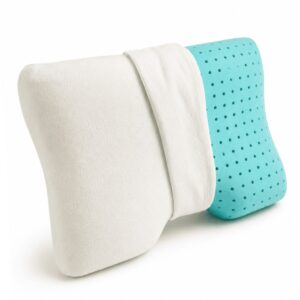
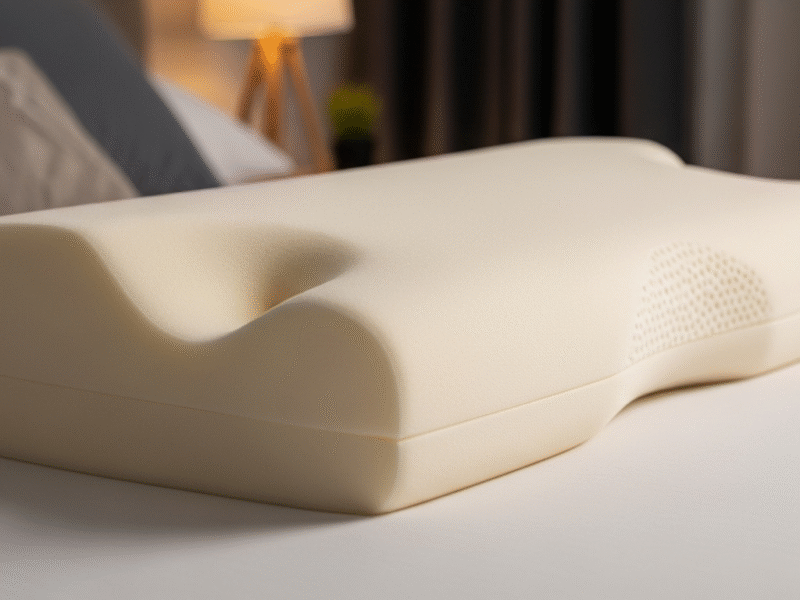
If you have neck pain, look for a contoured, ergonomic memory foam pillow with a supporting roll beneath the neck and a recess for the head. This design can help maintain the cervical curve in the two main sleeping positions and is used in the Memory pillow. We discuss one experience with morning pain in the article Wake Up Without Neck Pain; you can find the full range under support pillows.
Specific needs: allergies, children, and travel
- Allergies: choose materials designed for allergy-sensitive users and removable, washable covers. You can find details in our guide to choosing a pillow for allergies.
- Children: need lower, softer pillows suited to their age. Learn more in our guide to children’s pillows.
- Heartburn, reflux, and snoring: an elevated upper-body position using a wedge pillow such as ComfortLift may help with positioning. We explain the relationship between sleep and reflux in the article Snoring and GERD.
- Travel and driving: special supports are available for long trips. See our guide to neck pillows for the car.
When is it time for a new pillow?
Most pillows lose support within one to two years, while high-quality memory foam and latex may last longer. One quick test is to fold the pillow in half. If it does not return to its original shape, it may be worn out. We have collected other signs that an old pillow may be affecting you in the article When Is It Time for a New Pillow?.
Frequently asked questions about choosing a pillow
How high should a pillow be?
It should be high enough to keep your spine in a straight, neutral line when viewed from the side. For side sleeping, this is usually 10–15 cm depending on shoulder width; for back sleeping, 8–11 cm; and for stomach sleeping, as low as possible. Your usual sleeping position matters more than a general rule.
Is a firm or soft pillow better?
Neither is universally better. Your sleeping position determines the best choice. Side sleepers need firmer support, back sleepers medium support, and stomach sleepers a soft pillow. If you have neck pain, shape, including a contoured roll beneath the neck, matters more than firmness alone.
How often should you replace a pillow?
As a general rule, every 1–2 years; high-quality memory foam and latex may last 3 years or longer. Replace it sooner if it is compressed, you wake with neck pain, or it does not pass the fold test.
Can a contoured pillow really help with neck pain?
For many people, it may. A contoured shape supports the curve of the neck and reduces muscle strain during the night, which may reduce morning stiffness and pain. It is not a cure. If pain persists during the day or radiates into your arm, see a doctor to identify the cause.
This content is for informational purposes. Speak with a doctor or physical therapist if you have persistent neck pain.
From our store