
Swollen, Heavy Legs in Summer: What May Help
Heat can contribute to swollen, heavy legs by widening blood vessels and increasing fluid movement into tissues. Prolonged standing, sitting, or travel allows fluid to collect around the ankles and calves. Leg elevation, regular movement, cooling, suitable fluid intake, and properly selected graduated compression may help, depending on the cause.
This article explains summer leg swelling, practical measures, how compression works, and warning signs that suggest more than a response to heat.
Why do legs swell and feel heavy in summer?
Heat widens blood vessels near the skin and can increase capillary filtration into surrounding tissue. Prolonged standing, sitting, and travel add the effects of gravity and an inactive calf muscle pump, so fluid is more likely to collect around the ankles and lower legs.
Swelling, or edema, is fluid accumulation in tissue, often visible at the ankles, feet, or calves. Heat-related vasodilation and gravity can make mild bilateral swelling more noticeable in summer, including in otherwise healthy people. Swelling still has many possible causes.
Gravity and immobility are two common aggravating factors. The UK NHS lists remaining in the same standing or sitting position for too long among common causes. Cleveland Clinic similarly includes prolonged uninterrupted sitting or standing.
Common situations in which summer swelling develops include:
- Prolonged standing in heat: Retail work, events, or queues can keep the calf muscles relatively inactive.
- Prolonged sitting: Office work, cafés, and long drives with the feet down can encourage dependent swelling.
- Travel: Long flights or drives involve hours with the legs bent and relatively still.
- A change in routine: Vacation, more walking in heat, or inadequate fluid replacement may affect symptoms.
For a broader prevention guide, read how to help prevent leg swelling.
What helps swollen legs in summer?
A combination of measures may help uncomplicated heat-related swelling: elevate the legs, move regularly to activate the calf muscles, maintain an appropriate fluid intake, cool the legs, and consider properly fitted graduated compression when suitable. Persistent or unexplained edema needs assessment.
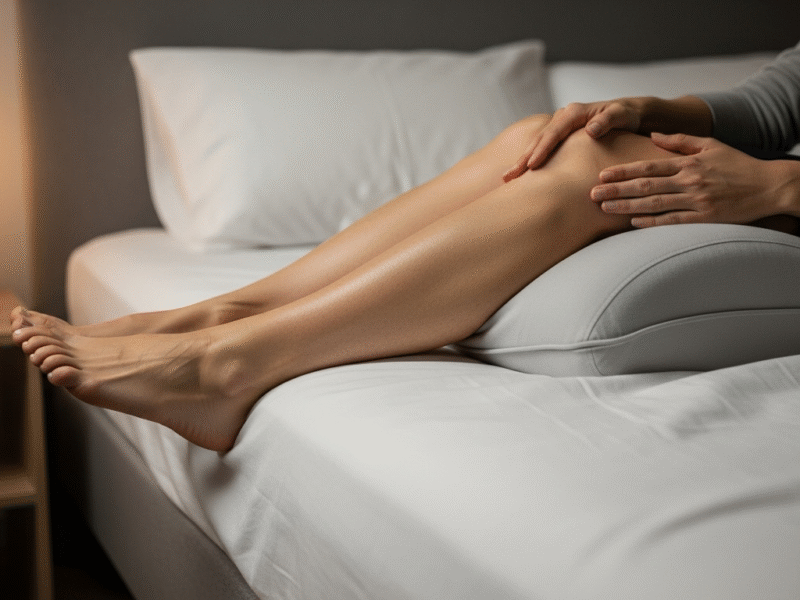
One direct measure is leg elevation. Raising the legs allows gravity to assist venous and fluid return. Cleveland Clinic advises elevating affected areas when possible. A practical trial is to support the legs approximately 15 to 20 cm above the resting surface for 20 to 30 minutes several times a day, while aiming for a comfortable position at or above heart level when feasible. See how leg elevation may help.
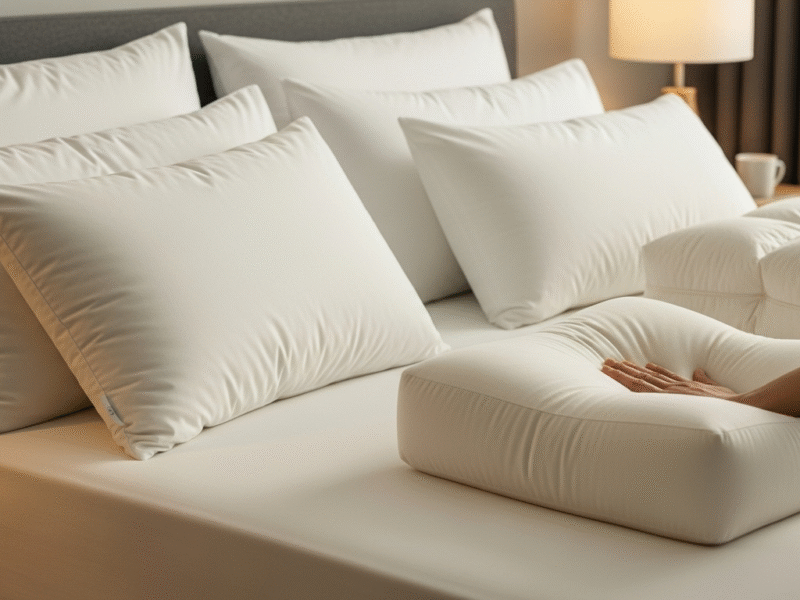
Stable support can make elevation easier. Folded pillows may shift or collapse. A wedge-shaped Medical leg pillow is intended to provide an even incline and support from the calves toward the feet. It may improve comfort and positioning, but it does not treat the underlying cause of edema. See other pillows in our category.
The second main measure is movement. Calf contractions help return venous blood upward. The NHS suggests gentle activity such as walking and advises against sitting or standing in one position for long periods. Try a short walk each hour or ankle movements while seated, if safe for you.
Summer care also includes hydration and cooling. Drink according to thirst, heat, activity, and medical advice. Hydration prevents dehydration but does not directly drain edema. A cool shower or cool compress may ease heat and heaviness; avoid ice directly on skin. Cleveland Clinic also mentions reducing salt , which may help some people with fluid retention but should fit their overall health and dietary advice.
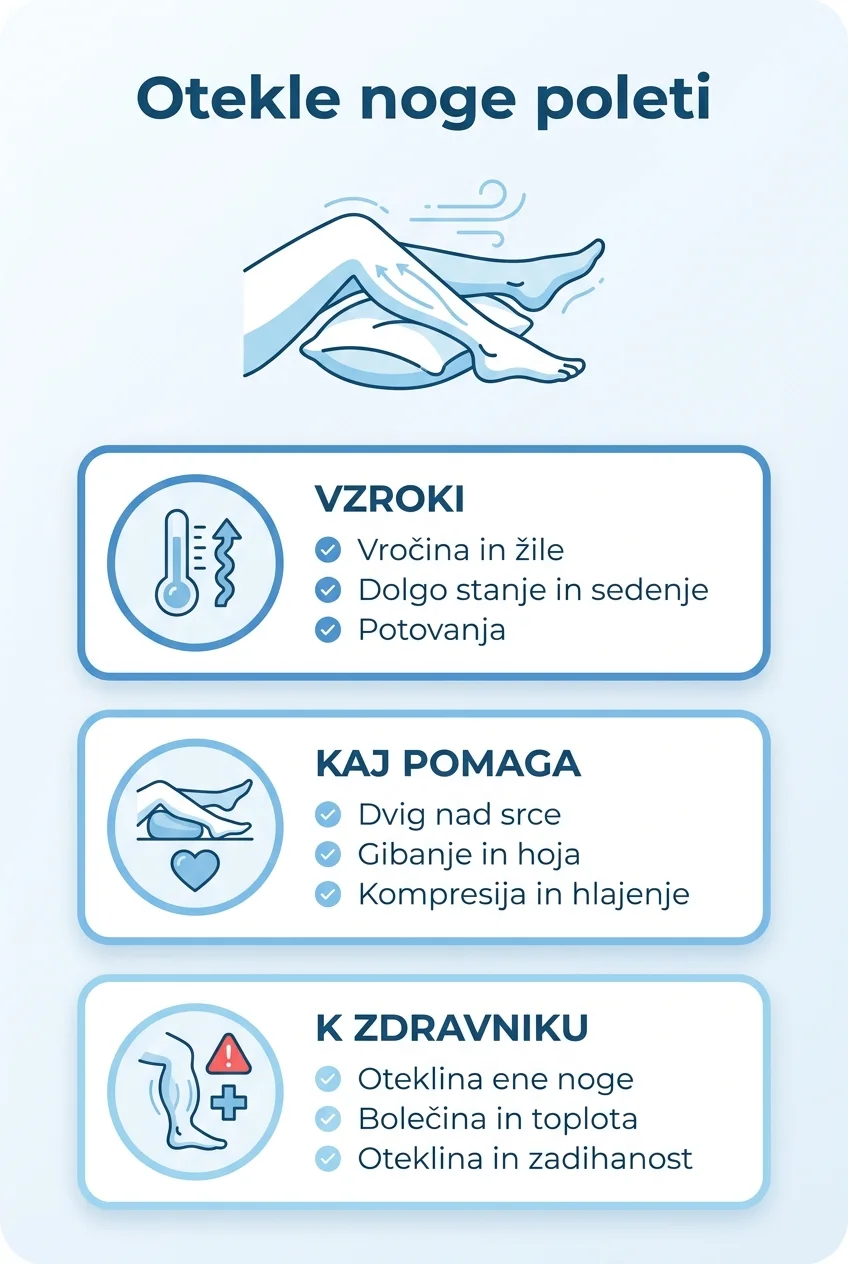
The infographic summarizes why legs swell in summer and which measures may provide relief.
How do compression socks work for swollen legs?
Graduated compression socks apply the greatest pressure at the ankle and progressively less farther up the leg. When correctly fitted, they support venous return and may reduce swelling or heaviness in some conditions. The appropriate pressure and length depend on the cause and the person’s circulation.
Compression works while it is worn, which can be useful during prolonged standing or sitting. Cleveland Clinic includes compression garments among edema measures and recommends consulting a clinician. This is especially important with peripheral arterial disease, diabetes-related circulation problems, heart failure, severe swelling, skin injury, or uncertain diagnosis.
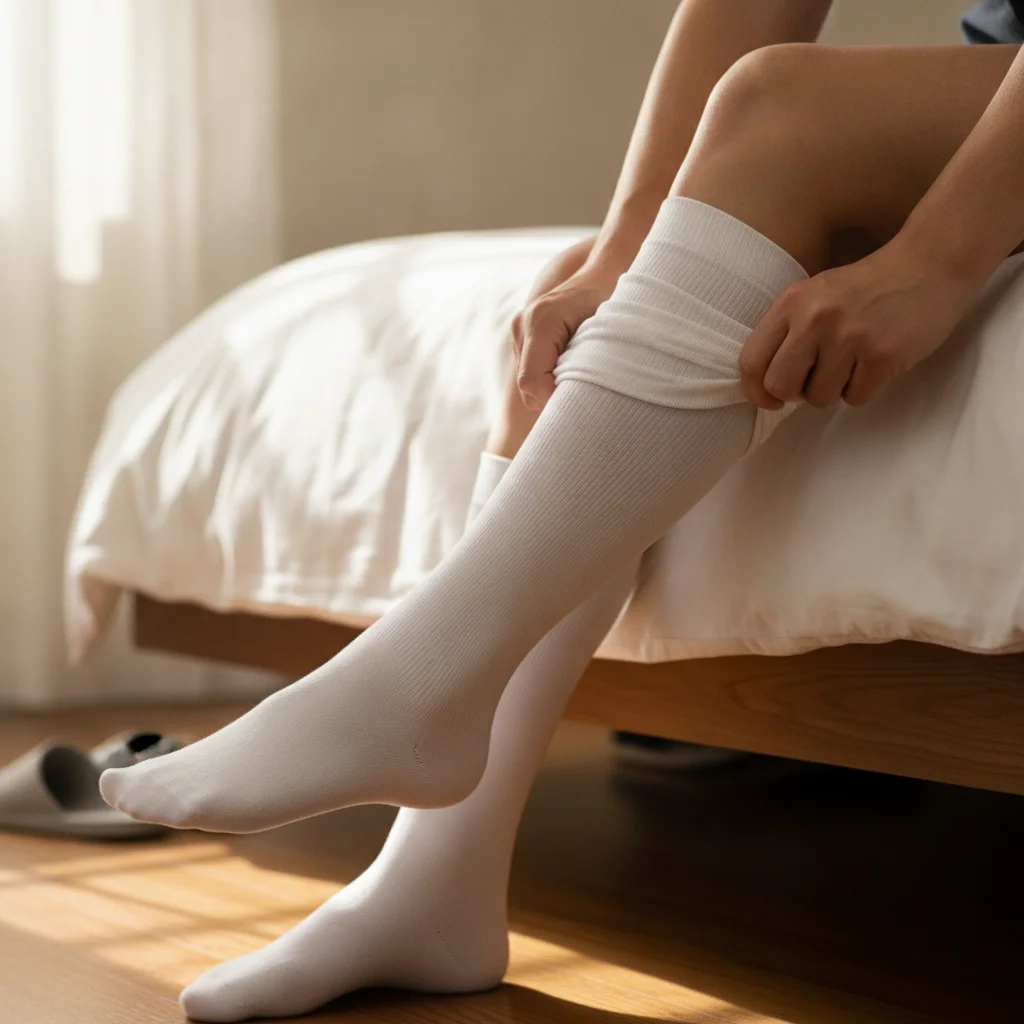
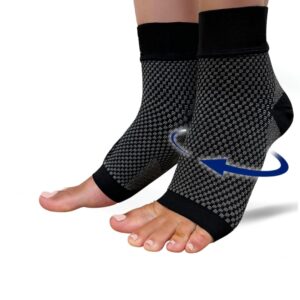
Kinesios compression socks are marketed to provide graduated support from the ankle upward for long periods of standing, sitting, or travel. Confirm the compression specification and fit before use. Wear time should follow product instructions or clinical advice; socks may ease symptoms but do not remove the cause. Learn more about supporting venous circulation.
Which measure should you choose?
The most suitable measure depends on the activity and the cause. Elevation may help during rest, while movement and suitable compression may be practical during standing, sitting, or travel. Combining appropriate measures can be useful, but unexplained swelling requires diagnosis.
This table compares common measures for summer swelling.
| Measure | How it works | When it may be useful |
|---|---|---|
| Leg elevation | Gravity assists venous and fluid return and may reduce dependent pressure. | Rest at home or after a long day standing. |
| Movement and walking | The calf muscle pump assists venous return. | Interrupting long periods of sitting, standing, or travel. |
| Compression socks | Graduated pressure supports venous return while the socks are worn. | Long periods on the feet or travel, when clinically suitable and correctly fitted. |
| Hydration | Replaces fluid lost in heat and supports normal fluid balance; it is not an edema treatment. | Hot weather, physical activity, and travel, unless fluid restriction is prescribed. |
| Cooling the legs | May provide temporary comfort and reduce the sensation of heat or heaviness. | After a hot day or before rest. |
In practice, vary your position, move regularly, cool and elevate the legs when resting, and maintain an appropriate fluid intake. Use compression only when the size, pressure, and circulation safety are suitable.
When are swollen legs a sign of illness?
Mild bilateral swelling related to heat and immobility may settle with rest, but edema can also indicate disease. Sudden one-sided swelling with pain or warmth raises concern for a blood clot. Bilateral swelling with breathlessness or swelling in someone with heart, kidney, or liver disease needs medical assessment.
Distinguish mild, bilateral, painless dependent swelling from a sudden change affecting one leg, while recognizing that appearance alone cannot establish the cause. MSD Manual describes deep vein thrombosis as potentially causing sudden swelling with pain, redness or discoloration, warmth, or tenderness. Suspected DVT needs urgent medical assessment.
Heart, kidney, and liver disease can cause more generalized swelling. Heart failure may cause painless swelling in both legs and feet with shortness of breath on exertion or when lying down. Cleveland Clinic also lists heart, liver, and kidney failure among serious causes of edema.
When should you seek medical care?
Most mild heat-related swelling improves with position changes, movement, and cooling. Seek medical advice if swelling persists despite rest, worsens quickly, is painful, or occurs with other symptoms. People with known heart, kidney, or liver disease should follow their clinician’s plan.
Seek urgent medical help if you notice:
- swelling in only one leg with pain, warmth, redness, or darker skin, which may indicate deep vein thrombosis;
- sudden leg swelling with shortness of breath, chest pressure or pain, or coughing up blood, which may indicate pulmonary embolism and requires emergency care;
- leg swelling with known heart, kidney, or liver disease that is new or worsening; or
- persistent or painful swelling with skin ulcers or color changes.
Travel can also increase risk: The NHS notes that DVT is more likely with long journeys of more than 4 hours by plane, car, or train. Move the legs regularly and maintain an appropriate fluid intake. Compression socks are appropriate only for some travelers and must fit correctly. Seek prompt medical advice for one-sided pain and swelling during or after travel.
Frequently asked questions
Why do legs swell more in summer than in winter?
Heat widens blood vessels near the skin and may increase fluid filtration into tissues. Gravity and prolonged standing, sitting, or travel can make bilateral ankle swelling more noticeable.
Do compression socks help swollen legs?
Properly fitted graduated compression can reduce swelling and heaviness in some people by supporting venous return. Ask a clinician or pharmacist about suitability and pressure, especially if you have arterial, cardiac, skin, or circulation problems.
How quickly does swelling improve after leg elevation?
Some people feel relief after 20 to 30 minutes, while visible swelling may take longer or persist. Response does not diagnose the cause. Repeat comfortable elevation as appropriate and seek advice for ongoing edema.
Should I drink less water when my legs are swollen?
Usually do not restrict fluids for presumed heat-related swelling without medical advice. Replace heat-related losses appropriately and reduce excess salt if advised. Heart or kidney disease may require an individualized fluid plan.
Can swollen legs be dangerous?
They are often caused by dependent fluid accumulation, but sudden one-sided painful swelling or swelling with shortness of breath can indicate a clot or another serious condition and needs urgent care.
This content is informational and does not replace medical advice. Consult a doctor for persistent or sudden swelling, leg pain, or other concerning symptoms.
From our store
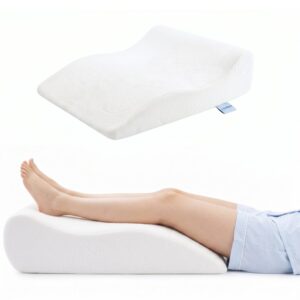
“Medical” leg support pillow