
Pillows for children: infant safety and choosing a first pillow
Keep pillows and other soft objects out of an infant’s sleep space throughout the first year. They increase the risk of suffocation, entrapment, and strangulation. Older children do not need a pillow at a fixed age; many begin using one after moving to a toddler or child bed. If you introduce a first pillow, choose one intended for the child’s age and sleep setting, and ask a pediatrician if you have questions. low-profile, firm, appropriately sized, and washable , rather than thick, soft, or shaped to hold the head in place.
This guide covers infant safe-sleep guidance, considerations for a first pillow, materials, care, and common mistakes.
When might a child use a pillow?
During the first year: no pillows
Keep the infant sleep space free of pillows and other soft objects for every sleep. American Academy of Pediatrics (AAP) recommends keeping soft objects and loose bedding out of an infant’s sleep area. This includes pillows, pillow-like toys, blankets, quilts, mattress toppers or other soft surfaces, loose sheets, and crib bumpers. Place an infant on their back for every sleep on a firm, flat, non-inclined sleep surface with a fitted sheet and no other items in the sleep space.
An infant does not need a pillow for spinal alignment. A flat, approved infant sleep surface is the safe setup.
After infancy: there is no required age for a first pillow
Many children begin using a pillow after moving from a crib to a toddler or child bed, often around ages 2–3, but a pillow is optional rather than a developmental requirement. Follow the bed and pillow manufacturer’s age guidance and ask a pediatrician if the child has medical or developmental needs. on the side A child who sleeps comfortably without a pillow does not need one solely to create a visually straight line. If you introduce one, it should support a comfortable position without sharply bending the neck.
What should a first child’s pillow be like?
| Feature | Consideration | Why |
|---|---|---|
| Height | Low profile, following the product’s age guidance | Avoid a height that sharply tilts or flexes the neck |
| Firmness | Firm rather than soft and fluffy | A very soft pillow can surround the face or collapse unevenly |
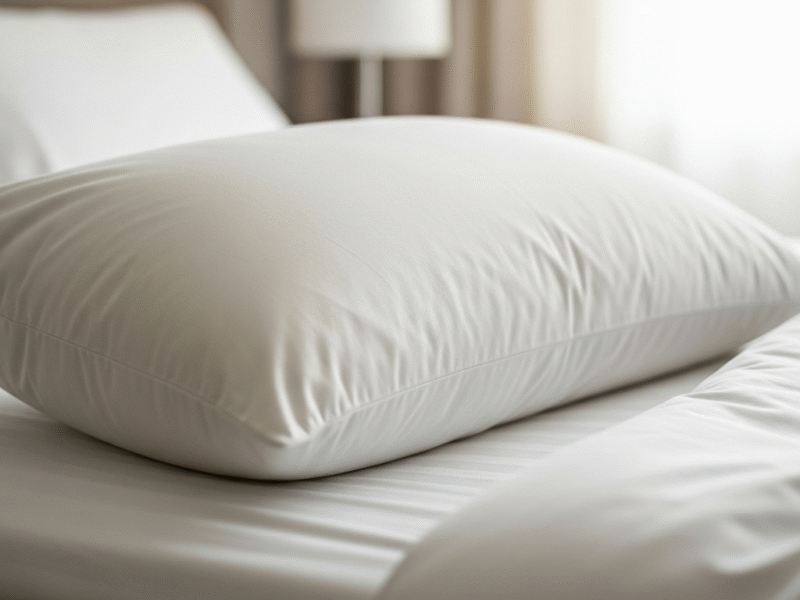
| Size | Child-sized, for example 40 × 60 cm when appropriate for the child and bed | An adult pillow may be too large or thick for a small child |
| Shape | Simple and flat | Avoid products that hold a young child’s head in a fixed position |
| Material | Washable materials with clear fiber-content and care labels | Regular cleaning can help manage sweat, dust, and allergens; no material prevents overheating or allergy on its own |
Choose the lowest profile that feels comfortable and does not sharply tilt the child’s head. Shoulder width alone is not a validated way to prescribe pillow height, and a child’s preferred sleeping position may change during the night.
Does a child need an orthopedic or contoured pillow?
Most healthy young children do not need a specialized orthopedic pillow. Claims that a contour corrects development or prevents pain are not established. Ask a pediatrician or pediatric physical therapist before using a positioning product for a medical concern.
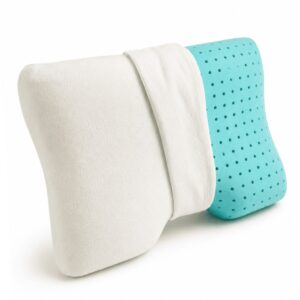
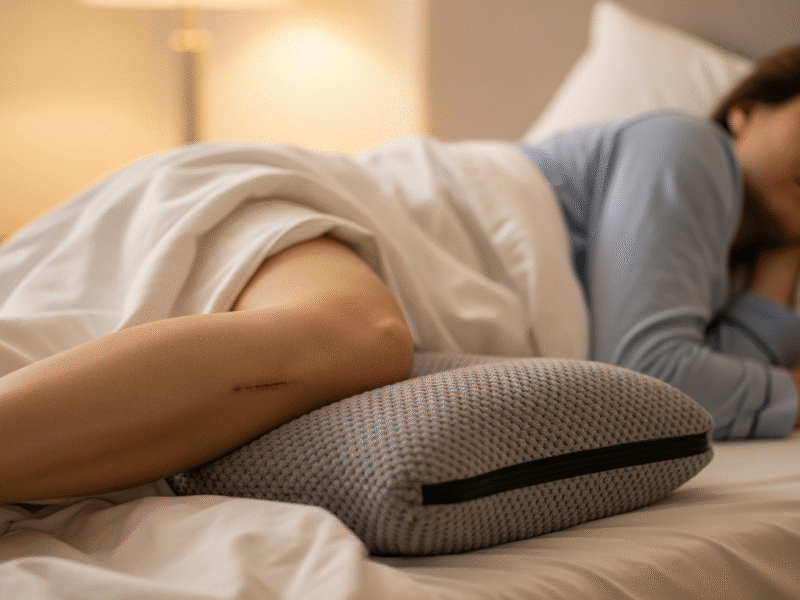
Older children and teenagers may prefer a contoured pillow as their body size changes, but age nine is not a medical threshold and morning neck pain should not be managed through a product alone. One consumer option is the Memory orthopedic pillow made from memory foam. Memory foam is not inherently hypoallergenic, and this product is not a treatment for neck pain. For general pillow considerations, see How to choose a pillow.
Materials and care
- Allergy considerations include the child’s known triggers, the complete material list, washable covers, and cleaning instructions. Labels such as “hypoallergenic” do not guarantee that a product will not cause symptoms. Learn more in Are you looking for a hypoallergenic pillow?
- Natural-fiber covers such as cotton may feel comfortable, but terms such as “bamboo” can refer to processed fibers. Check the actual fiber-content and care labels.
- Temperature and breathability: choose sleepwear, room conditions, and bedding that help the child remain comfortable. No pillow material eliminates overheating risk.
- Washability: follow the manufacturer’s cleaning instructions for the cover and pillow. Replace the product if it is damaged, misshapen, or cannot be cleaned adequately.
Common mistakes
- Putting a pillow in an infant’s sleep space . The safe-sleep guidance applies to naps and nighttime sleep in every location.
- Using an adult pillow for a small child . It may be unnecessarily large or thick.
- Choosing a very soft, fluffy pillow . Soft filling can surround the face or shift unevenly.
- Using a positioning or contoured pillow for a young child . Do not use a product that restrains head movement or is outside the manufacturer’s stated age range.
- Keeping a damaged or outgrown pillow . Children grow and products wear out. Reassess comfort, condition, and fit periodically rather than assuming one pillow will remain suitable for years.
Frequently asked questions about children’s pillows
At what age can a child use a pillow?
Never place a pillow in an infant’s sleep space during the first year. After infancy, there is no age at which every child needs one. Many families consider a first pillow after the child moves to a toddler or child bed, following product guidance and pediatric advice as needed.
Why must an infant’s sleep space be pillow-free?
The AAP advises keeping pillows and other soft objects out because they increase the risk of suffocation, entrapment, and strangulation. An infant should sleep on a firm, flat, non-inclined surface approved for infant sleep.
How high should a child’s pillow be?
For an older child who uses a pillow, start with a low profile appropriate to the product’s age range and the child’s bed. It should not sharply tilt the head. There is no universal centimeter measurement or shoulder-width formula.
Is an orthopedic pillow suitable for a child?
Most healthy children do not need an orthopedic pillow. For an older child or teenager, a contoured pillow may be a comfort preference, but it does not treat unexplained neck pain. Discuss persistent pain, headaches, weakness, numbness, or sleep problems with a clinician.
Warning: This article provides general information and does not replace pediatric medical advice or current safe-sleep guidance. Ask a pediatrician about a child’s sleep environment or pillow, especially when medical, developmental, respiratory, or mobility needs are involved.
From our store