Compression socks: when to wear them and how to choose
Compression socks are specially knitted garments that apply graduated pressure to the leg, strongest at the ankle and gradually decreasing upward. This can support the return of blood through the veins. Compression is used for certain causes of leg swelling and venous symptoms, during some long journeys, and in pregnancy or medical care when appropriate. The right product depends on its intended use, fit, and pressure level.
This guide explains how compression socks work, how pressure is expressed in mmHg, when compression may help, how sizing works, and how to wear and care for the socks. Medical compression should be selected with a qualified healthcare professional.
What are compression socks and how do they work?
Compression socks are elastic garments that apply pressure around the leg. The pressure is strongest at the ankle and gradually decreases toward the knee or thigh. This graduated pressure can help move blood through the veins and reduce pooling in the lower legs.
When you stand or sit for a long time, blood in the legs must move against gravity to return to the heart. Vein valves and contracting leg muscles help this process. If this »pump« is less effective, fluid and blood can collect in the lower legs, contributing to swelling or heaviness. Graduated compression can support venous return. The UK NHS, explains that compression stockings »apply pressure to your lower legs, helping to maintain blood flow and reduce discomfort and swelling«.
Compression may manage symptoms, but it does not remove the underlying cause of venous disease. The MSD Manual states that compression stockings and leg elevation can »relieve the symptoms of varicose veins but do not prevent new varicose veins from forming«. Compression is supportive care rather than a cure or a guarantee of prevention.
What levels of compression (mmHg) exist and what do they mean?
Compression pressure is expressed in millimeters of mercury (mmHg), usually as a range measured at the ankle. Lower and higher ranges may be sold for different uses, but class names and thresholds vary among countries, standards, and manufacturers. More pressure is not automatically »better« and may be unsafe for some people.
The table below is general orientation only. Pressure ranges and class labels such as I–III vary among manufacturers and healthcare systems. A clinician or qualified fitter should assess circulation, select medical compression, and take measurements when compression is being used for a health condition.
| Pressure range (mmHg) | Strength | Common use or context |
|---|---|---|
| 8–15 mmHg | Light | Light support for tired legs or prolonged sitting; check the manufacturer’s intended use. |
| 15–20 mmHg | Mild to moderate | General support for prolonged standing or sitting and some travel uses; suitability varies. |
| 20–30 mmHg | Firm compression; class label varies | May be used for venous symptoms or swelling after professional assessment and fitting. |
| 30–40 mmHg and above | Higher medical compression; class label varies | Used for selected venous or lymphatic conditions and after some procedures, only under professional guidance. |
For general comfort or travel, some people use lighter compression. If you have swelling, varicose veins, diagnosed venous disease, diabetes, reduced sensation, or possible arterial disease, ask a healthcare professional which pressure and fit are appropriate before buying.
When do compression socks help?
Compression socks are used most often for symptoms related to venous circulation or long periods of sitting or standing. Depending on the person and condition, they may reduce swelling or heaviness, support care for varicose veins, or be advised during pregnancy, travel, or recovery. They are not suitable for every cause of leg swelling.
Let’s look at the most common examples of use:
- Heavy and swollen legs: Chronic venous insufficiency can cause swelling that increases through the day, along with heaviness, aching, or tired legs. MSD Manual The NHS states that compression stockings can »reduce swelling and discomfort« in this context. If this is a recurring problem, also see our guidance on tired and heavy legs.
- Varicose veins: Compression can ease symptoms such as aching, heaviness, or swelling, but it does not remove existing varicose veins or prevent all new ones. Other steps may also be useful; read about reducing the risk of varicose veins.
- Long journeys and flying: Long periods of sitting during air or road travel can contribute to leg swelling and are one factor in blood-clot risk. Compression stockings reduce symptomless deep vein thrombosis on long flights in clinical trials, but personal risk and suitability still matter.
- Pregnancy: Pregnancy increases pressure on the veins, and varicose veins can first appear during pregnancy. Compression stockings may ease leg heaviness or swelling for some people. Ask your maternity care professional which pressure and fit are suitable, especially if swelling is sudden or affects only one leg.
- Work standing or sitting: People who stand or sit for much of the day may notice swelling or heaviness by evening. Properly fitted compression may reduce venous pooling for some people, while regular movement and assessment of persistent swelling also matter.
- Sport and recovery: Some runners and recreational athletes wear compression socks during activity or recovery. Evidence for faster recovery or better performance is mixed, so treat them as optional support rather than a guaranteed performance aid.
The clearest evidence discussed here concerns long flights. Cochrane systematic review of 12 trials evaluated airline passengers on flights lasting more than five hours and found fewer symptomless deep vein thromboses among those assigned compression stockings. Across 2,637 participants, 50 such clots were detected: 3 among participants wearing stockings and 47 among those not wearing them. The review also found less leg swelling. These results do not show that compression is appropriate for every traveler or replace individual advice for people at increased clotting risk.
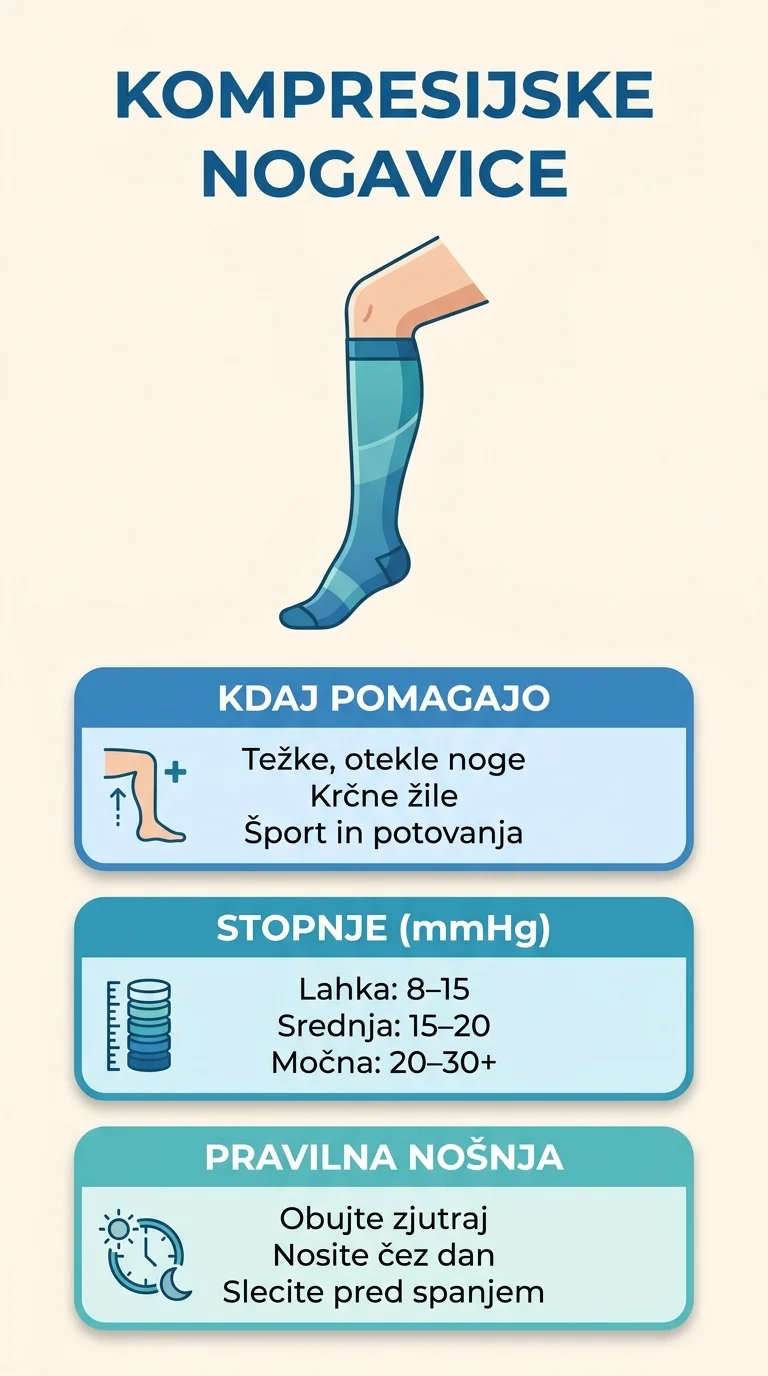
The infographic below briefly summarizes when compression stockings help, what levels of compression exist, and how to wear them correctly.
How do I choose the right size and pressure?
Choose size from leg measurements rather than shoe size. For knee-high socks, follow the manufacturer’s instructions, which commonly use the ankle at its narrowest point, the calf at its widest point, and the length from the floor to below the knee. Measure early in the day before swelling builds. Medical compression should be measured and fitted by a qualified professional.
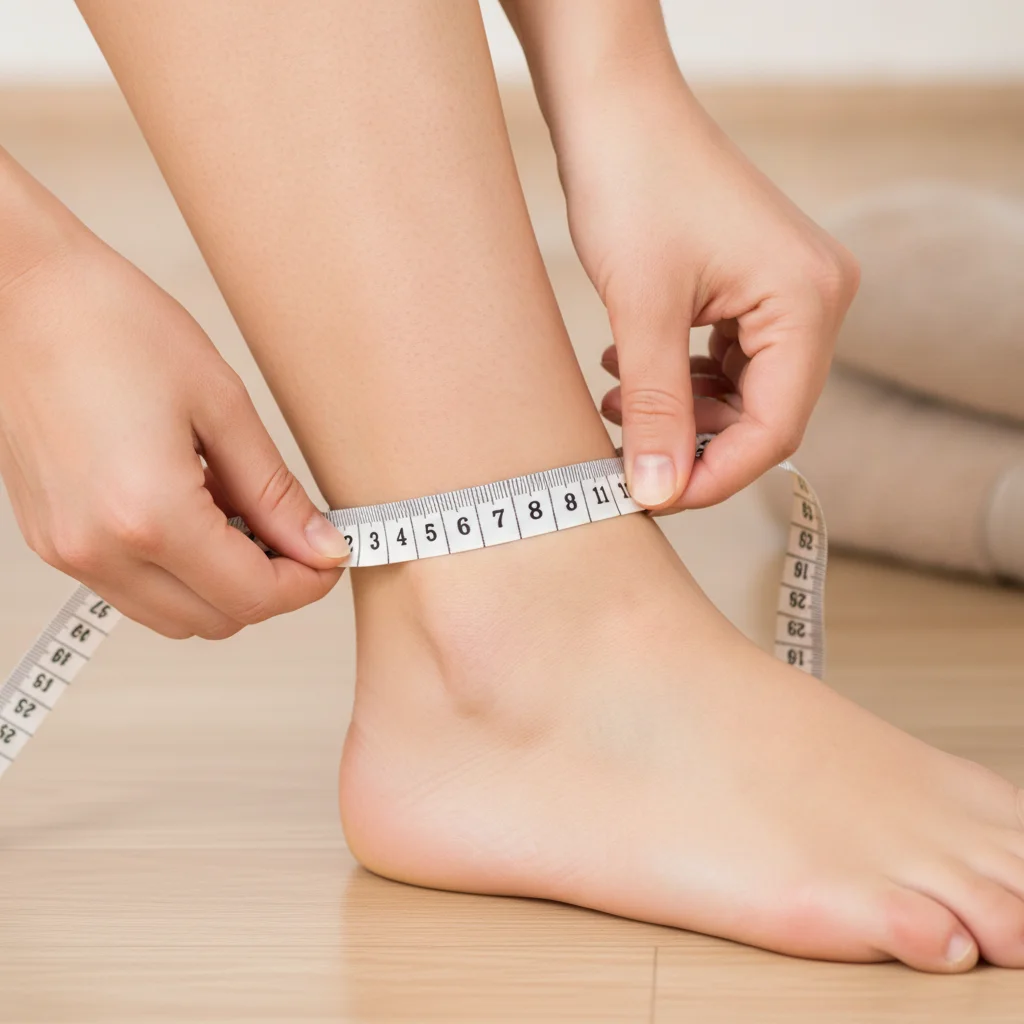
Incorrect sizing can make compression ineffective or unsafe. A garment that is too loose may not deliver its stated pressure, while one that is too tight or bunched can create pressure points or restrict circulation. Follow these steps:
- Measure your legs in the morning. Measurements can increase after swelling develops during the day.
- Compare with the manufacturer’s size chart. Sizing differs by brand and product, so use the chart for the exact garment.
- Get medical compression professionally fitted. For compression intended to manage varicose veins, swelling, or venous disease, have circulation assessed and the legs measured by a qualified professional. The NHS advises that you »speak to a doctor or pharmacist« about the correct type.
Our products have a specific scope. Our compression stockings are sold for sport, foot support, and everyday comfort for tired legs. They are not a substitute for individually assessed and fitted medical compression. If you want compression for varicose veins, persistent swelling, or diagnosed vascular disease, consult a healthcare professional before choosing a product.
How do I properly wear and care for compression stockings?
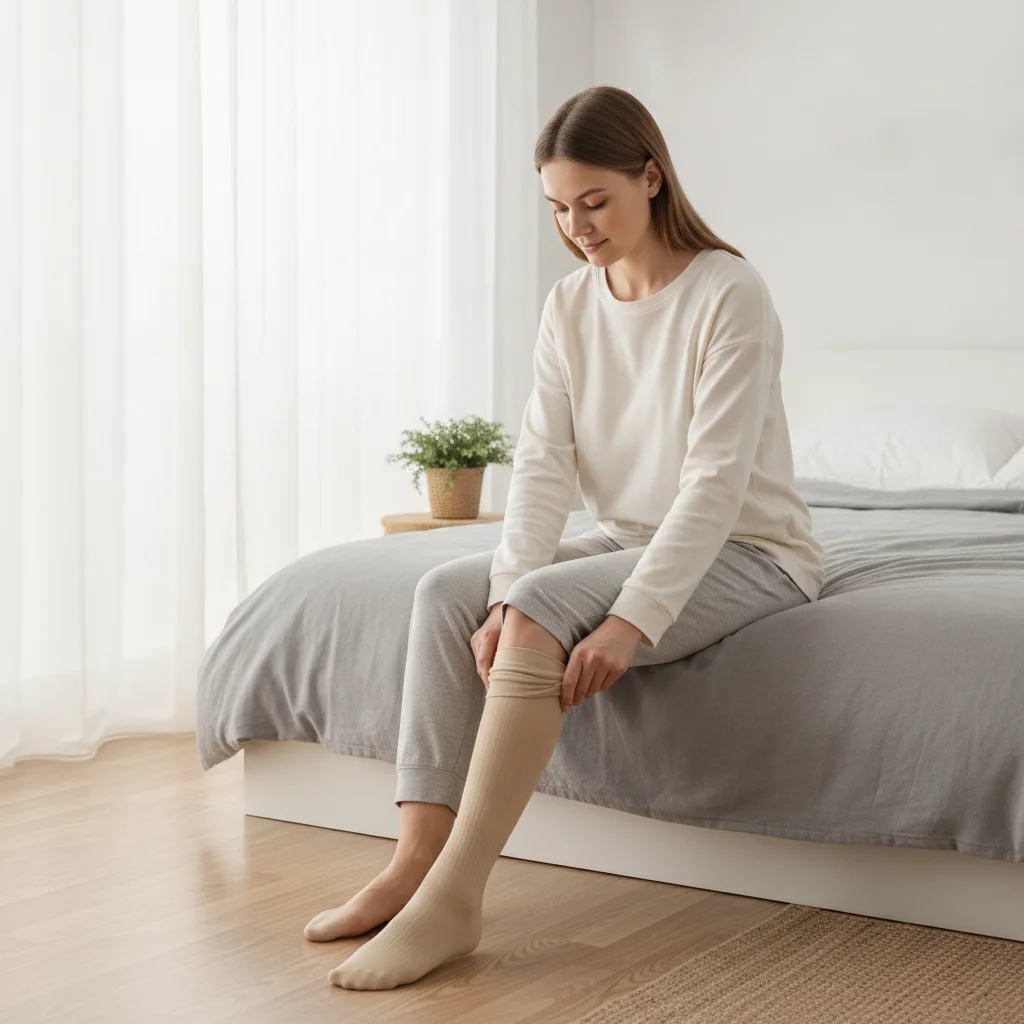
Unless your healthcare professional gives different instructions, put compression socks on early in the day before swelling develops and remove them before bed. Apply them to dry skin, smooth out wrinkles, and do not roll or fold the top. Follow the product’s care label; heat can damage elastic fibers.
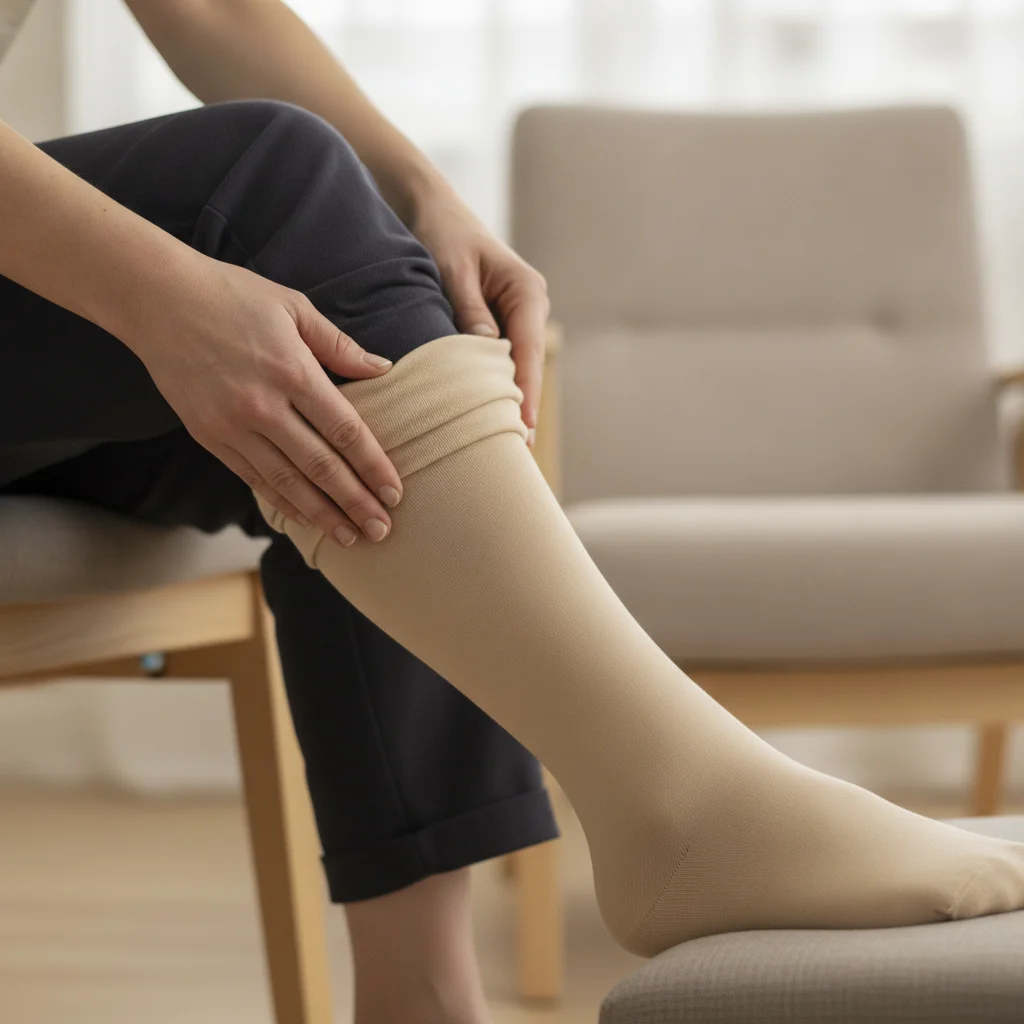
For prescribed compression, follow the schedule given by your healthcare professional. The MSD Manual advises putting stockings on »when you wake up, before swelling worsens with activity, and wearing them all day«. The NHS likewise advises wearing them »during the day and taking them off before going to bed«. Do not wear them overnight unless a clinician specifically tells you to.
Some practical advice:
- Putting them on: Turn the stocking inside out as far as the heel, position the foot, then ease the material gradually up the leg. Do not pull only on the top band.
- Smooth fit: Smooth out wrinkles because folds can create concentrated pressure and irritate the skin.
- Care: Wash and replace the socks according to the manufacturer’s instructions. Their compression declines as elastic fibers wear, and the replacement interval varies by product and frequency of use.
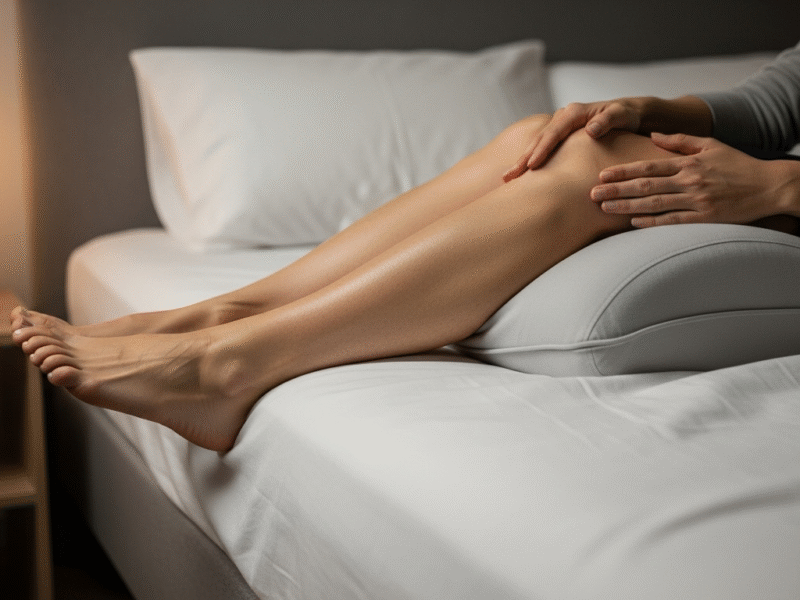
- Combine with movement: When appropriate for you, combine compression with regular movement, walking, and leg elevation. Read how to support venous circulation and reduce leg swelling.
Compression socks for sports and foot support
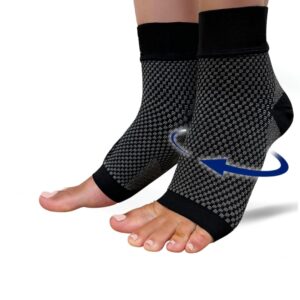
Compression socks with arch support are popular for running, sport, and jobs that involve long periods on the feet. They provide pressure around the lower leg and additional support beneath the foot. They do not treat plantar fasciitis, heel pain, or Achilles tendon conditions.
Our range includes Kinesios compression socks with graduated compression rated at 20–30 mmHg and built-in arch support. They are intended for everyday wear, sport, and recovery support. This pressure range may be unsuitable for people with arterial circulation problems, diabetes-related foot complications, reduced sensation, or certain other conditions. It does not replace assessed and fitted medical compression; seek professional advice for significant venous symptoms or persistent swelling.
You can also watch this video on the topic:
When should you seek medical advice?
Compression socks provide pressure and support; they are not a cure. Ask a healthcare professional before using them if you have diabetes, reduced sensation, peripheral arterial disease, significant heart problems, unexplained swelling, skin damage, or a history of blood clots.
Seek urgent medical advice if you notice:
- sudden swelling, pain, redness, or warmth in one leg, which can indicate deep vein thrombosis;
- an ulcer, skin-color change, or wound that is not healing, especially around the ankle;
- tingling, numbness, discoloration, or pain caused or worsened by the socks;
- a cold, pale, blue, or painful foot, which may indicate impaired arterial circulation.
The NHS warns that compression stockings »are not suitable if you have problems with blood flow in your arteries«. Remove the garment and seek prompt advice if it causes new pain, numbness, coldness, or color change. Sudden breathlessness, chest pain, coughing blood, or collapse can indicate a pulmonary embolism; call local emergency services immediately.
Frequently asked questions
Can I wear compression socks at night?
Usually not. Compression socks are generally worn during the day and removed before bed. Wear them overnight only when a healthcare professional has assessed you and specifically advised it.
Which compression level should I choose to start with?
There is no single starting pressure that is right for everyone. Product ranges and class labels vary, and 15–20 mmHg may still be unsuitable for some people. Ask a healthcare professional if you have symptoms, a medical condition, reduced sensation, or concerns about circulation.
Do compression socks eliminate varicose veins?
No. Compression may ease symptoms such as heaviness, aching, or swelling and support venous return, but it does not remove existing varicose veins or reliably prevent new ones. A healthcare professional can explain treatment options if the veins are troublesome.
How often should I change compression socks?
Compression garments gradually lose elasticity with wear and washing. Some need replacement after about three to six months of regular use, but follow the manufacturer’s schedule and any instructions from your fitter. Replace them sooner if they are damaged, stretched, or no longer fit correctly.
Can I wear compression socks during pregnancy?
Compression socks can be used during pregnancy and may ease heaviness or swelling for some people. Ask your maternity care professional which pressure and fit are appropriate. Sudden swelling, swelling in one leg, headache, visual changes, chest pain, or breathlessness needs prompt medical assessment rather than self-treatment with compression.
This content is for informational purposes and does not replace professional medical advice. For health issues or before choosing medical compression, consult a doctor or pharmacist.
From our store