
How to choose a neck pillow for the car
Do you feel tired, stiff, or sore in the neck after a long drive? Prolonged sitting, vehicle vibration, and an uncomfortable seat setup can all contribute. Neck discomfort can also distract a driver. A well-fitted car neck pillow may improve comfort for some people, provided it does not interfere with the vehicle’s head restraint, seat belt, or driving position.
This article explains why driving can contribute to neck pain, how a pillow may help, and what to consider when choosing and positioning one.
Why does driving cause neck pain?
Sitting may seem passive, but holding one position while driving can be demanding on the body, particularly the cervical spine. Understanding the contributing factors can help you adjust your setup.
Static posture and muscle strain
While driving, the head may remain in nearly the same position for a long time. The neck muscles continue working to support it, which can contribute to fatigue, stiffness, and discomfort, especially for people who spend many hours behind the wheel.
Inadequate support and ergonomics
Vehicle head restraints are safety equipment designed to help reduce injury in a collision. Depending on the seat and the driver’s body shape, the seatback may not feel supportive during a long drive. Any added pillow must preserve the correct head-restraint position and must not push the head forward.
Vehicle vibrations
Road and vehicle vibration is transmitted through the seat. The body may respond with small, ongoing muscle adjustments to stabilize the trunk and head, adding to fatigue during a long drive.
How can an ergonomic neck pillow help?
A car neck pillow is intended to fill part of the space between the neck and seat. If its shape and position suit the user and vehicle, it may provide additional support and comfort.
- Neck position: A suitable pillow may support the natural curve of the cervical spine and help the user maintain a comfortable seated posture.
- Reduced muscle effort: Support behind the neck may reduce the effort needed to hold the head in one position. A pillow that is too thick, however, can push the head forward and increase discomfort.
- Comfort: Memory foam responds to pressure and may conform to the neck, although comfort and fit vary by person, seat, and temperature.
- Vibration cushioning: A pillow may dampen some vibration transmitted through the seat, but it should not be treated as protective equipment for the spine.
Reducing discomfort may make a long drive less distracting. Stop safely and take a break if pain affects your concentration or ability to control the vehicle.
Types of car neck pillows: which one may suit you?
Car neck pillows differ in material, shape, firmness, and intended use. One common option is a memory foam car neck pillow.
Materials: memory foam and other options
Memory foam, also called viscoelastic foam, responds to heat and pressure and conforms to the body. Its feel and support depend on the foam density, shape, temperature, and the person using it.
| Material | Advantages | Disadvantages |
|---|---|---|
| Memory foam | Conforms to the body, distributes pressure, and is available in different densities. | Can retain heat; a breathable cover may help. |
| Inflatable pillows | Portable, adjustable firmness, and usually inexpensive. | May provide less stable support, can feel less comfortable, and can be punctured. |
| Microbead or fiber fill | Soft and light. | May lose shape over time and generally provides less structured support. |
Ergonomic shape
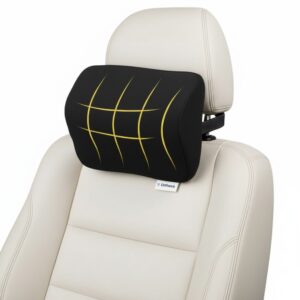
Some pillows have a U-shaped or contoured design intended to follow the neck and shoulders. Choose a shape that supports the neck without restricting head movement, obstructing your view, or changing the safe position of the vehicle’s head restraint. One example is the ErgoLux ergonomic neck pillow, made from 100% memory foam and contoured to provide support behind the neck. Fit and comfort vary by user and vehicle.
Car neck pillows for children
Children may need support while sleeping in a car seat, but added accessories can affect how a child restraint performs. Car neck pillows for children Do not add a pillow or positioning device unless the child-restraint manufacturer permits it for that exact seat. Follow the seat instructions for harness fit, head position, and approved accessories. Soft materials and child-friendly covers do not establish crash safety.
How to choose a car neck pillow
Consider the following factors and check the vehicle manufacturer’s guidance before purchasing an accessory for the seat or head restraint.
Factors to consider:
- Memory foam density: Higher-density foam generally feels firmer and may retain its shape longer, although density alone does not determine whether a pillow fits you.
- Removable and washable cover: A removable cover makes the pillow easier to clean because it touches the skin and hair. Follow the care instructions for both the cover and foam.
- Adjustable strap: Check if the pillow has an adjustable elastic strap on the back. This allows you to securely attach the pillow to the headrest and prevent it from moving while driving.
- Breathability: A breathable cover may reduce heat and moisture buildup.
How to position a neck pillow in the car
Position affects both comfort and safety. The pillow should not push your head forward or interfere with the head restraint, seat belt, mirrors, or movement needed to drive. Follow the vehicle manual and these general fit checks:
- Adjust the vehicle head restraint: Follow the vehicle manual. In general, position the head restraint so its top is at least as high as the top of your ears and, when possible, level with the top of your head. Keep it as close to the back of the head as the vehicle allows.
- Attach the pillow only if permitted: If the vehicle manufacturer allows the accessory, secure the strap so the pillow cannot move or interfere with the head restraint.
- Adjust the pillow height: Move the pillow until it gently supports the curve of your neck. It should not push your head forward, limit head movement, or alter your view of the road and mirrors.
- Check the driving position: Before driving, sit in your normal position and confirm that you can turn your head, see the road and mirrors, reach the controls, and use the seat belt correctly. Remove the pillow if it compromises any of these checks.
When to seek professional care
Although a car neck pillow for occasional discomfort may improve comfort for some people, it is not a treatment for every cause of pain. Consult a doctor or physical therapist if neck pain is persistent or severe, travels into the arms, or occurs with tingling, numbness, or weakness. These symptoms can occur with conditions such as cervicalgia or a herniated disc.
Comfort and safety on long drives
A neck pillow may make a long drive more comfortable when it fits both the user and vehicle, but it must not compromise the head restraint or driving position. Memory foam is one option rather than a universal best choice. Adjust your posture, take regular breaks, and read more about managing long drives without back pain.
This content is for general information and is not a substitute for professional medical advice. Consult a clinician about persistent or concerning symptoms.
From our store