
Pillows for Neck Support: Is Memory Foam Best?
For many people with neck pain, a memory foam pillow can be a good choice because its density holds the head and neck in alignment better than softer materials. It is not best for everyone: it retains more heat than latex, responds more slowly, and is often too high for stomach sleepers. Below, we compare the materials and explain how to choose the right height for your sleeping position.
What is memory foam, and where did it come from?
Memory foam, also called viscoelastic foam, yields under body weight and heat and conforms to the body. When the pressure is removed, it slowly returns to its original shape. It was developed at NASA in 1966 to cushion impact in aircraft seats[1], and the material later moved into medical, sports, and sleep products. For the neck, this slow, close conformity is the key feature: the foam fills the space beneath the neck and supports the head in a neutral position instead of simply collapsing beneath it.
Memory foam vs. latex, down, and polyester: an honest comparison
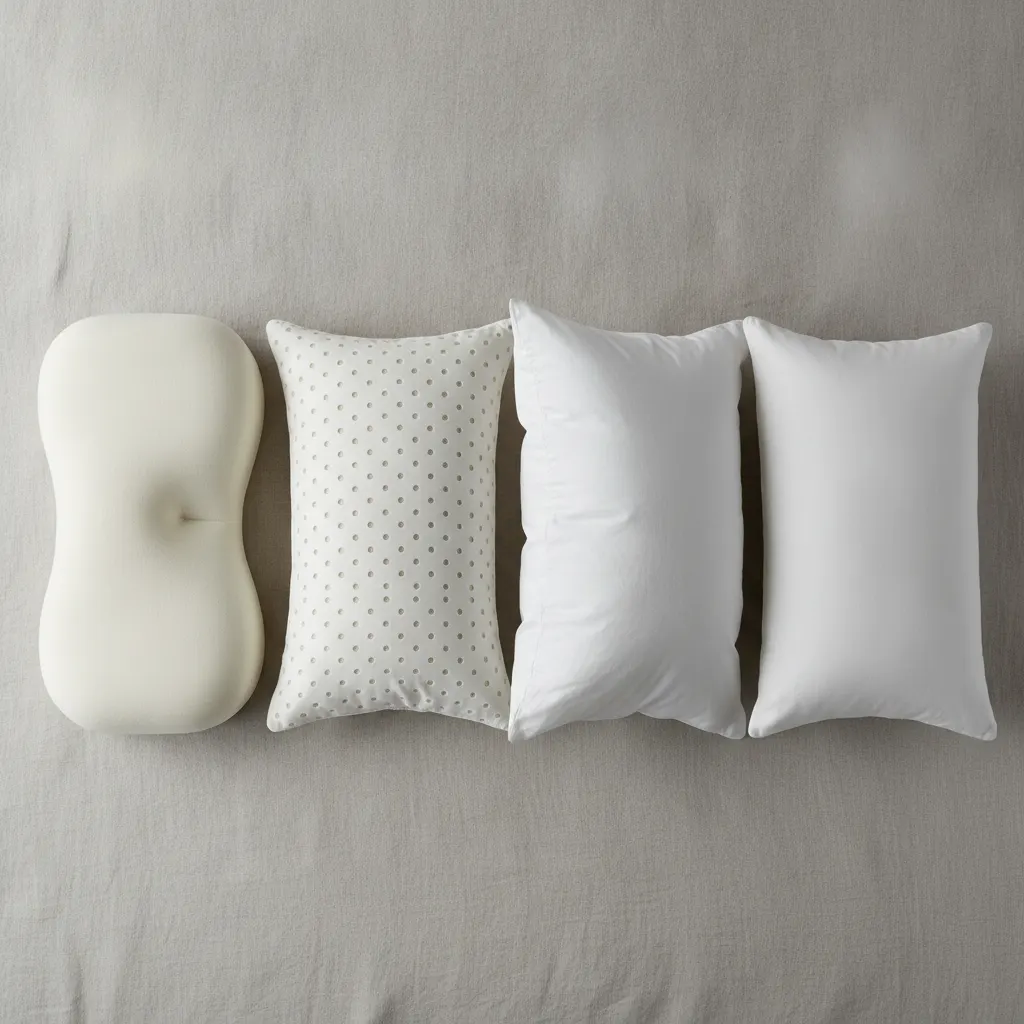
No material is best for everyone. Each involves a tradeoff among support, heat retention, durability, and price. Here is how the materials compare:
| Material | Neck support | Heat retention | Approximate lifespan | Price range |
|---|---|---|---|---|
| Memory foam | Strong; conforms closely to the neck | High; retains the most heat of the materials compared | approx. 2–3 years | Medium to high |
| Latex | Strong; more responsive and springy | Low; stays cooler | approx. 3–5 years | High |
| Down and feathers | Limited; compresses and shifts quickly under the weight of the head | Medium | approx. 2–4 years with regular care | Medium to high |
| Polyester fill | Basic; loses its shape quickly | Medium | approx. 1–2 years | Low |
Andrew Bang, a chiropractor at Cleveland Clinic, says natural latex provides support without retaining as much heat as memory foam, an important point if sweating bothers you at night. The Cleveland Clinic article also identifies feather and down pillows as frequent contributors to neck pain because the filling shifts and loses its shape during sleep, reducing support.[2] Polyester fill is the least expensive choice but also loses its shape the fastest, making it more suitable as a temporary solution than a long-term purchase.
Who may not find memory foam suitable?
Because we also sell a memory foam pillow, it is only fair to explain who may not find this material suitable:
- People who sleep hot: the denser cell structure retains more body heat than latex, so you may overheat during the night.[2] A version with cooling gel or a more open-cell structure may help, while latex is generally a cooler option.
- Stomach sleepers: stomach sleeping is generally the least favorable position for the spine because the head remains turned to one side for a long time.[2] A contoured memory foam pillow is often too high for this position. Mayo Clinic recommends very low support or a pillow beneath the hips and lower abdomen to reduce strain on the lower back.[3]
- People who dislike a slow response: the foam returns to shape gradually rather than immediately. Some people experience this as an uncomfortable “stuck” feeling, while others find it comfortable for the same reason.
- The first few days after opening: new memory foam initially releases volatile organic compounds from the manufacturing process, with levels declining over time.[4] A mild chemical odor after opening is therefore not unusual. Air the pillow in a well-ventilated space for a few days before first use.
Pillow height matters more than material
Cleveland Clinic notes that a pillow should closely fill the space between the head, neck, and mattress. A pillow that is too low leaves the neck unsupported, while one that is too high pushes the head forward. Pillows that accommodate changes in position can work well, with lower support when you lie on your back and higher support when you lie on your side.[2] Mattress firmness also affects the pillow height you need. Your shoulder sinks less into a firm mattress than a soft one, so a thicker pillow may be needed.[2]
| Sleeping position | Recommended height | Recommended firmness |
|---|---|---|
| Side | Medium-high to high; fills the distance between shoulder and head | Medium-firm to firm |
| Back | Low to medium-high | Medium-firm |
| Stomach | Very low or no pillow beneath the head | Soft |
If your main sleeping position does not answer all your questions, see our complete guide to choosing a pillow, which also covers age, allergies, and specific needs.
When is a memory foam pillow a good choice?
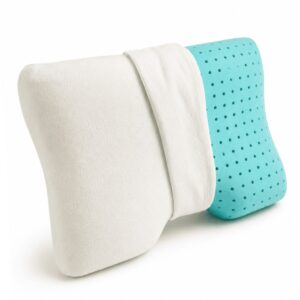
It is generally best suited to side and back sleepers who want firm, close support for the neck and are not bothered by heat retention. A contoured shape with a recess for the head and a higher edge beneath the neck, such as the design of the Memory contoured pillow , may keep the cervical spine better aligned in both positions than a traditional flat pillow. You can view the full range under support pillows. If you already wake with neck pain, you may also want to read the experience described in the article Wake Up Without Neck Pain.
Caring for a memory foam pillow
The memory foam core should not be machine washed or soaked in water because this can damage its structure.
- Wash the cover regularly: most pillows have a removable, washable cover. Follow the manufacturer’s instructions, usually washing it once every week or two.
- Protect the core: for added protection from sweat and stains, use a cotton cover for the Memory pillow.
- Spot clean: clean marks on the foam with a damp cloth and mild detergent; do not soak the foam.
- Air regularly: leave the pillow in a well-ventilated place for a few minutes, away from direct sunlight, which can damage the foam.
Even with regular care, foam loses support over time. You can find signs that it is time for replacement and comparisons of material lifespan in the article How Often Should You Replace a Pillow?. If allergies bother you at night as well as neck pain, see our guide to pillows for people with allergies.
When should you see a doctor?
Changing the material and choosing the right pillow height may help with mild neck pain related to sleep. According to the CDC, adults need at least 7 hours of sleep a night for general health[5] . An unsuitable pillow can interfere with that sleep. Speak with a doctor if your neck pain does not improve after changing pillows, radiates into your arm, is accompanied by tingling, numbness, or weakness, or began after an injury. For persistent neck pain that is not simply related to sleep, see also the article Cervicalgia: When Neck Pain Is More Than “Sleeping Wrong”. This article is for informational purposes and is not a substitute for medical advice, diagnosis, or treatment.
Frequently asked questions about memory foam pillows
Does memory foam cause night sweats?
It can retain more heat than latex because of its denser structure. If you overheat at night, look for a cooling-gel or more open-cell version, or choose latex.
Is the smell of a new memory foam pillow harmful?
New foam initially releases volatile organic compounds, but their levels decline over time. Air the pillow in a well-ventilated space for a few days before first use.
Which pillow should I choose if I sleep on my stomach?
Choose a very low, soft pillow, or place a pillow beneath your hips instead of beneath your head. Stomach sleeping is generally the least favorable position for the spine, so consider gradually training yourself to sleep on your side.
How high should a memory foam pillow be?
It depends on your sleeping position and mattress firmness. Side sleepers need higher support, back sleepers medium support, and stomach sleepers the lowest. A firm mattress may require a slightly thicker pillow than a soft mattress.
When should you replace a memory foam pillow?
Approximately every 2 to 3 years, or sooner if you notice a permanent indentation, loss of support, or worsening allergies. You can find detailed signs in the article How Often Should You Replace a Pillow?.
Sources: [1] NASA Spinoff – Forty-Year-Old Foam Springs Back With New Benefits. [2] Cleveland Clinic – Is Your Pillow Hurting Your Neck? 7 Tips for Better Sleep. [3] Mayo Clinic – Sleeping Positions That Reduce Back Pain. [4] Derivation of Indoor Air Guidance Values for VOC Emitted From Polyurethane Flexible Foam, PMC (NIH). [5] CDC – Adults Sleep Facts and Stats.
From our store