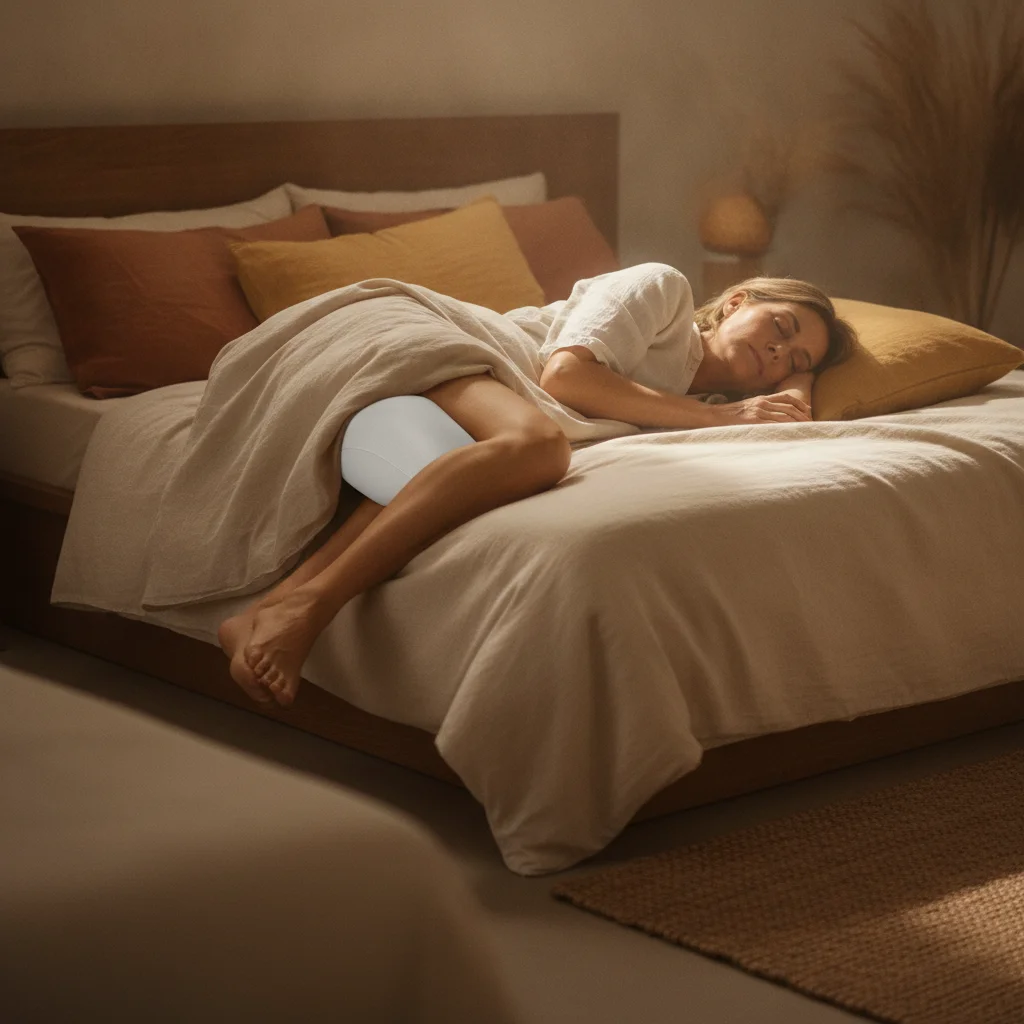
Hip Pain at Night When Sleeping on Your Side
Nighttime pain on the outside of the hip can worsen when body weight presses on the greater trochanter and nearby soft tissues. The upper leg may also fall forward and rotate the pelvis. Compression and sustained positioning can aggravate an already sensitive bursa or, more commonly, the gluteal tendons.
This guide explains why side lying may hurt, what greater trochanteric pain syndrome involves, sleep positions and knee support, mattress considerations, and signs that need medical assessment.
Why does my hip hurt at night when I lie on my side?
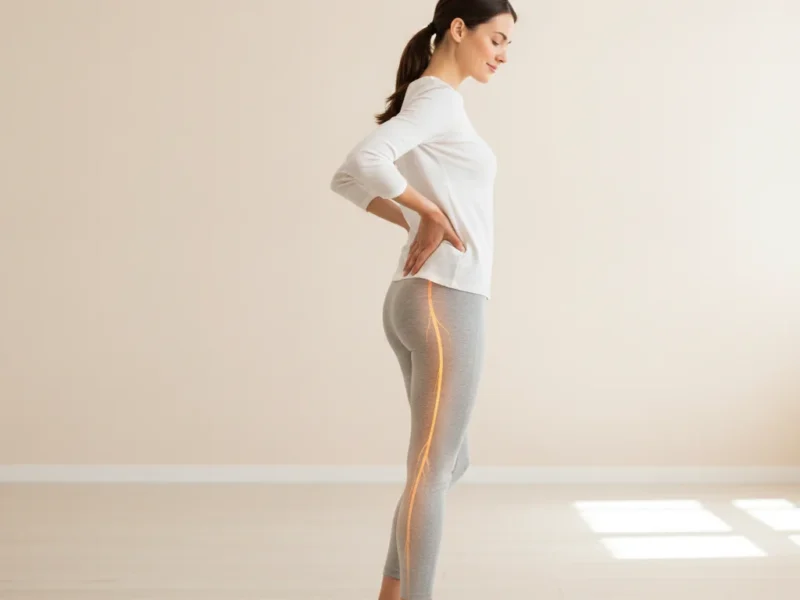
Side lying places direct pressure over the greater trochanter, the bony prominence on the outside of the hip, and nearby bursae and tendons. If these tissues are irritated, sustained pressure may cause aching or burning pain that sometimes travels down the outer thigh.
This pattern may be more noticeable at night. The American Academy of Orthopaedic Surgeons (OrthoInfo) notes that pain associated with trochanteric bursitis is often worse at night when lying on the affected hip and when rising after prolonged sitting. Remaining in one position can aggravate pressure-sensitive tissue.
Without support, the upper leg may move forward and downward, rotating the pelvis. This position can increase compression or tension around the outer hip for some people, although no single alignment explains every case of nighttime hip pain.
What causes nighttime hip pain? Greater trochanteric pain and pressure
A common cause of pain on the outside of the hip is greater trochanteric pain syndrome (GTPS). Despite the traditional term “trochanteric bursitis,” gluteal tendon irritation is often a major component, with or without bursal inflammation. A bursa is a small fluid-filled sac that reduces friction between bone and soft tissue.
OrthoInfo describes the trochanteric bursa over the greater trochanter and lists repetitive activity, hip injury, iliotibial-band tightness, and leg-length difference among possible contributors. The UK NHS similarly notes that bursitis pain may spread into the upper thigh and worsen with movement or side lying.
Direct pressure
When side lying, pressure is concentrated over the outer hip. Sustained compression can aggravate sensitive tendons or a bursa, regardless of body size.
Pelvic rotation
If the upper knee drops across the body, the pelvis rotates and the outer-hip tissues may be compressed or tensioned. This can aggravate symptoms in some people.
Other causes
Osteoarthritis, lumbar referred pain, sciatica, injury, and pregnancy-related changes can also cause nighttime hip pain. Deep groin pain, marked stiffness, neurological symptoms, or pain after injury may point to a different cause and needs appropriate assessment.
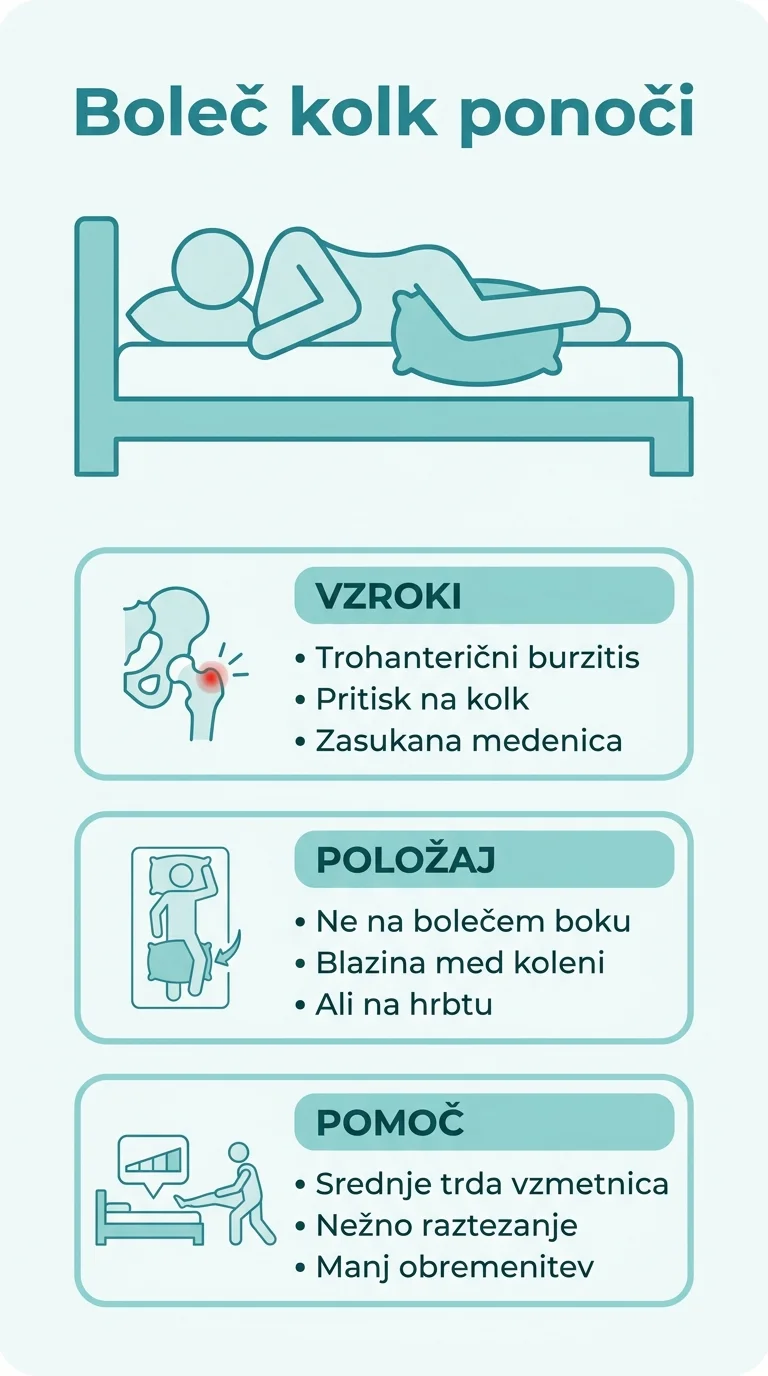
The infographic summarizes common causes of nighttime hip pain, positioning triggers, and ways to reduce pressure during sleep.
Which sleep position is best for a painful hip?
Choose a position that avoids direct pressure and feels sustainable. Options include lying on the opposite side with support between the legs or lying on the back with the knees supported. Avoid the painful side if direct pressure clearly worsens symptoms.
| Sleep position | Effect on the hip | General guidance |
|---|---|---|
| Painful side down | Direct pressure over sensitive outer-hip tissue | Usually avoid during a painful flare |
| Opposite side without support | The upper leg may fall forward and rotate the pelvis | May aggravate symptoms |
| Opposite side with a pillow between the knees | Supports the upper leg and may reduce pelvic rotation | Often worth trying if comfortable |
| On the back with knees supported | Avoids direct side pressure and may feel neutral | Often worth trying if comfortable |
| On the stomach | May rotate the pelvis or lower back | Usually less suitable if it increases symptoms |
If pain prevents lying on the affected side, try the opposite side with leg support or lie on your back. Similar pressure-management principles are discussed in shoulder pain at night, where side lying can also aggravate a sensitive area.
How can a pillow between the knees help nighttime hip pain?
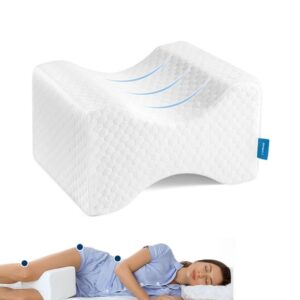
A pillow between the knees supports the upper leg and may limit the amount it drops across the body. This can reduce pelvic rotation and may make side lying more comfortable. It cannot diagnose or treat the underlying tendon, bursa, joint, or spinal condition.
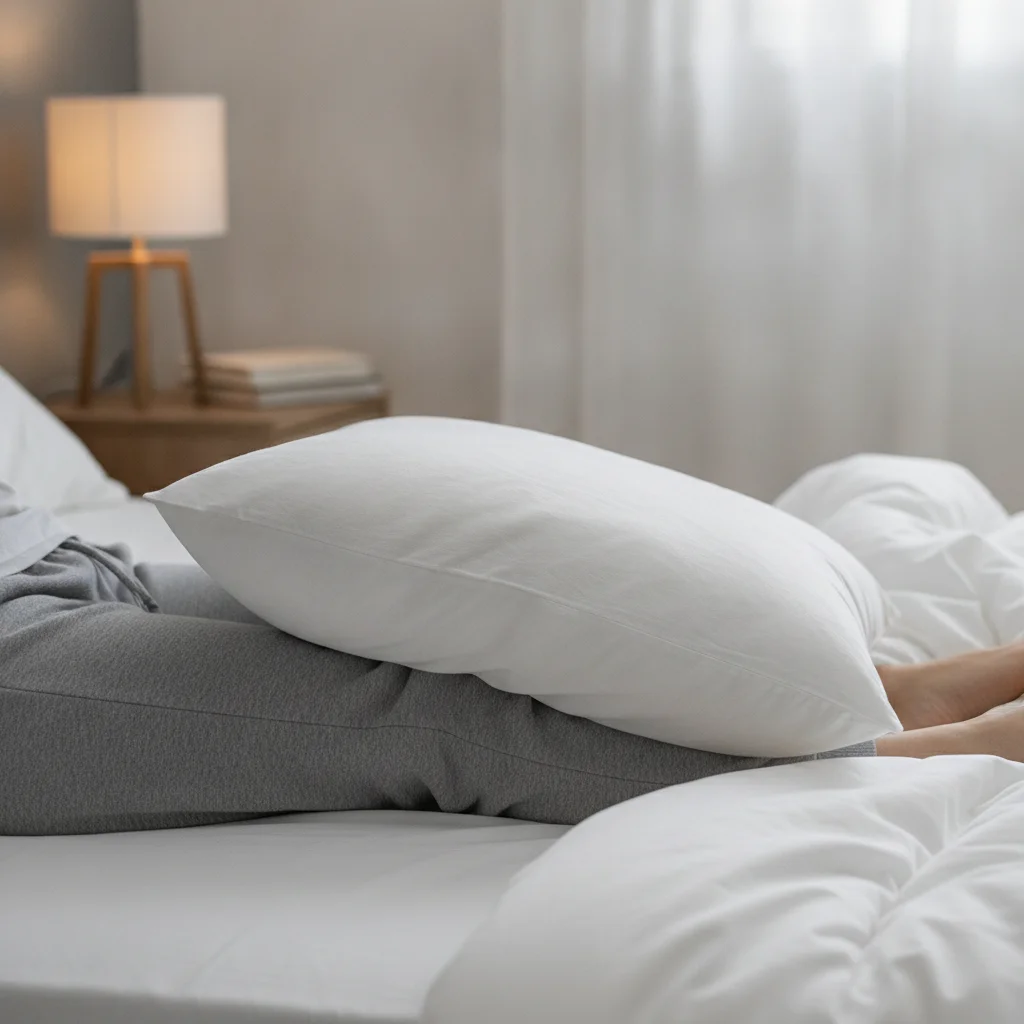
An ordinary pillow or folded blanket may work if it stays comfortable. A contoured option intended to remain between the legs is the ErgoPlus knee pillow . Its hourglass-shaped memory foam is intended to fit between the knees; see other support pillows. Support may ease symptoms but does not treat the underlying cause.
Similar leg-positioning support may be used during recovery after a procedure, as discussed in sleeping after hip surgery. Postoperative positioning must follow the surgical team’s instructions; this article addresses hip pain without recent surgery.
What kind of mattress is best for hip pain?
No single firmness is best for everyone. A mattress should allow comfortable pressure distribution while supporting the body. A surface that feels too firm may increase outer-hip pressure, while one that sags excessively may make position changes uncomfortable.
If the surface feels too firm, a pressure-relieving topper may improve comfort. If the pelvis sinks excessively or the mattress has a permanent hollow, replacement may help. Choose based on trial comfort and return policy rather than a guaranteed “medium-firm” prescription.
What else may help nighttime hip pain?
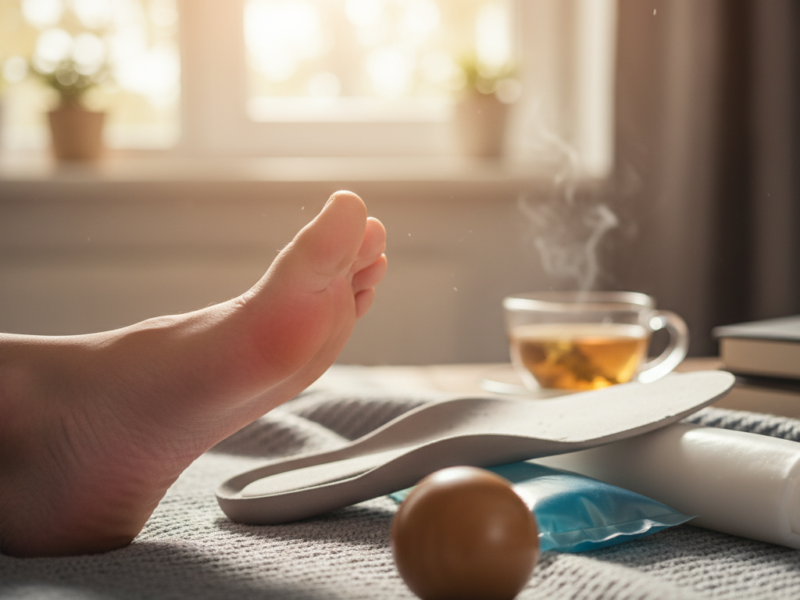
Along with sleep-position changes, management may include activity modification and an individualized strengthening program for the hip muscles. Cold or heat may provide short-term comfort. The correct approach depends on whether symptoms arise from GTPS, arthritis, the back, injury, or another cause.
- Reduce pressure on the affected side: Try the opposite side with support between the legs or lie on your back.
- Use individually selected exercise: Gluteal strengthening often forms part of GTPS rehabilitation. Aggressive iliotibial-band or outer-hip stretching can increase compression and is not suitable for everyone.
- Modify aggravating activity: Temporarily reduce activities such as prolonged standing, stairs, or running if they clearly worsen symptoms, while avoiding unnecessary complete inactivity.
- Cold or heat: Use whichever provides short-term relief, protect the skin, and limit exposure to a comfortable duration.
- Support sleep: Reducing pain and improving the underlying condition may reduce nighttime awakenings.
Adults generally need adequate sleep for health. The Slovenian National Institute of Public Health (NIJZ) recommends 7 to 9 hours a night and reported that fewer than 7 hours on workdays was the pattern for 41.8% of Slovenian adults in a pandemic-era survey. These Slovenian data do not establish the cause or treatment of hip pain.
For a visual introduction, see this video:
When should you see a doctor?
Positioning may ease pressure but does not address every cause. The NHS advises assessment when hip pain disrupts sleep or usual activities, worsens or recurs, does not improve after two weeks of home care, or causes more than 30 minutes of morning stiffness. Seek advice after a fall or injury and for tingling, weakness, or numbness. A hot, red, swollen hip, fever, inability to bear weight, or sudden major weakness needs urgent assessment.
Frequently asked questions
Why does my hip hurt more at night than during the day?
Sustained side pressure can aggravate sensitive outer-hip tendons or a bursa, and fewer position changes may make symptoms more noticeable. Night pain also has other causes, so persistent or severe symptoms need assessment.
Does a pillow between the knees really help hip pain?
It may help some side sleepers by supporting the upper leg and reducing pelvic rotation. It is a comfort measure, not a treatment for tendon disease, bursitis, arthritis, or referred pain.
Which side should I sleep on if my hip hurts?
Try the opposite side with support between the knees if that is comfortable. If both sides hurt, try lying on your back with the knees supported. Avoid direct pressure on a painful outer hip during a flare.
How firm should a mattress be for hip pain?
There is no universal best firmness. Look for enough pressure relief at the shoulder and hip without uncomfortable sagging, and use a trial period when possible.
When is nighttime hip pain concerning?
Seek assessment when pain lasts more than two weeks, worsens, disrupts sleep, follows a fall, or travels with tingling or weakness. A hot, swollen, red hip, fever, inability to bear weight, or sudden weakness needs urgent care.
This content is informational and does not replace medical advice. Consult a doctor or physiotherapist for persistent, severe, or worsening hip pain.
From our store