Cervicalgia: when neck pain is more than a stiff neck
Cervicalgia is the medical term for neck pain, one of the most common musculoskeletal problems. About half of all people experience it at some point in life. It is often related to muscle tension from sustained posture, screen-based work, or stress, and many episodes settle within a few weeks. Regular neck exercises have some of the strongest evidence for relief and prevention of recurrence.
This guide explains when neck pain is likely to be uncomplicated, which warning signs require medical attention, which exercises and habits may help, and how posture and pillow choice can reduce the chance of recurrence.
What is cervicalgia?
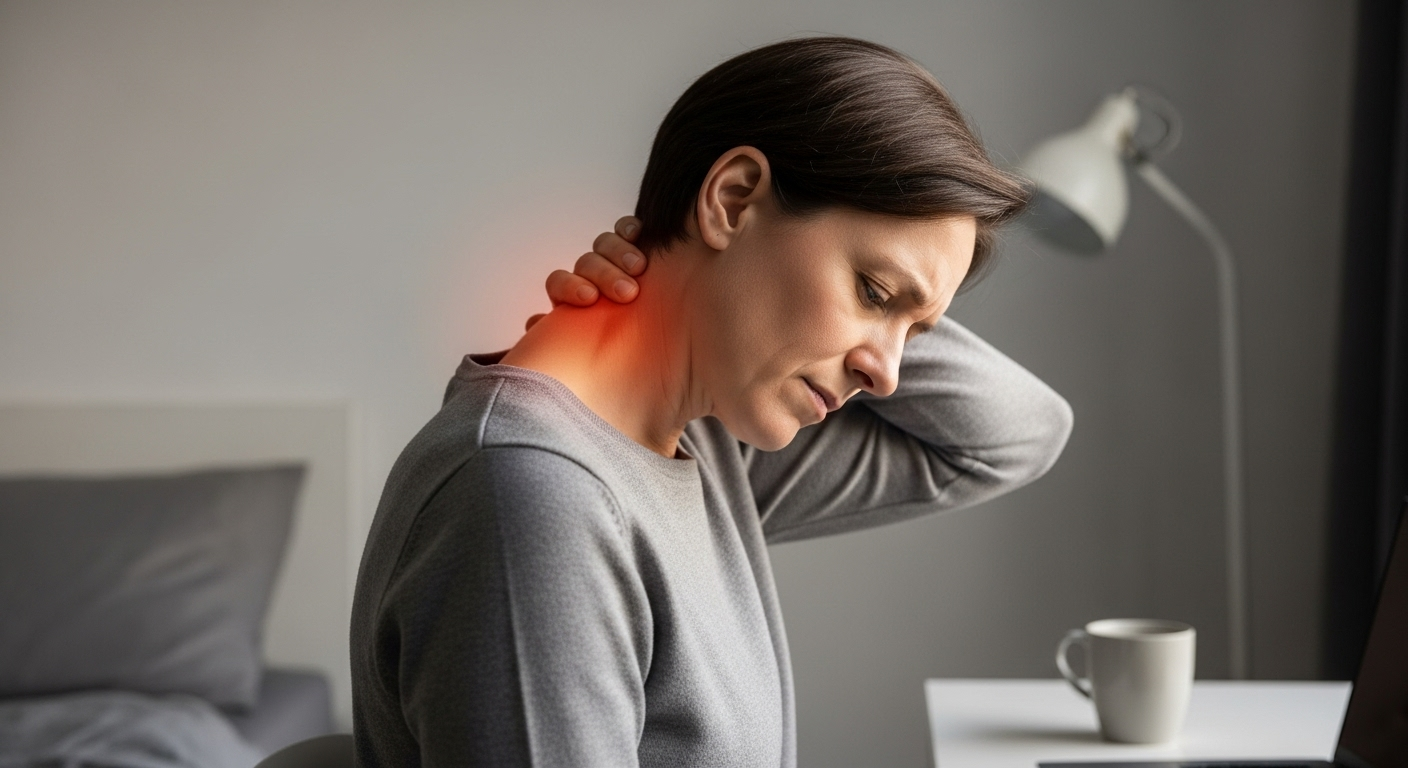
Cervicalgia is pain in the cervical region of the spine. It may spread to the shoulders or the back of the head and is often accompanied by stiffness and reduced range of motion. According to a review in Mayo Clinic Proceedings, 30–50% of adults experience neck pain each year, and about half experience a clinically significant episode during their lifetime. Most episodes settle within a few weeks, but recurrence is common, so prevention matters as well as symptom relief.
What causes neck pain?
- Sustained posture while using screens, sometimes called “tech neck”: the head weighs about 5 kg, and tilting it forward increases the load on the neck muscles. A frequently cited computer model estimates that at a 45° forward tilt, the force on the cervical spine is equivalent to approximately 22 kg. This is a model estimate, not a measured value, and posture alone does not explain every case of pain. Holding any one position for a long time can fatigue the muscles, so movement and regular breaks matter more than maintaining a “perfect” posture.
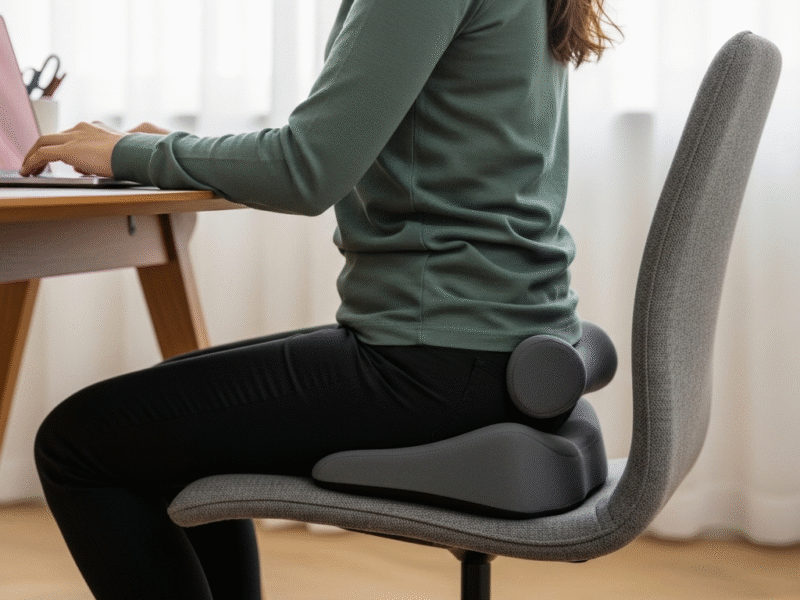
- Prolonged sitting with the arms unsupported and the head held forward.
- Stress: unconscious tension in the trapezius muscles. We explain the connection in Why stress can make your muscles hurt.
- An unsuitable pillow or sleeping in a strained position, such as on your stomach with your head turned.
- Degenerative changes in the cervical spine, sudden movements, or injuries such as whiplash.
What are the symptoms?
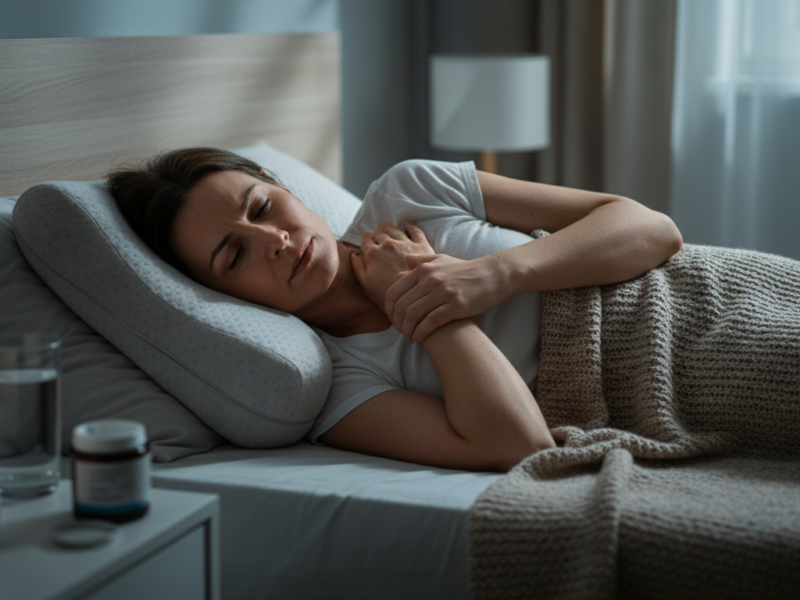
Typical signs of cervicalgia include dull or sharp neck pain, stiffness or difficulty turning the head, tight muscles that feel like tender knots, a headache beginning at the back of the head, and symptoms that worsen toward the end of the workday. Pain may also be most noticeable in the morning. If you often wake with neck pain, your pillow may be one contributing factor; read more in Wake up without neck pain.
When is arm pain a warning sign?
Pain that travels from the neck down the arm, especially with tingling, numbness, or finger weakness, may indicate compression of a nerve root, known as cervical radiculopathy. Arrange a medical assessment. Seek urgent care for neck pain after a fall or accident, fever with a stiff neck, problems with balance or walking, rapidly worsening arm weakness, or severe pain that becomes worse at night.
What can you do at home?
1. Exercise: the strongest evidence
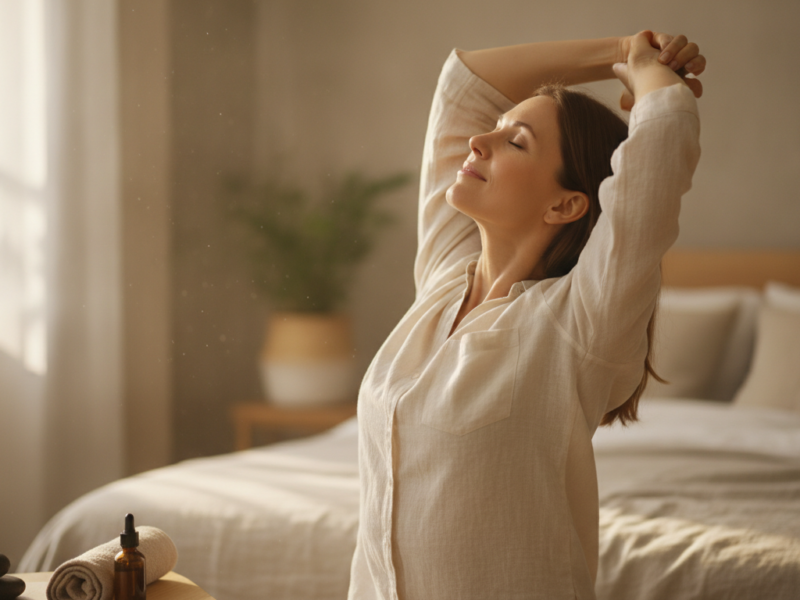
A review in Mayo Clinic Proceedings found that exercise has some of the strongest evidence among interventions for neck pain. One suggested routine takes 3 minutes, 3 times a day:
- Chin tuck: sit upright and slowly draw your chin straight back, as though making a double chin. Hold for 5 seconds and repeat 10 times.
- Side bend: bring one ear toward the same-side shoulder and use your hand to deepen the stretch gently. Hold for 30 seconds on each side.
- Slow rotations: turn your head slowly to the left and right within a comfortable range. Repeat 10 times on each side.
- Shoulder shrugs: raise your shoulders toward your ears, hold for 5 seconds, then relax. Repeat 10 times.

2. Heat and massage
A warm compress or shower may relax tight muscles, while gentle massage around the back of the neck and shoulders may support circulation and ease tension. We describe techniques for home use in Neck and shoulder massage.
3. Adjust your workstation
Position the top of the screen at eye level, support your elbows, and bring your phone toward your face instead of bending your head toward it. Every 30–45 minutes, stand up and roll your shoulders. Our full setup guide is Home office ergonomics.
Sleep and your pillow: the nighttime part of the solution
Your neck needs a comfortable position at night. A pillow should be neither too high nor too low; it should support the natural curve of the neck and keep the spine aligned when viewed from the side:
- Side sleeping: a higher, firmer pillow that fills the space between the shoulder and head.
- Back sleeping: a medium-height pillow that supports the curve of the neck.
- Stomach sleeping: this is generally the least comfortable position for the neck because the head remains turned. If you cannot avoid it, use the lowest pillow that feels comfortable.
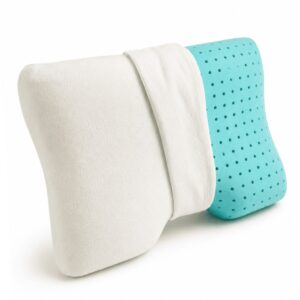
A contoured memory-foam pillow such as the Memory pillow can adapt to the curve of the neck when you sleep on your back or side. For details on choosing one for your sleep position, see our pillow selection guide.
How can you prevent recurrence?
- Do neck exercises regularly, rather than only when pain occurs. Evidence suggests that exercise can reduce recurrences.
- Take breaks from sitting and position your screen at a suitable height.
- Manage stress. Relaxation and breathing exercises may reduce muscle tension.
- Check your pillow. If it is old, sagging, or the wrong height for you, it may no longer support your neck comfortably.
- Stay physically active. Strong muscles around the shoulders help support the neck.
Frequently asked questions about cervicalgia
How long does cervicalgia last?
An acute episode often improves within 1–2 weeks with self-care and settles fully within several weeks. Because neck pain can recur, continue suitable exercises and avoid remaining in one position for too long after you improve. These measures have better evidence than trying to maintain one rigid “correct” posture.
Should I rest when I have neck pain?
Usually not. Complete inactivity and prolonged use of a rigid collar can slow recovery in uncomplicated neck pain. Move your neck gently within a comfortable range, perform gentle stretches, and continue normal daily activities as tolerated. After an injury, follow a doctor’s advice about whether a short period of rest is appropriate.
Heat or cold: which is better for neck pain?
For uncomplicated neck pain caused by tight muscles, many people prefer heat because it can help the muscles relax. Cold may be useful during the first 24–48 hours after a sudden injury. Use whichever feels more helpful, protect the skin from direct heat or cold, and seek medical advice after a significant injury.
Could my pillow be contributing?
If pain is worst in the morning and improves during the day, your pillow may be one contributing factor. Check whether its height suits your sleeping position and whether it still provides support. Pillows more than 2 years old may begin to lose support. For other signs that replacement may be due, read When is it time for a new pillow?.
This content is for information only and does not replace advice from a doctor or physical therapist. Seek medical help if you have any of the warning signs described above.
Related: spinal alignment during sleep.
From our store