Snoring and GERD: How Are They Connected?
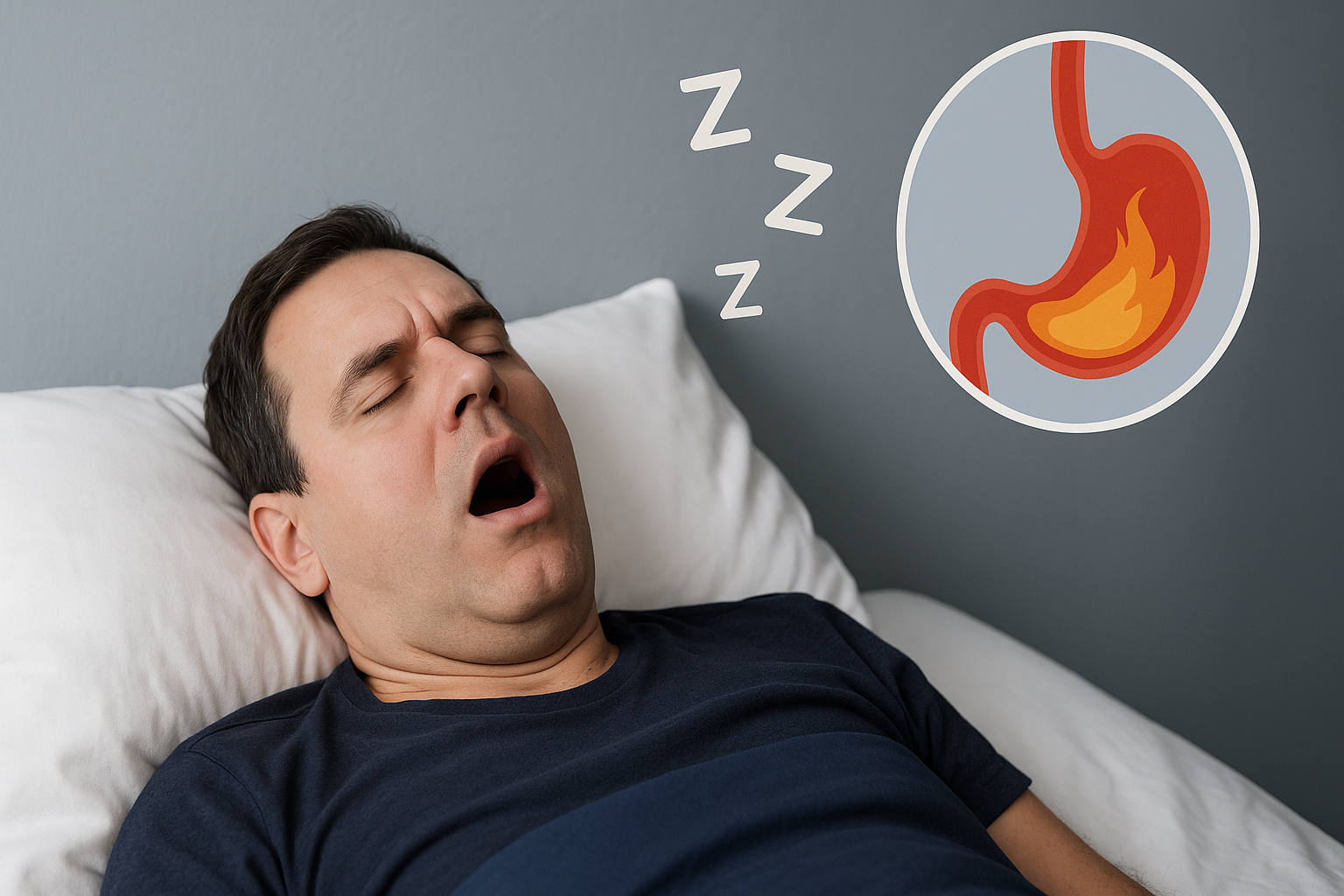
Snoring and gastroesophageal reflux disease (GERD) are considered separate problems, but they often occur together and may aggravate each other. Reflux can irritate the throat and worsen snoring, while pressure changes during snoring or apnea may make it easier for stomach acid to rise. Evidence supports a bidirectional relationship, although it is not necessarily causal in every person. Below, we explain how to distinguish the two and what may help with both.
When it may be sleep apnea rather than snoring alone
Loud, persistent snoring combined with pauses in breathing observed by a partner during sleep and excessive daytime sleepiness is no longer “just” snoring. It may be obstructive sleep apnea (OSA), a condition that requires medical diagnosis, not a pillow. No pillow, including a wedge pillow, treats apnea or replaces an evaluation by a doctor.
According to Mayo Clinic, the most recognizable signs of OSA include loud snoring interrupted by periods of silence followed by sudden gasping, pauses in breathing observed by a bed partner, waking while gasping or choking, morning headaches, a dry mouth or sore throat, marked daytime sleepiness, and difficulty concentrating (Mayo Clinic). If you recognize this pattern in yourself or your partner, the next step is to speak with a doctor rather than experiment with pillows. We explain diagnosis and the role of elevating the upper body in milder forms of apnea in more detail in our article about sleep apnea and elevating the upper body.

Why snoring and GERD often occur together
Research consistently shows that people with GERD are more likely to have sleep-related breathing disorders, and vice versa. Estimates of how often they occur together vary considerably between studies, which suggests a complex, bidirectional relationship rather than a simple cause that applies equally to everyone.
In an analysis of a US hospital database involving more than 22 million hospitalized patients from 2016–2019, 12.21% of patients with GERD had obstructive sleep apnea, compared with 4.79% of those without GERD (p < 0.001) (PMC8980249). A smaller Korean study found a high risk of OSA in 32.8% of participants with non-erosive reflux disease (NERD), compared with 20.4% of healthy controls (PMC4015211). Estimates therefore range from just over 10% to one-third or more, depending on the population and measurement method. There is no single established figure, but the association appears to be real and common.
A genetic analysis using Mendelian randomization found population-level evidence of bidirectional causality: GERD was associated with a higher risk of snoring and OSA, while snoring and OSA were associated with a higher risk of GERD (PMC10716286). This strengthens the evidence for a relationship, but it does not mean that we can always determine which condition came first in an individual. In practice, it often makes sense to address both factors rather than search for a single “true” cause.
How reflux may worsen snoring
When stomach acid reaches the throat during sleep, it can irritate and inflame soft tissues, increase mucus production, and narrow the airway. A narrower, more swollen airway allows the tissues to vibrate more as air passes through, which may make snoring louder and more frequent. This direction of the relationship, in which reflux worsens breathing, is consistent with the genetic analysis cited above.
How snoring and apnea may worsen reflux
During snoring, and especially during apnea, the airway partly or completely closes while the body tries to inhale against the blockage. This creates pronounced negative pressure in the chest, which may exert a suction effect on stomach contents and make it easier for acid to rise through the esophagus. Lying down also removes the help provided by gravity in keeping acid lower, so the effect of both problems may be strongest at night.
How to identify which problem may be more prominent
Because the signs overlap, the following observations may help point you in the right direction. They are a guide, not a diagnosis.
| What you notice | What it is more likely to suggest |
| Snoring becomes noticeably worse after a large or late meal, spicy food, or alcohol in the evening | GERD as a trigger for snoring; see the section on eating with reflux |
| Heartburn wakes you at night or is worse when you lie flat | Typical GERD aggravated by lying down and possibly by snoring |
| Your partner notices pauses in breathing, wheezing, or gasping for air | Possible obstructive sleep apnea; a medical evaluation is needed |
| Hoarseness, a persistent sore throat, or a sour taste in the morning without typical heartburn | Possible silent (atypical) reflux |
| Marked daytime sleepiness despite getting enough hours of sleep | Possible apnea rather than snoring alone |
If typical reflux symptoms predominate without respiratory warning signs, see our article about natural ways to relieve heartburn. If you mainly have atypical symptoms without heartburn, read about silent reflux. If the respiratory signs in the table above predominate, speak with a doctor first about possible apnea.
What may help with both
Because the mechanisms overlap, several measures may help with both problems:
- Elevating your upper body during sleep : elevate the torso from the waist up, not just the head. This may reduce pressure on the airway and help prevent acid from rising. We explain the correct technique and rationale in more detail in our article about sleeping with your upper body elevated; the ComfortLift wedge pillow is designed to support a more comfortable position, not to treat apnea or GERD.
- Leave time between your last meal and bedtime : NHS guidance recommends finishing your last meal at least 3–4 hours before bed, which reduces the amount of stomach contents that could flow upward while you are lying down (NHS).
- Drink less alcohol in the evening : alcohol relaxes both the throat muscles, which can increase snoring, and the lower esophageal sphincter, which can increase reflux (NHS).
- Aim for moderate weight loss, if you have excess body weight. Abdominal pressure on the stomach and a narrower airway are often associated with body weight in both conditions (NHS).
- Sleep on your side rather than your back : this may reduce airway closure associated with snoring, while sleeping on the left side in particular may help keep acid lower. Learn more in our article about side sleeping.
- Review dietary triggers : fatty, acidic, and spicy foods, caffeine, and carbonated drinks worsen reflux for many people. You can find a full list of foods and practical advice in our article about eating with reflux.
None of these measures is a miracle solution, and none replaces medical care when apnea or severe, frequent heartburn is present. Public health sources support them as reasonable first steps.
When to see a doctor
Speak with a doctor if your partner notices pauses in your breathing or gasping for air; you are extremely sleepy during the day despite getting enough hours of sleep; you have heartburn several times a week or take over-the-counter medicine for it more than twice a week; you have difficulty swallowing, lose weight unintentionally, or notice blood in vomit or stool. Chest pain, especially with shortness of breath or pain in the jaw or arm, requires immediate emergency care because it may be a heart attack rather than heartburn.
This article is for informational purposes and is not a substitute for a medical examination, diagnosis, or treatment. Speak with a doctor if you suspect sleep apnea or have persistent GERD.
Frequently asked questions
Can GERD really cause snoring?
It may contribute. Acid that reaches the throat can irritate and narrow the airway, increasing the likelihood of tissue vibration. It is not necessarily the only cause, as anatomy, body weight, and sleeping position can also play a role.
Can snoring cause GERD?
It may contribute. Negative pressure created by a partly closed airway may make it easier for acid to rise. Research indicates a bidirectional relationship, but it is not possible to state with certainty how many cases of GERD are caused specifically by snoring.
Can a wedge pillow solve both problems?
It may help with milder symptoms by elevating the upper body and using gravity. It is not a treatment for obstructive sleep apnea or moderate to severe GERD, both of which require medical care.
When should I suspect sleep apnea rather than “ordinary” snoring?
When snoring is accompanied by observed pauses in breathing, waking while gasping or choking, morning headaches, and marked daytime sleepiness. These are reasons to see a doctor, not simply to buy a pillow.
Can I have GERD without knowing it?
Yes. With silent (atypical) reflux, hoarseness, a persistent sore throat, or a sour taste in the morning may be the only sign, without typical heartburn. Learn more in our article about silent reflux.
From our store