Looking for an Allergy-Friendly Pillow? What to Consider
Do you wake with a blocked nose, watery eyes, or repeated sneezing? Seasonal allergy and infection are possible causes, but allergens in bedding can also contribute. A pillow change may be one part of reducing exposure, although no pillow can diagnose or cure an allergy. An allergy-friendly pillow is best judged by its washable cover, care instructions, fit, and use with an allergen-impermeable encasing. Terms such as “hypoallergenic” are broad marketing descriptions and do not guarantee symptom relief.
Hidden allergens in the bed: what can cause nighttime symptoms?
If symptoms are worse in bed or on waking, house dust mites may be one cause. These microscopic relatives of spiders occur in many homes and thrive in warm, humid textiles, including mattresses, carpets, and pillows. Allergy testing and clinical assessment can help distinguish mites from pollen, pets, mold, or nonallergic rhinitis.
Dust mites feed on shed skin cells. Their body fragments and fecal particles contain proteins that can trigger allergy symptoms in sensitized people when particles become airborne or contact the eyes and nose.
Common symptoms of dust-mite allergy
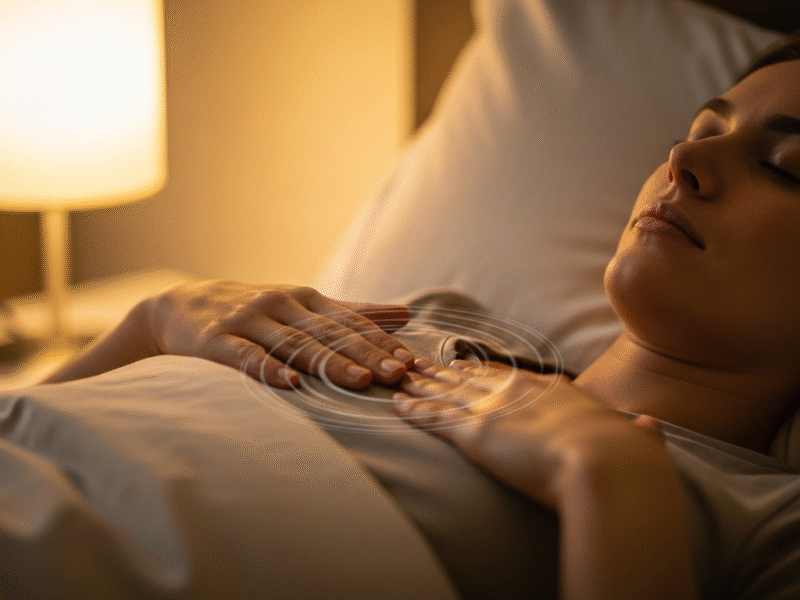
Dust-mite allergy can resemble hay fever and may be most noticeable after time in bed. Symptoms can include:
- sneezing and a runny nose;
- nasal congestion and difficult nasal breathing;
- itchy, red, or watery eyes;
- cough or an itchy throat;
- eczema flares in some people; and
- worsening asthma symptoms, including wheezing or chest tightness.
Ongoing exposure can contribute to persistent symptoms and disrupted sleep in sensitized people. Reducing humidity, washing bedding, and using tested allergen-barrier encasings may reduce exposure, but medical treatment may still be needed.
What is an allergy-friendly pillow, and how does it work?
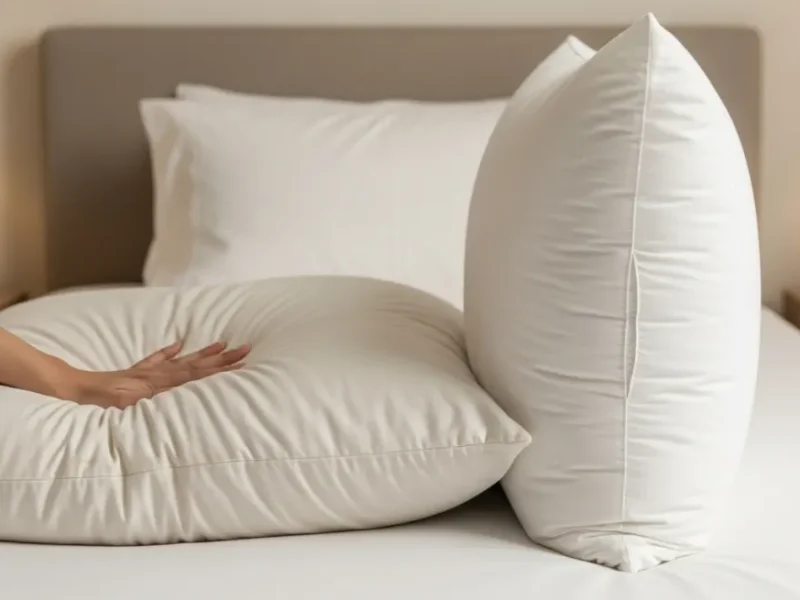
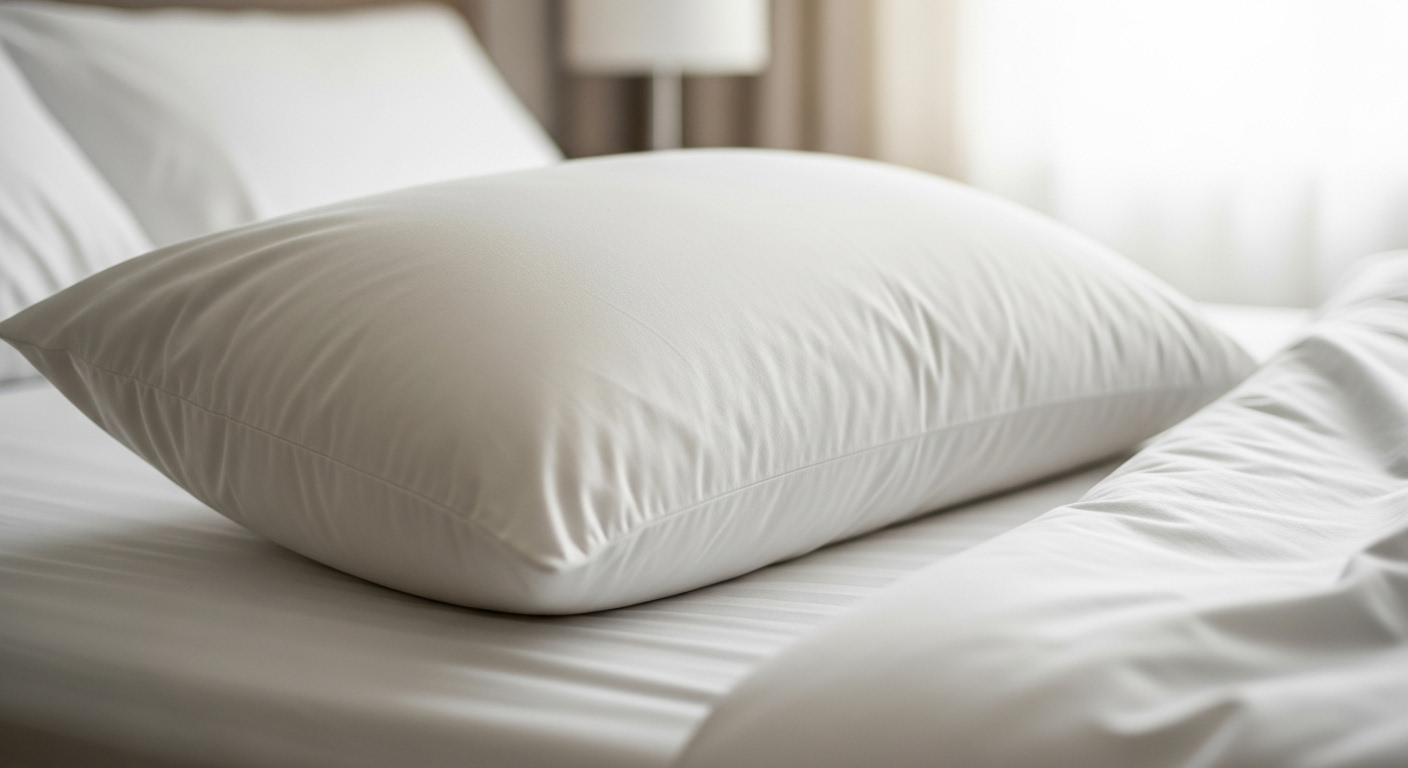
An allergy-friendly pillow is usually a pillow marketed for people with allergies. The label itself does not prove that it prevents mites, mold, or pollen. Practical features include a tightly woven allergen-barrier cover, washable bedding components, moisture control, and materials the user tolerates.
Feather, synthetic, foam, and latex pillows can all accumulate allergens from the surrounding environment. Evidence does not support assuming that every natural filling is worse or every synthetic filling resists mites. A certified allergen-impermeable encasing and regular care are more directly relevant than the filling alone.
Which allergy-friendly pillow should you buy? A material guide
Choose a pillow that is comfortable, suitable for your sleep position, and maintainable according to its label. Material affects feel, heat, and cleaning options, but does not by itself establish allergy protection.
Memory-foam pillows
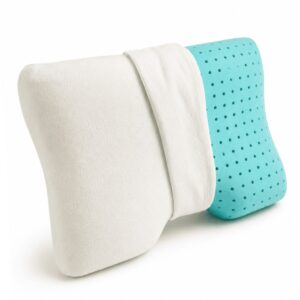
Memory foam was originally developed from aerospace research and is now widely used in pillows. Its dense structure changes feel and support, but it should not be described as naturally dust-mite-proof. A washable, tightly woven cover or allergen encasing is still useful. A memory-foam allergy-friendly pillow may contour around the head and neck. Comfort and support depend on pillow height, firmness, sleep position, and individual anatomy. One example is the Anatomical pillow – Memory. It may feel supportive, but it has not been established as a treatment for allergy, neck pain, shoulder pain, or spinal alignment.
Pillows with bamboo-derived fabric
Bamboo-derived viscose may feel soft and breathable, but finished fabric should not automatically be called naturally antibacterial or hypoallergenic. Products containing bamboo-derived fabric vary in weave, finish, filling, and moisture handling. Check the full composition, independent certifications, and care label rather than relying on “bamboo” claims.
Synthetic-fiber pillows (polyester or microfiber)
Synthetic-filled pillows are common and often affordable. Their main practical advantage is that some can be machine-washed. Use the temperature on the care label; some products tolerate 60°C, which can kill mites, but washing and rinsing are also needed to remove allergens.
Choosing the best allergy-friendly pillow for your needs
Along with material, consider who will use the pillow, sleep position, comfort, washing instructions, and whether a separate allergen-barrier encasing fits securely.
Allergy-friendly pillows for children
Children with suspected allergy benefit from an accurate diagnosis and a broader bedroom plan. Pillow choice should also follow age-appropriate safe-sleep guidance. Allergy-friendly pillows for children should be:
- An appropriate height: Choose a height suited to the child’s age and sleep position. Babies should sleep on a firm, flat surface without a pillow.
- Breathable and comfortable: Choose materials and construction that do not cause overheating and meet applicable safety standards.
- Washable: Follow the care label and use a washable cover or allergen-barrier encasing.
No pillow material can guarantee prevention of mites or bacteria. For a child with asthma or persistent symptoms, ask a clinician about allergy management.
Comparison table
To help compare allergy-friendly pillow options, here is a practical overview of common materials.
| Material | Mite control | Support | Breathability | Care |
|---|---|---|---|---|
| Memory foam | Depends mainly on encasing and cleaning, not foam alone | Varies with shape and firmness | Moderate to good, depending on construction | Wash the removable cover; follow label for the foam core |
| Bamboo-derived cover | Depends on weave, encasing, and care rather than a “natural” claim | Depends on the filling | Varies with shape and firmness | Wash the removable cover; follow label for the foam core |
| Synthetic fiber | Depends on washing, drying, and encasing | Moderate and varies by fill | Depends on washing, drying, and encasing | Some models are fully machine-washable |
| Latex | Depends mainly on encasing and cleaning, not foam alone | Not mite-proof; use a suitable encasing if needed | Depends on washing, drying, and encasing | Usually spot-clean or hand-clean only; follow the label |
For a complete guide to pillow choice by sleep habits, read How to Choose the Right Pillow: A Practical Guide.
Care and maintenance: maintaining allergen control
Buying a pillow is only one step. Regular care of the whole sleep environment matters more than a marketing label.
Washing an allergy-friendly pillow: Always follow the manufacturer’s care label.
- Synthetic-fiber pillows: Many are machine-washable, but only use 60°C if the label permits it. A hot wash may kill mites; thorough washing removes allergen particles.
- Memory-foam and latex pillows: The cores usually cannot be machine-washed. Wash the removable cover regularly and air the core as directed, while keeping it dry.
Additional ways to reduce allergens:
- Wash sheets and pillowcases weekly, using 60°C when the fabric and local guidance allow.
- Ventilate the bedroom and manage indoor humidity; outdoor air may be unhelpful during high-pollen periods.
- A vacuum with a well-sealed HEPA filtration system can reduce redistribution of captured particles.
Find more practical advice in our guide, 13 Ways to Reduce Allergens at Home.
Pillow price and value
Prices vary by material, construction, certification, and brand. Synthetic pillows are often less expensive, while memory foam or latex may cost more. Higher price does not prove better allergen control, durability, or ergonomic benefit. When considering an allergy-friendly pillow , prioritize verifiable specifications, care requirements, comfort, and return policy over health promises. Better sleep may follow effective allergy management, but a pillow alone cannot guarantee it.
Conclusion: take a practical step toward better sleep
If bedding contributes to symptoms, a washable cover, tested allergen encasing, humidity control, and regular cleaning may reduce exposure. Choose a pillow for comfort and maintainability, and seek medical advice for persistent nasal, eye, skin, or asthma symptoms. Replacing a pillow alone cannot promise symptom-free sleep.
From our store