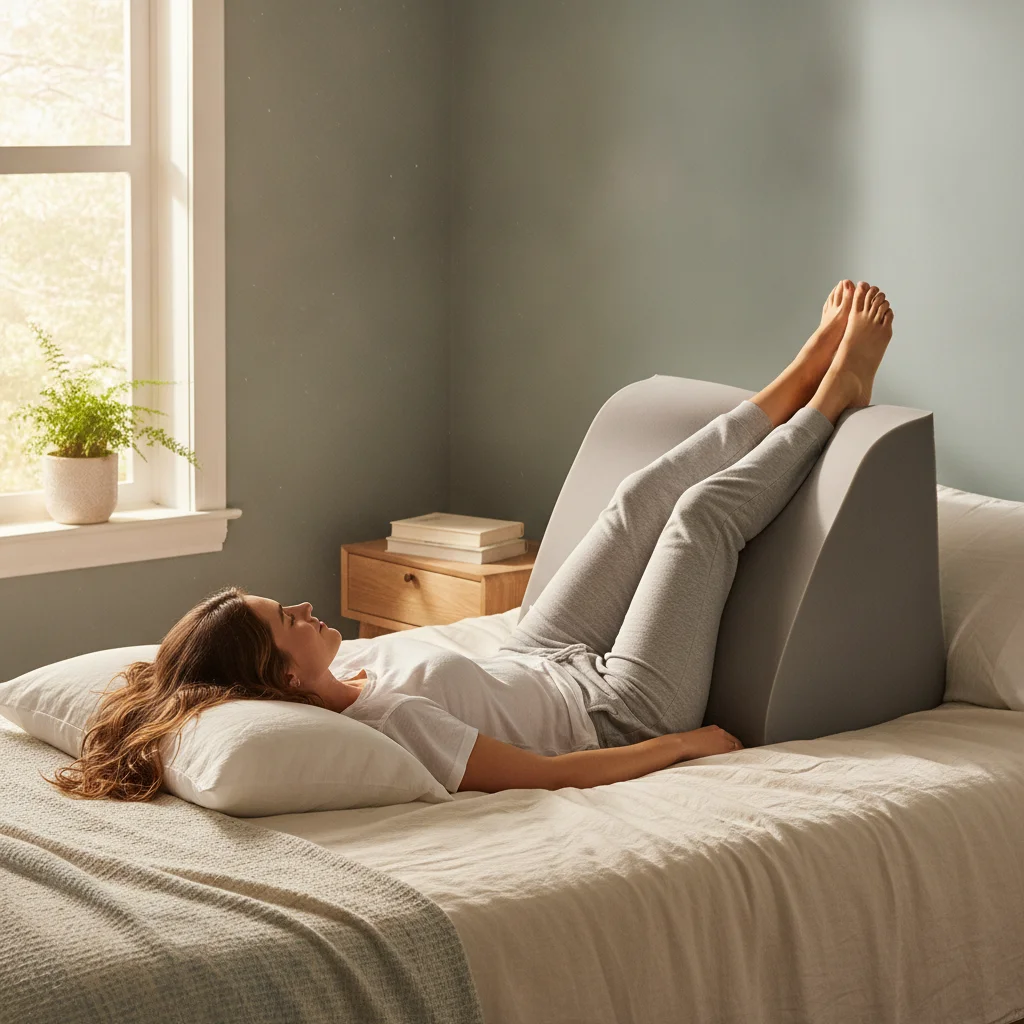
Leg elevation and varicose veins: a practical guide
Leg elevation may temporarily ease swelling or heaviness associated with varicose veins and chronic venous insufficiency. One commonly cited position is lying down with the feet above heart level, supported along the lower legs. Advice such as 15 to 20 cm of elevation for 15 to 30 minutes several times a day is only a general example, not a prescription for everyone.
This guide explains how elevation affects venous pressure, how to support the legs comfortably, how clinical schedules differ, and which symptoms need medical assessment rather than self-care.
Why do elevated legs help with varicose veins?
When the legs are raised while lying down, gravity can assist venous return and may temporarily reduce pressure in the leg veins. This can ease swelling, heaviness, or aching for some people. It does not work for every cause of swelling and does not remove varicose veins.
Varicose veins are enlarged, twisted veins beneath the skin. They often develop when vein valves do not keep blood moving upward efficiently, allowing blood to pool and pressure to rise. A review in StatPearls (NCBI) reports that varicose veins affect up to 30% of adults, although estimates vary by population and definition.
Leg elevation can use gravity to assist venous return. Cleveland Clinic advises raising the legs above heart level several times during the day so that »gravity can help the blood flow from your lower legs back toward your heart«. For chronic venous insufficiency, the MSD Manual: »Elevating the leg above the level of the heart decreases pressure in the veins.«
Leg elevation has a limited role. MSD Manual states that elevation »relieves the symptoms of varicose veins, but does not prevent new ones from forming«. It is a comfort and symptom-management measure, not a cure. For broader risk-reduction guidance, see our article on prevention of varicose veins. The sections below focus on comfortable positioning.
How high should you elevate your legs?
For venous symptoms, guidance often recommends placing the feet above heart level while lying down. A 15 to 20 cm rise may be comfortable in some setups, but the exact height depends on the body, surface, and support. Avoid positions that strain the knees, hips, back, or breathing.
Elevation above the heart creates a favorable gravity gradient for venous return, but a lower position may still feel comfortable and is not necessarily useless. The clinical effect of an exact height has not been established for every person. The UK NHS advises people with varicose veins: »raise your legs when you can, for example, lie down and rest them on pillows«.
Practical positioning points:
- Use heart level as a guide. When tolerated, place the feet slightly above the chest. A near-vertical position is unnecessary and may be uncomfortable.
- Support the lower legs, not only the feet. Support the calves, ankles, and feet so that the knees and hips remain comfortable.
- Aim for a comfortable slope. Use an even incline rather than a sharp pressure point behind the knees.
- Keep the lumbar region relaxed. If elevation strains the lower back, adjust the height, bend the knees slightly, or stop and choose a more comfortable position.
How long and how often should you elevate your legs?
There is no single schedule for every person or every cause of swelling. Some clinical guidance for chronic venous insufficiency uses 30 minutes or longer at least three times a day, while shorter sessions may be more practical. Follow condition-specific advice and stop if the position causes symptoms.
One specific schedule comes from Cleveland Clinic for chronic venous insufficiency: elevation above the heart »may help reduce pressure in your leg veins«, with sessions of »30 minutes or longer at least three times a day«. This is condition-specific guidance, not a proven universal dose for all varicose veins or leg swelling.
Times when elevation may feel useful include:
- After standing or sitting for a long time: after prolonged standing or sitting, when swelling or heaviness tends to be more noticeable.
- In the evening before bed: a comfortable 20 to 30 minute rest may be practical, but duration can be adjusted.
- During rest during the day: support the legs comfortably rather than leaving them dependent for the entire break.
- During overnight rest: The MSD Manual notes that swelling related to venous insufficiency may lessen overnight because the »veins empty well« while lying down. Sleeping with added elevation is optional and may be unsuitable for some conditions or after some procedures.
Elevation should not replace regular movement. Walking and calf-muscle activity also support venous return. Avoid prolonged bed rest unless prescribed. Learn more in our guide to tired and heavy legs.
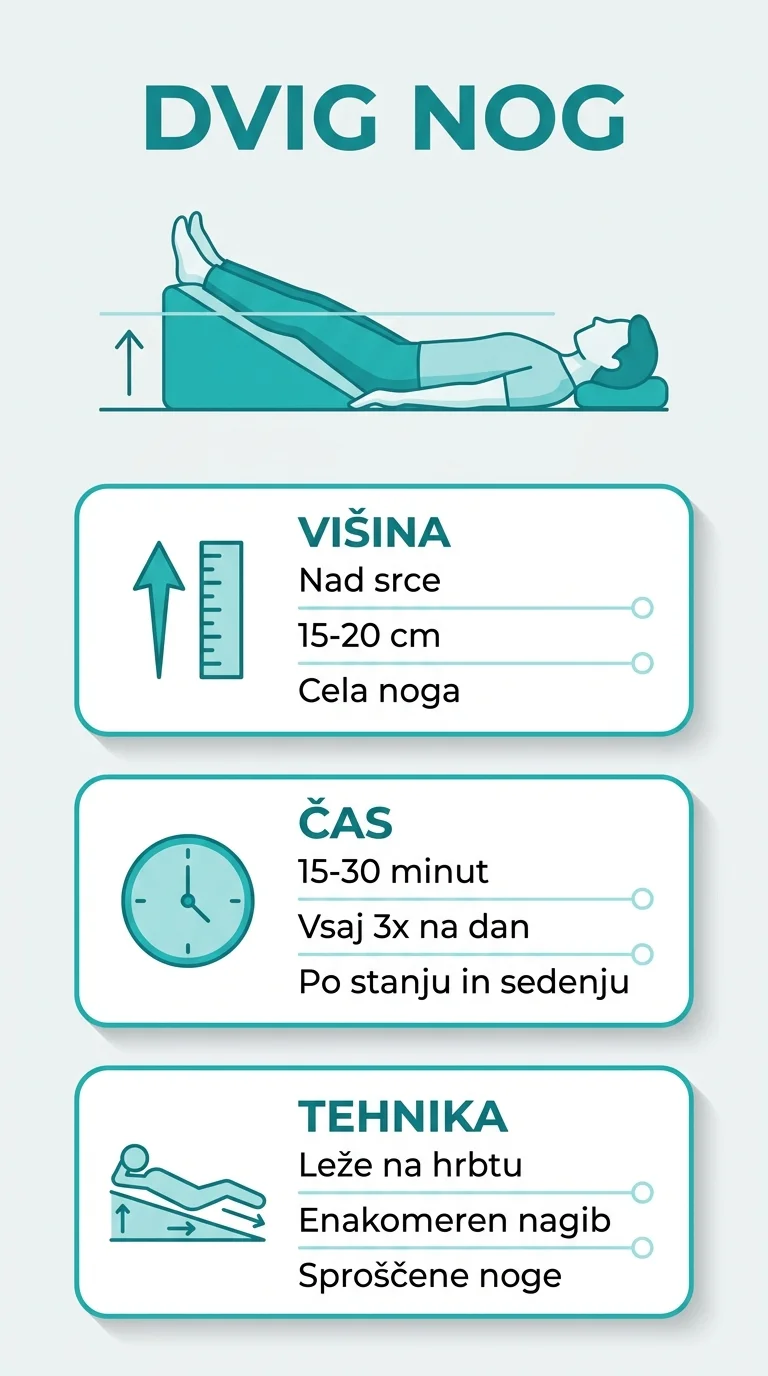
The infographic below summarizes common positioning guidance and warning signs that require medical advice.
How do you elevate your legs comfortably?
Lie in a comfortable position and support the lower legs on a stable surface so the muscles can relax. If advised for venous symptoms, position the feet above heart level without forcing the hips, knees, or lower back.
Step-by-step procedure:
- Lie down on a flat surface. Use a bed, sofa, or floor surface that supports your back comfortably.
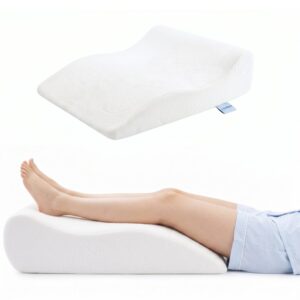
- Place support beneath the lower legs. A wedge pillow, firm pillows, or a folded blanket can be used if they remain stable and do not create a pressure point.
- Check the height. If advised, place the feet above heart level while keeping the knees and lower back comfortable.
- Relax your legs and feet. Let the support carry the legs without tensing the muscles.
- Stay for the advised or comfortable duration. Breathe normally. Gentle ankle movements may be comfortable if they are safe for you and do not conflict with postoperative or medical instructions.
- Get up gradually. Lower the legs and rise gradually if you are prone to dizziness.
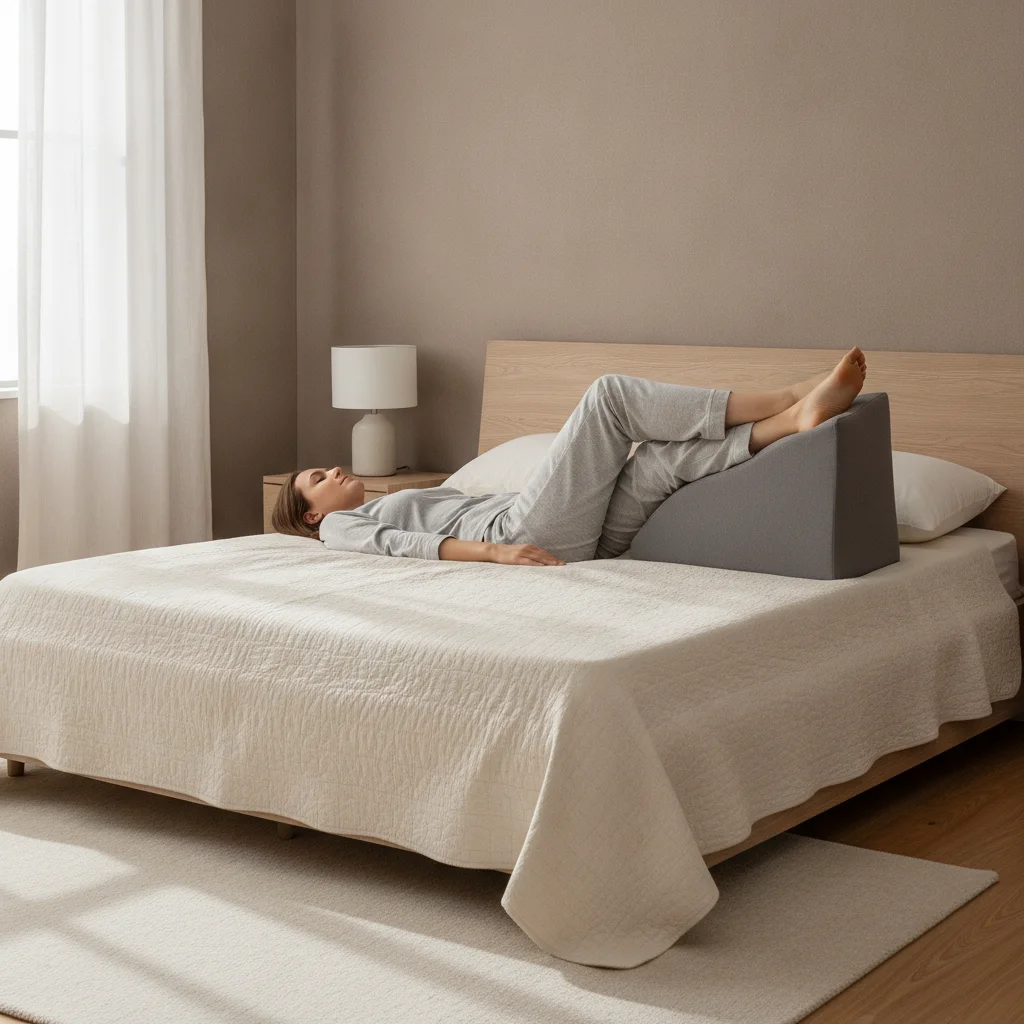
A purpose-made wedge is one way to create a stable incline, but folded bedding can work if it remains secure and comfortable. One product option is the Medical leg support pillow . Its wedge shape and firm foam are designed to support the lower legs in an elevated position. It is a positioning aid and does not treat varicose veins, swelling, or their cause. Browse more support pillows in our category.
Wedge pillow, folded pillows, or legs against a wall: comparing options
Each method creates a different angle and pressure pattern. Choose a stable, comfortable position and follow clinical instructions when elevation is part of postoperative or medical care.
The table below compares the most common ways of lifting the legs.
| Method | Advantages | Limitations | Possible use |
|---|---|---|---|
| Wedge pillow for legs | Stable incline and support along the lower legs, depending on its size and firmness. | Requires space and may not fit every body or sleep position. | Regular resting position if comfortable; overnight use only when appropriate. |
| Folded cushions or a rolled-up blanket | Available at home and easy to adjust. | May shift or flatten and create uneven pressure. | Short trials or occasional elevation. |
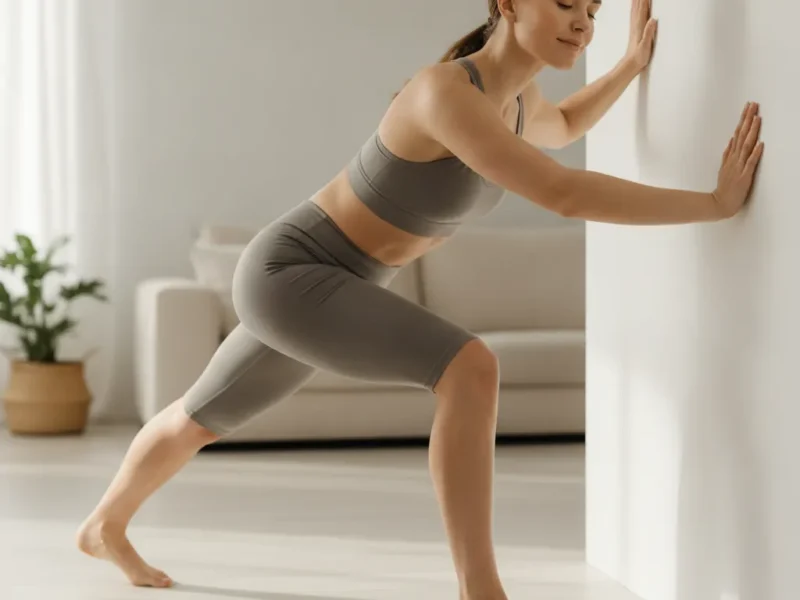
| Legs resting against the wall | Creates a steeper angle without a product. | Can stretch the back of the legs, strain the hips or back, and is unsuitable for sleep. | A brief position change if comfortable. |
| Footstool while sitting | Convenient at a desk and changes the leg position. | Usually remains below heart level and does not provide the same gravity gradient. | Position changes when lying down is impractical. |
The NHS advises: »do not sit or stand for long periods«, and raise the legs when possible. A footstool can improve comfort but is not equivalent to elevation above heart level.
What mistakes should you avoid?
Common problems include an unstable setup, uncomfortable pressure, and deciding that elevation »does not work« after an arbitrary three-minute trial. Adjust or stop if the position causes pain, numbness, tingling, breathlessness, dizziness, or worsening swelling.
- An uncomfortable height. Higher is not always better. Use the position advised for your condition and keep it comfortable.
- Pressure only behind the knees. Avoid a hard edge or concentrated pressure behind the knees. Support the lower legs evenly without compressing the skin.
- A rigid duration. The 15 to 30 minute range is a practical example, not a minimum proven for everyone. Follow personal medical guidance.
- Muscle tension or discomfort. Change the setup or stop if you must tense the legs to hold the position.
- Elevation without movement. Elevation can complement regular movement but should not replace it unless a clinician has prescribed rest. Also see promotion of venous circulation.
After surgery, follow the surgical team’s instructions on position, height, duration, movement, and blood-clot prevention. Generic elevation advice does not override those instructions. See our article on sleeping after hip surgery.
For an easier understanding, also watch the video on this topic:
When should you see a doctor?
Leg elevation is not a treatment for the underlying cause. Seek medical advice for painful or rapidly changing varicose veins, persistent or unexplained swelling, skin changes, or wounds. People with heart failure, kidney or liver disease, diabetes-related foot problems, arterial disease, reduced sensation, or recent surgery need condition-specific advice.
Seek urgent medical care for:
- sudden swelling, pain, redness, or warmth in one leg, which can indicate deep vein thrombosis;
- an ulcer, wound, or skin-color change around the ankle that is not healing;
- bleeding from a varicose vein that does not stop with firm direct pressure and elevation;
- leg swelling with sudden breathlessness, chest pain, coughing blood, fainting, or collapse. Call local emergency services immediately.
If swelling persists, returns frequently, or worsens despite rest, a healthcare professional should assess the cause.
Frequently asked questions
How high should I elevate my legs?
Clinical advice often uses feet above heart level while lying down. A 15 to 20 cm rise is only an example and may not place every person above heart level. Choose a stable, comfortable position and follow advice for your condition.
How many times a day should I raise my legs for varicose veins?
Cleveland Clinic gives 30 minutes or longer at least three times daily for chronic venous insufficiency. That is condition-specific guidance, not a universal prescription for every person with varicose veins.
Does raising the legs get rid of varicose veins?
No. Elevation may temporarily ease heaviness, aching, or swelling and reduce venous pressure, but it does not remove varicose veins or reliably prevent new ones. A healthcare professional can discuss treatment options.
Can I sleep all night with my legs raised?
Some people find a gentle incline comfortable, but overnight elevation is not necessary or appropriate for everyone. Follow postoperative or condition-specific advice, keep the position stable, and stop if it causes pain, numbness, breathlessness, or sleep disruption.
Is it better to rest your legs against the wall or use a wedge pillow?
Neither is universally better. A wall position creates a steeper stretch and may strain the legs, hips, or back. A wedge can provide steadier support but must fit the person and bed. Use whichever safe position is comfortable and follows any clinical advice.
This content is for informational purposes and does not replace professional medical advice. For varicose veins, persistent swelling, or other health issues, consult a doctor.
From our store