
Nighttime Leg Cramps: Causes and What May Help
Nighttime leg cramps are sudden, painful, involuntary muscle contractions, usually in the calf or foot, that occur during sleep or rest and last from several seconds to several minutes. The exact cause is often unknown. Muscle fatigue, pregnancy, age, some medicines, and certain health conditions may contribute. Gentle stretching usually helps release an active cramp.
This article explains nighttime leg cramps, how they differ from restless legs syndrome, immediate relief, evidence for stretching and magnesium, the uncertain role of hydration and leg position, and reasons to see a doctor.
What are nighttime leg cramps?
Nighttime leg cramps are sudden, brief, painful contractions in a leg muscle during sleep or rest. They most often affect the calf or foot and may pull the foot and toes downward. Most isolated episodes are benign, although persistent or unusual symptoms need assessment.
The US medical reference MSD Manual defines a cramp as a sudden, brief, involuntary, and usually painful contraction of a muscle or group of muscles. Nocturnal cramps commonly affect the calf and foot and can pull the foot and toes downward.
They are common. According to the American Academy of Family Physicians journal American Family Physician , up to 60% of adults report having experienced nighttime leg cramps, and an episode lasts about nine minutes on average, though many are shorter. Frequency rises with age and may be slightly higher among women. The UK NHS also describes cramps as common, usually harmless, and brief, with many occurring at night or during rest.
What causes nighttime leg cramps?
The exact cause often remains unknown. Age, pregnancy, muscle fatigue, some medicines, nerve or metabolic conditions, and sustained foot position may contribute. Dehydration and electrolyte abnormalities can cause cramps in particular circumstances, but they do not explain most idiopathic nighttime cramps in otherwise healthy adults.
Possible triggers and risk factors include:
- Tired or heavily loaded muscles: Prolonged standing, walking, or intense exercise may precede cramps for some people. The NHS includes overexertion during exercise among possible causes.
- Dehydration: Substantial fluid loss, especially with heat or exercise, can contribute to cramping, but ordinary nighttime cramps are not reliably prevented by drinking extra water. MSD Manual lists dehydration as a risk factor in relevant settings.
- Electrolyte abnormalities: Low blood levels of potassium, magnesium, or calcium can cause cramps, but routine idiopathic nighttime cramps usually do not indicate a mineral deficiency.
- Sustained position or neurological excitability: Holding the foot pointed downward shortens the calf and may make a cramp easier to trigger. Poor circulation should not be assumed from cramps alone; vascular disease usually causes a different symptom pattern.
- Age: Both the NHS and MSD Manual note that cramps become more common in middle-aged and older adults.
- Pregnancy: The NHS lists pregnancy, usually later pregnancy, as a common setting for cramps.
- Some medicines and health conditions: The NHS lists medicines such as statins and diuretics and excessive alcohol use among possible contributors. Do not stop prescribed medicine without advice.
American Family Physician notes that ordinary nighttime cramps have not consistently been associated with dehydration or electrolyte disturbances involving potassium, sodium, or magnesium and may relate more to muscle fatigue and nerve excitability. Hydration and a balanced diet support general health but are not guaranteed treatments.
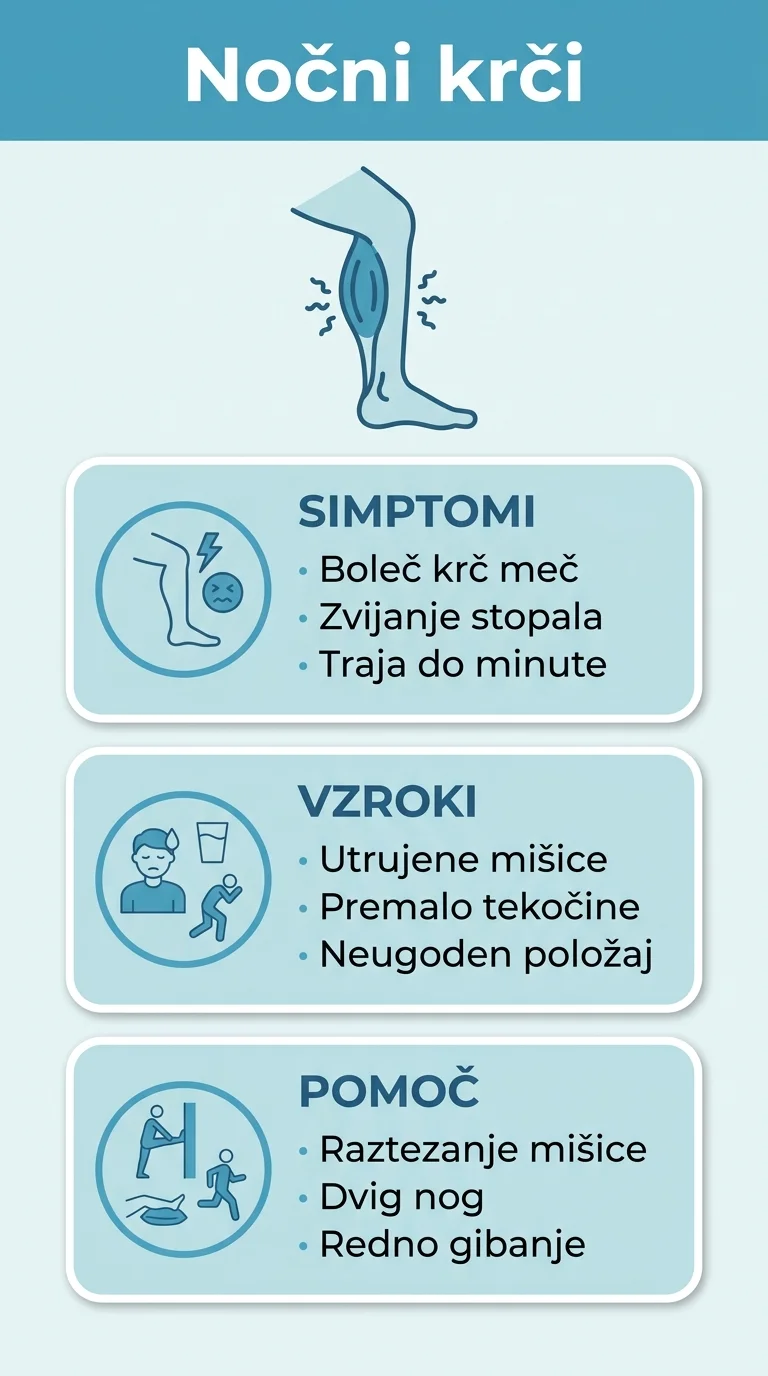
The infographic summarizes common symptoms, possible contributors, and ways to ease an episode.
Are nighttime cramps the same as restless legs syndrome?
No. A nighttime cramp is a painful, palpable muscle contraction that temporarily locks the leg. Restless legs syndrome causes an uncomfortable urge to move, usually without a hard painful contraction.
Both occur in the evening or at night, so they are sometimes confused. A cramp is sudden and painful and often eases when the muscle is stretched. Restless legs syndrome causes crawling, tingling, or itching sensations during rest that improve with movement.
| Feature | Nighttime leg cramps | Restless legs syndrome |
|---|---|---|
| Main sensation | Sharp, painful muscle tightening | Unpleasant crawling, itching, or tingling |
| Muscle | Palpably hard and contracted, usually in the calf | Not forcibly contracted |
| What provides relief | Stretching and gentle massage | Movement and walking |
| Duration | Several seconds to several minutes | Persists or recurs while the legs remain at rest |
If you mainly experience restlessness and an urge to move rather than painful contractions, read how to calm restless legs syndrome. The conditions can coexist, so seek assessment for persistent uncertainty.
What helps nighttime leg cramps?
During a cramp, gently stretching the affected muscle is the most consistent immediate measure. Massage may also help. Regular calf stretching may reduce recurrence for some people, but prevention evidence is limited. Medicines are rarely used and require medical review.
What can you do yourself?
During a cramp
Straighten the leg and gently pull the toes toward you for a calf cramp, or stand carefully and place weight through the affected leg if safe. The NHS says stretching and massage may ease pain and that standing on the cramped leg may help. MSD Manual also notes that stretching often releases a cramp.

To reduce recurrence
- Stretch the calves regularly: The NHS says regular calf stretching may reduce cramps. Try a few gentle minutes in the evening, stopping if it causes pain or instability.
- Maintain an appropriate fluid intake: Replace fluid lost through heat or physical activity. Extra fluid does not reliably prevent idiopathic nighttime cramps and may be restricted for some heart or kidney conditions.
- Stay active during the day: Regular walking and movement help maintain strength and mobility, although they do not guarantee prevention.
- Keep the feet comfortable: Avoid bedding or a sleep position that forces the toes downward for long periods if you notice that this triggers cramps.
What about magnesium?
Magnesium is often promoted for cramps, but a large Cochrane systematic review concluded that supplementation is unlikely to provide clinically meaningful prevention for older adults with skeletal muscle cramps. Differences from placebo were small and not statistically important. Evidence for pregnancy-related cramps is mixed.
For otherwise healthy adults with idiopathic nighttime cramps, magnesium is not a reliable treatment. Supplementation can cause side effects and may be unsafe with kidney disease or interact with medicines. Quinine also carries potentially serious risks and is not routinely recommended for leg cramps; any exceptional use requires a clinician.
Can leg elevation or positioning reduce nighttime cramps?
A neutral, comfortable foot position may prevent sustained calf shortening for people whose cramps are triggered by pointed toes. Evidence that leg elevation itself prevents nighttime cramps or improves the relevant blood flow is limited.
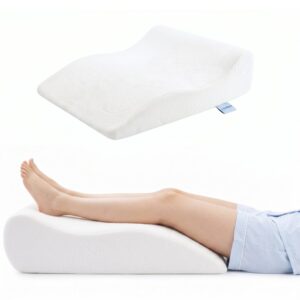
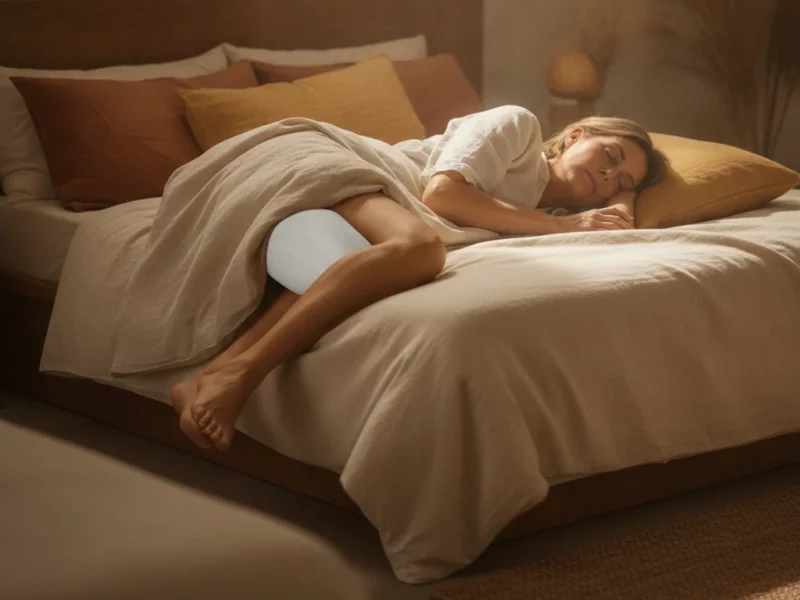
A small support beneath the calves may feel comfortable and help keep bedding from forcing the feet downward, but it should not restrict movement or place pressure behind the knees. Positioning is an optional comfort measure rather than a proven cramp treatment.
One product intended for leg support is the Medical leg pillow, a contoured wedge that elevates the legs and supports the calves. It may help with comfort or a feeling of heavy legs, but it has not been shown to prevent nighttime cramps or treat an underlying condition. See other support pillows for positioning options..
Leg elevation may also be used for swelling or heaviness. Read our guidance on tired, heavy legs and on supporting venous circulation in the legs. These are separate symptoms and improved circulation should not be promised as a cure for idiopathic cramps.
When should you see a doctor?
Most occasional nighttime cramps are benign. Consult a doctor if cramps are frequent, severe, disrupt sleep, or occur with other symptoms, because a health condition or medicine may contribute.
See a doctor if:
- cramps regularly disrupt sleep or occur almost every day;
- an episode lasts a long time, such as more than 10 minutes, or is exceptionally painful;
- the leg is swollen, warm, red, or discolored, especially on only one side;
- weakness, numbness, or tingling persists after the cramp; or
- cramps began after a new medicine such as a statin or diuretic. Do not stop it without advice.
A clinician may examine the leg, review medicines, and order tests when indicated. The aim is to identify treatable causes and distinguish cramps from vascular, neurological, or other problems.
Frequently asked questions
Why do I get a leg cramp at night?
The exact cause is often unknown. Sustained plantar flexion, age, pregnancy, muscle fatigue, some medicines, and certain health conditions may contribute. Dehydration or electrolyte disturbance matters in specific settings but is not the usual explanation for idiopathic nighttime cramps.
Does magnesium help nighttime leg cramps?
Evidence does not support magnesium as a reliable treatment for otherwise healthy older adults with idiopathic cramps. The Cochrane review found it unlikely to provide clinically meaningful prevention. Pregnancy evidence remains mixed.
What should I do as soon as a cramp starts?
Gently stretch the muscle. For a calf cramp, straighten the leg and pull the toes toward you, or stand and bear weight if safe. Follow with gentle massage. Relief often occurs within seconds to minutes.
Does elevating the legs help nighttime cramps?
A supported neutral foot position may feel comfortable, but evidence that elevation prevents cramps is limited. Use it as an optional comfort measure alongside stretching, and seek advice for frequent symptoms.
Are nighttime cramps a sign of serious disease?
Usually not. Seek assessment if cramps are very frequent or prolonged or occur with persistent weakness, numbness, swelling, warmth, redness, or discoloration. Sudden one-sided swelling with pain needs urgent medical assessment.
This content is informational and does not replace medical advice. Consult a doctor or pharmacist for frequent or severe cramps or other concerning symptoms.
From our store