
Sleeping After Hip Surgery: Safe Positions
Sleep after hip surgery can be painful and uncertain. Pain, swelling, and concern about a wrong movement can interrupt rest when the body needs it for recovery. Sleeping on your back is the safest general position. Sleeping on the non-operated side may be allowed only with a pillow between the knees to prevent the legs from crossing. This guide explains why, which positions to avoid, and which signs require attention, but one rule has no exceptions: instructions from your surgeon and physical therapist always take priority over anything you read here.
Why is sleeping after hip surgery so difficult?
Recovery after total hip replacement, which many people undergo after years of pain from advanced hip osteoarthritis , takes time, especially at night. Sleep can be difficult for several reasons:
- Pain and swelling: the surgical area is painful and swollen after the procedure. At night, when the body is still, pain may feel more intense.
- Limited mobility: your surgeon or physical therapist will tell you which movements to avoid to reduce the risk of prosthetic joint dislocation. This may temporarily rule out some of your usual sleeping positions.
- Concern and tension: worry about harming the new joint with a wrong movement is common and can make falling asleep more difficult.
- Muscle weakness: the muscles around the operated hip are weaker, making a stable position harder to find.
Sleep problems are an expected part of recovery. Suitable positioning and support may ease them.
First: which instructions apply?
Precautions after hip surgery are not uniform. They vary according to the surgical approach (posterior or anterior) and the surgeon or hospital. Some hospitals advise sleeping on your back for two weeks, while others advise six. Some allow sleeping on the operated side sooner than others. These are different instructions for different patients rather than a contradiction. This article describes commonly used general recommendations. If anything here differs from what your surgeon or physical therapist told you, follow their instructions rather than this article.
The best sleeping positions after hip surgery
Two positions are commonly recommended during the first few weeks after surgery.
Sleeping on your back: the most commonly recommended position
Sleeping on your back is generally considered the safest position during early recovery because it keeps the hip neutral and reduces unintended rotation or crossing of the legs. According to the American Academy of Orthopaedic Surgeons (AAOS/OrthoInfo) , your doctor may tell you to avoid certain positions or sleep with a pillow between your legs for a period of time. The duration depends on your surgery. For comfort, place a small pillow or rolled towel beneath the knees to ease tension in the lower back.
Sleeping on the non-operated side: use caution and a pillow between the knees
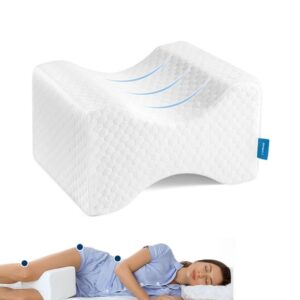
If you normally sleep on your side, whose general benefits we discuss in a separate article , additional rules apply after hip surgery. Lie on the non-operated side only after your surgeon allows it, and place a firm pillow between the knees and ankles to prevent the operated leg from falling forward and crossing the other leg. This helps maintain pelvic and hip alignment. Designed for this purpose is the contoured Knee pillow – ErgoPlus, which helps keep the legs separated during the night. The pillow only helps maintain the position prescribed by your surgeon. It does not protect the prosthesis from dislocation by itself; safety still depends on careful movement.

Positions to avoid
During the first few weeks after surgery, guidance from the NHS and AAOS/OrthoInfo generally advises avoiding:
- Sleeping on the operated side until your surgeon explicitly allows it, as pressure on the newly operated joint can interfere with healing.
- Sleeping on your stomach , which twists the spine and hip and may be risky after surgery.
- Crossing your legs at the ankles or knees, including unintentionally while turning.
- Deep hip flexion beyond approximately 90 degrees. Also avoid low beds, low chairs, or sitting with the knees higher than the hips when this precaution applies to you.
Why instructions differ: anterior vs. posterior approach
Much of the confusion in online advice comes from different surgical approaches with different dislocation risks. The traditional “hip precautions” you may know apply mainly to the posterior approach: avoiding hip flexion beyond approximately 90 degrees, crossing the leg past the midline of the body, and internally rotating the leg. With the anterior approach the surgeon does not cut the same posterior muscles and tendons that stabilize the joint. According to Hospital for Special Surgery (HSS) , dislocation risk is lower and precautions differ from the traditional ones. Some surgeons prescribe substantially fewer or different precautions after an anterior approach. Only the surgeon who knows your approach and joint can tell you which rules apply to you.
| Position | General recommendation | Status |
|---|---|---|
| On your back | Most commonly recommended; a pillow beneath the knees may improve comfort. | ✔ Generally recommended |
| On the non-operated side | Allowed after your surgeon confirms it, with a firm pillow between the knees and ankles. | ⚠ Allowed with caution |
| On the operated side | Avoid until your surgeon explicitly allows it, often for several weeks after a posterior approach. | ✘ Not recommended early |
| On your stomach | Twists the spine and hip. | ✘ Not recommended |
The table summarizes common general recommendations. Your specific timeline and permitted positions depend on the surgical approach and the instructions you received at discharge.
Getting into and out of bed safely
Getting into or out of bed can cause discomfort because it is easy to flex or twist the hip deeply. A general approach is to sit on the edge of the bed, keep the operated leg supported and extended, and use your arms for support as you slowly lie back instead of bending forward. Reverse the steps when getting up. Before discharge, your physical therapist will show you the exact sequence for your operated side, which can differ depending on which hip was treated. Practice that sequence rather than relying on a general online description. Low beds and chairs are a common problem because getting into and out of them requires deeper hip flexion. AAOS/OrthoInfo advises using a firm, higher chair during this period and bed risers if needed.
The role of physical therapy in better sleep
Physical therapy after hip surgery restores strength and mobility and may indirectly improve sleep. Prescribed exercises strengthen muscles that stabilize the hip and may reduce general discomfort. Staying active during the day within your permitted limits may make sleep easier. Walking is an important part of recovery; we discuss its general benefits in the article 10 Reasons Walking Is Good for You.
Warning signs: when to seek urgent care
Most discomfort after hip surgery is part of healing, but some signs require an immediate response. Complications such as prosthetic joint dislocation and deep vein thrombosis (DVT) are recognized risks during recovery.
- Sudden severe pain, a leg that looks shorter or rotated, or inability to put weight on the operated leg : according to Cleveland Clinic , these are signs of possible prosthetic joint dislocation. Move the leg as little as possible and seek emergency care immediately.
- Calf pain or swelling away from the incision, swelling that does not improve with leg elevation, or warmth or redness over the calf : according to AAOS/OrthoInfo guidance on deep vein thrombosis , these may be signs of a clot (DVT). DVT sometimes causes no noticeable signs, so pay attention to smaller changes as well.
- Sudden shortness of breath, chest pain, or coughing up blood : these may be signs of a pulmonary embolism, a clot that travels to the lungs, and require immediate emergency care.
- Persistent fever, chills, increasing redness or swelling, or drainage from the wound : according to AAOS/OrthoInfo, these may be signs of infection. Call your surgeon or primary care doctor.
This list does not replace the discharge instructions from your hospital, which should explain whom to call and when. If you are unsure, it is safer to call than to wait.
Practical tips for easing pain at night
Along with suitable positioning, a few practical habits may improve sleep.
- Take pain medication on the schedule prescribed by your doctor . If pain regularly wakes you, ask about adjusting the timing of a dose before bed rather than making changes yourself.
- Cold packs may help with pain and swelling. AAOS/OrthoInfo advises wrapping them in a thin towel rather than placing them directly on the skin. Follow your physical therapist’s instructions for frequency and duration.
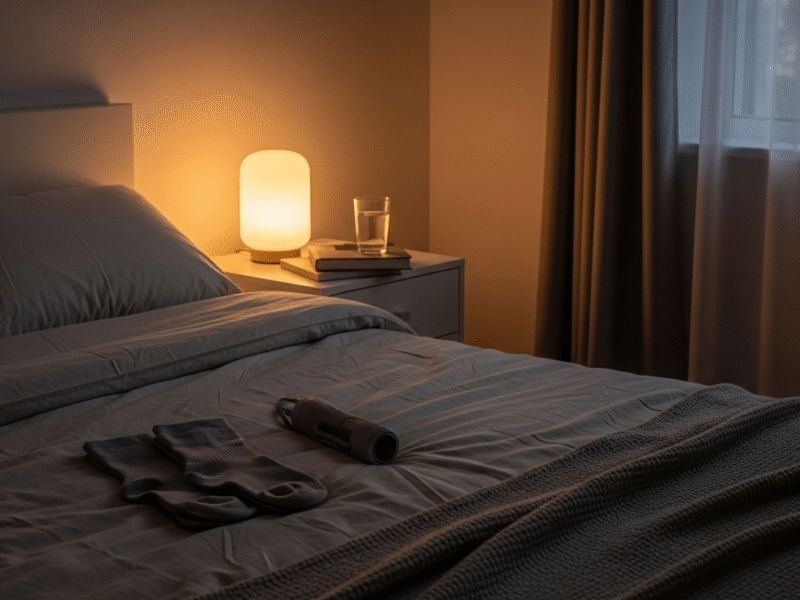
- A calm evening routine , such as quiet music, reading, or breathing exercises, may help the body settle before sleep.
- A dark, quiet, cool bedroom is a good foundation for sleep in general. Find more ideas in the article 17 Tips for Better Sleep, and for help choosing a pillow for your head, see the guide How to Choose a Pillow.
Aids that may make sleeping after hip surgery easier
Pillow between the knees
After your surgeon permits sleeping on the non-operated side, a knee pillow may be more stable than an ordinary pillow that can slide during the night. A contoured Knee pillow – ErgoPlus helps keep the legs separated. The pillow supports a position recommended by your care team but does not protect the joint by itself. Safety still depends on following movement restrictions.
Wedge pillow for leg elevation
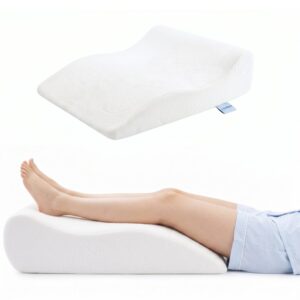
If lying completely flat causes discomfort or you have noticeable swelling, mild leg elevation may improve comfort. ComfortLift wedge pillow provides a gentle, stable elevation. Confirm any position with your surgeon first because elevating the legs must not cause prohibited hip flexion.
Frequently asked questions
How long do I need to sleep on my back?
Recommendations vary among hospitals. Some advise about two weeks, others six, and some one month. The timeline depends on the surgical approach and your recovery, so follow your discharge instructions or ask your surgeon or physical therapist.
When can I start sleeping on the operated side?
Only after your surgeon explicitly allows it. After a posterior approach, this is often several weeks after surgery; the timeline may differ after an anterior approach. Do not make the change on your own even if you feel well.
Should the pillow between my knees be firm or soft?
It should be firm enough to maintain space between the knees as you turn during the night. A pillow that is too soft or small may slide, making it less effective at maintaining the prescribed position.
What should I do if pain still wakes me?
If pain regularly wakes you despite prescribed medication, speak with your doctor or orthopedic surgeon because treatment may need adjustment. Do not wait until morning if pain is accompanied by any warning signs listed above.
Is it normal to have sleep problems for several weeks?
Yes. Sleep disruption is common after a major procedure and can last for several weeks. Follow your instructions, use recommended aids, and allow time for recovery.
Conclusion
Recovery of sleep after hip surgery takes time. Sleeping on your back is generally the safest choice, while sleeping on the non-operated side is possible only with your surgeon’s permission and suitable support between the knees. Precautions differ by surgical approach and surgeon, so use this guide as a starting point for discussion with your care team rather than a substitute for its advice. Watch for warning signs, follow your physical therapy plan, and maintain a calm evening routine.
Warning: this content is for informational purposes and does not replace instructions from your surgeon, physical therapist, or primary care doctor. Seek urgent medical care for suspected prosthetic joint dislocation, signs of DVT or pulmonary embolism, or infection.
Sources and further reading
- AAOS/OrthoInfo: Activities After Total Hip Replacement
- AAOS/OrthoInfo: Deep Vein Thrombosis
- Cleveland Clinic: Dislocated Hip
- NHS: Recovering From a Hip Replacement
- Hospital for Special Surgery (HSS): Anterior Hip Replacement
Related: pillow for side sleeping.
Related: hip pain at night.
From our store
ERGOPLUS Knee Pillow