Tips for better sleep: what can help right away
If you cannot fall asleep, get out of bed after about 20 minutes, go to another dimly lit room, and do something calming until you feel sleepy, then return to bed. This is one of the simple, evidence-based techniques that can help when sleep will not come. Below are solutions for specific problems, including waking during the night, an overheated bedroom, noise, caffeine, alcohol, a snoring partner, and shift work.
This article is for information only and does not replace medical advice. If sleep problems persist or make everyday life difficult, consult a doctor. The end of this article explains when that is advisable.
If you are looking for a long-term routine for better sleep rather than a quick fix, first see our guide Your path to better sleep: 8 steps to excellent sleep hygiene. This article is for the moments when sleep simply will not come.
Cannot fall asleep? Use the 20-minute rule
If you are still awake after about 20 minutes in bed, get up and go to another dimly lit room. Do something calming there, such as reading or listening to quiet music, until you feel sleepy, then return to bed. This technique is called stimulus control. Its purpose is to help your brain associate the bed with sleep again rather than wakefulness and frustration. It is recommended by the UK’s NHS.
Do not look at the clock. Checking the time increases stress and makes it harder to fall asleep again, whether at bedtime or after waking during the night.
Your thoughts race when you turn off the light
If worries or tomorrow’s to-do list flood your mind in bed, take five minutes before lying down to write them on paper. The NHS describes this as a simple way to calm the mind before sleep, with the paper “taking over” the worry from your thoughts. If prolonged stress is causing the restlessness, the subject is covered in more detail in our article Is stress stealing your sleep? How to calm your mind and body before bed.
Slow breathing may also help. One widely used method is 4-7-8 breathing: inhale through your nose for four seconds, hold your breath for seven seconds, and exhale through your mouth for eight seconds. According to Cleveland Clinic , it may activate the parasympathetic nervous system, which calms the body.
You wake during the night and cannot fall asleep again
Waking during the night is common. Possible causes include an overheated room, a full bladder, thirst, noise, or simply lighter sleep toward morning. What you do in the next few minutes matters: leave the light off, do not reach for your phone (screen light further stimulates the brain), and do not check the time. If you are still unable to sleep after about 20 minutes, follow the same rule as at bedtime: get up and do something calming in another room.
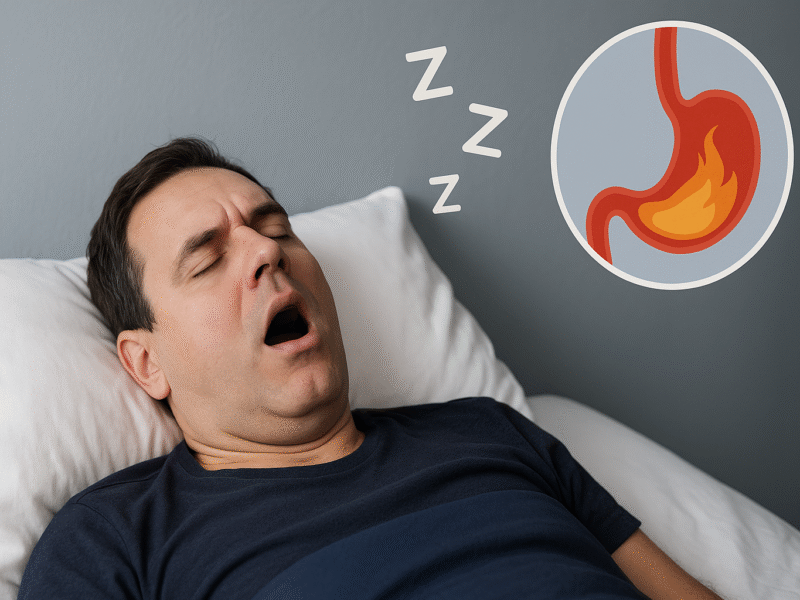
If a burning sensation in your chest (heartburn) regularly wakes you at night, sleeping with your upper body slightly elevated may help. The ComfortLift wedge pillow provides this position. Read more about causes and habits that trigger heartburn in our sleep hygiene guide.
You feel exhausted in the morning even after enough hours of sleep
Enough hours in bed do not necessarily provide enough good-quality sleep. Common causes include an overheated bedroom, a glass of wine before bed, or a partner’s snoring, which can interrupt sleep without you realizing it (more on these below). The first and easiest step is often a regular schedule: go to bed and get up at a similar time. If you are unsure when to go to bed, use the calculation in our article What time should you go to bed? Calculate your ideal bedtime.
Over time, chronically poor sleep increases the risk of heart disease, high blood pressure, and obesity and also impairs the body’s response to insulin, warns the US National Heart, Lung, and Blood Institute (NHLBI).
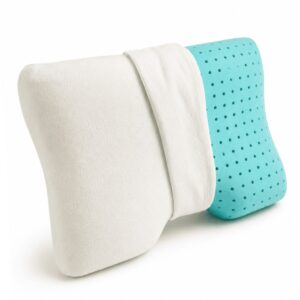
If you also wake with neck pain, an unsuitable pillow may contribute to how you feel. Our range of pillows includes the contoured Memory pillow, whose memory foam follows the shape of the neck and head.
The bedroom is too hot or too cold
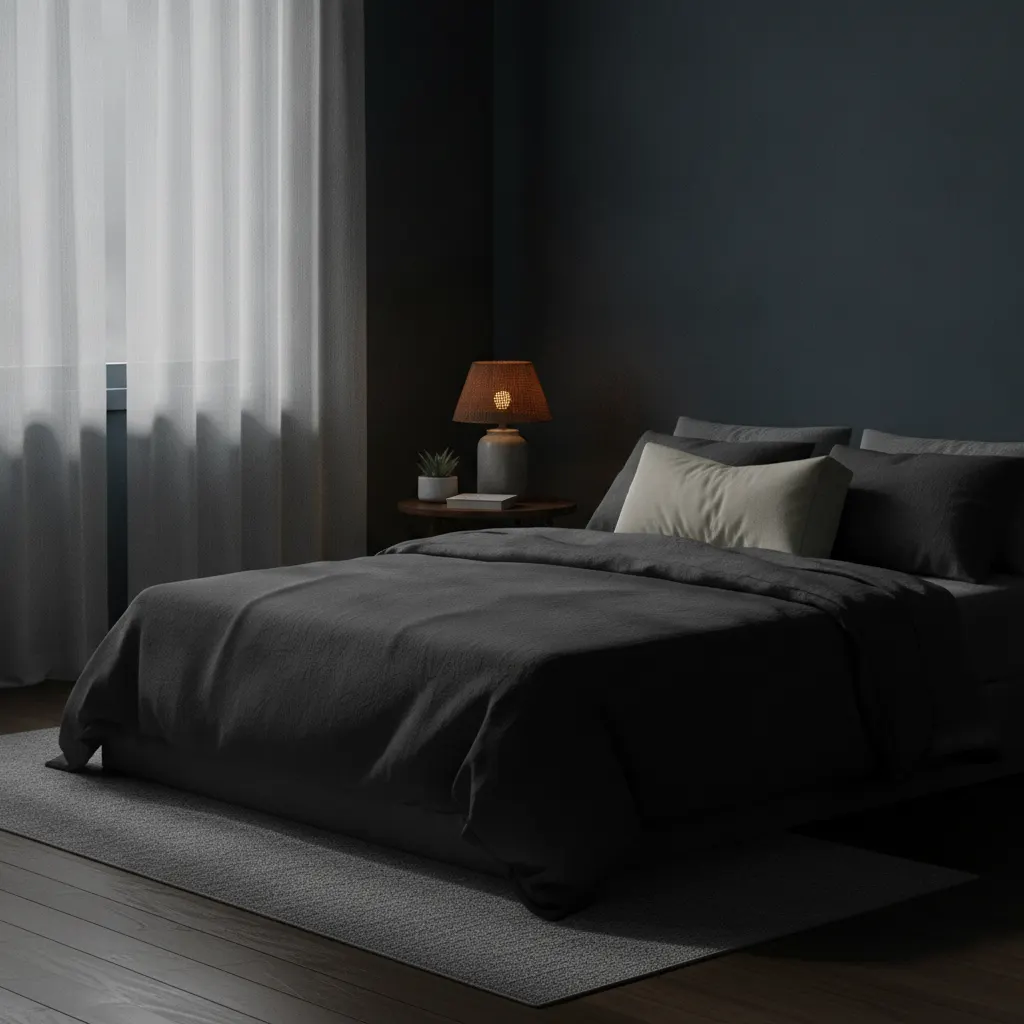
The recommended bedroom temperature is approximately 15 to 19 °C, according to Cleveland Clinic. The body needs to lower its temperature slightly before sleep, which is more difficult in an overheated room.
If you do not have air conditioning, try airing the room before bed, using a fan, choosing light bedding made from natural fibers, and taking a cooler shower just before bed. If you are cold, add a blanket or socks, as cold feet often make it take longer to fall asleep.
Noise wakes you
The World Health Organization recommends that the average nighttime noise level outside the bedroom should not exceed 40 decibels, as higher levels increase the risk of sleep disruption (WHO). In practice, traffic, neighbors, or a partner’s snoring can measurably reduce sleep quality even if you do not remember waking in the morning.
Earplugs, a white-noise machine, or an ordinary fan may help by using a steady sound to mask fluctuations in background noise.
Your partner snores
Immediate measures include earplugs or white noise, separate blankets so one person’s movement does not wake the other, and sleeping on the side instead of the back, where snoring often becomes worse. Read about proper side-sleeping posture in our article Sleeping on your side: benefits and proper posture.
If your partner snores loudly and irregularly, with noticeable pauses in breathing, choking, or gasping, it may be sleep apnea and should be assessed by a doctor. Our article explains when the cause may be more serious and when an elevated upper body may help: Sleep apnea: can elevating the upper body help with milder forms?
You feel sleepy during the day: is a nap a good idea?
A short nap can be useful, but a long or late nap may make it take longer to fall asleep in the evening. The US CDC/NIOSH recommends a short nap (up to about 20 minutes, with an alarm set for 15–30 minutes). The same guidance advises against napping immediately before your usual bedtime, when the body is less likely to fall asleep anyway.
An evening drink: why alcohol worsens sleep
Alcohol can help you fall asleep faster, but it has the opposite effect during the second half of the night. Research summarized by the National Institute on Alcohol Abuse and Alcoholism (NIAAA/NIH) indicates that REM sleep, which is important for restoration and memory, decreases during the first half of the night. As the body metabolizes the alcohol in the second half, a REM “rebound” occurs together with more awakenings, making sleep lighter and more fragmented.
If you fall asleep quickly but wake during the night and do not feel rested in the morning, a bedtime drink is a common but overlooked cause.
Coffee too late in the afternoon
A clinical study published in the Journal of Clinical Sleep Medicine gave volunteers 400 mg of caffeine 0, 3, or 6 hours before bed. In all three cases, sleep was measurably shorter and poorer than with a placebo, including when caffeine was taken 6 hours before bed. The authors therefore recommend having your last coffee at least 6 hours before bed. If you go to bed at 22:00, that means no later than about 16:00.
Screens before bed
Blue light from a phone, tablet, or computer screen can make it harder to fall asleep, so NHS recommends putting away your phone and other screens at least one hour before bed.
Shift work
Night and rotating shifts disrupt the internal body clock, so daytime sleep is usually lighter and shorter. The US CDC/NIOSH recommends a consistent sleep schedule, including on days off if you work permanent night shifts, along with controlled exposure to light: brighter light at the start of the shift, darker glasses on the journey home in the morning, and a well-darkened bedroom during the day.
Quick overview: the problem and what can help
| Problem | What can help right away | Source |
|---|---|---|
| Cannot fall asleep for > 20 minutes | Get up, do a calm activity in another room, and return to bed when sleepy | NHS |
| Racing thoughts | Write down worries/tasks before bed, use 4-7-8 breathing | NHS, Cleveland Clinic |
| Waking during the night | No clock or phone, use the same 20-minute rule | NHS |
| Bedroom too hot | Lower the temperature to 15–19 °C | Cleveland Clinic |
| Noise disrupts sleep | Earplugs or white noise | WHO |
| Daytime nap | Up to 20 minutes, not immediately before bed | CDC/NIOSH |
| Alcohol in the evening | Limit or avoid it | NIAAA/NIH |
| Coffee in the afternoon | Last cup at least 6 hours before bed | Journal of Clinical Sleep Medicine |
| Shift work | Consistent schedule, controlled light exposure | CDC/NIOSH |
When to see a doctor
An occasional bad night is no cause for concern. Consult a doctor if insomnia lasts more than three weeks, if you are so sleepy during the day that driving or work becomes unsafe, if your partner notices pauses in your breathing or loud gasping during sleep, or if poor sleep is accompanied by signs of anxiety or depression. This article is for information only and does not replace a medical assessment.
Frequently asked questions
How long should I try to fall asleep before getting out of bed?
About 20 minutes. If you are still awake after that, get up, go to another room, and do something calming until you feel sleepy, then return to bed (source: NHS).
Is a daytime nap bad for nighttime sleep?
Not necessarily. A short nap (up to about 20 minutes) that is not immediately before your usual bedtime generally does not disrupt nighttime sleep. Longer or late naps are more likely to do so (source: CDC/NIOSH).
Why do I wake at the same time every night?
Common causes include an overheated bedroom, alcohol before bed, noise, a full bladder, or stress. If the pattern recurs, check the room temperature and your evening habits and consult a doctor if needed.
Is a glass of wine in the evening really a problem for sleep?
Yes. Alcohol can help you fall asleep faster, but during the second half of the night it causes lighter, more fragmented sleep with changes to REM sleep (source: NIAAA/NIH).
When should I have my last coffee?
At least 6 hours before bed. A clinical study found that caffeine disrupted sleep even when consumed 6 hours before bedtime (source: Journal of Clinical Sleep Medicine).
From our store