Sleep Apnea: Can Upper-Body Elevation Help Mild Cases?
Sleep apnea repeatedly interrupts breathing during sleep. In obstructive sleep apnea (OSA), the upper airway narrows or closes. An analysis in The Lancet Respiratory Medicine estimated that 936 million adults worldwide have OSA, many without a diagnosis. Small studies suggest that upper-body elevation can reduce breathing events in some people, particularly those with mild or positional OSA, but it does not replace diagnosis or prescribed treatment.
This article explains the signs of sleep apnea, how testing is generally arranged, what research says about upper-body elevation, and which treatments are available.
What is sleep apnea?
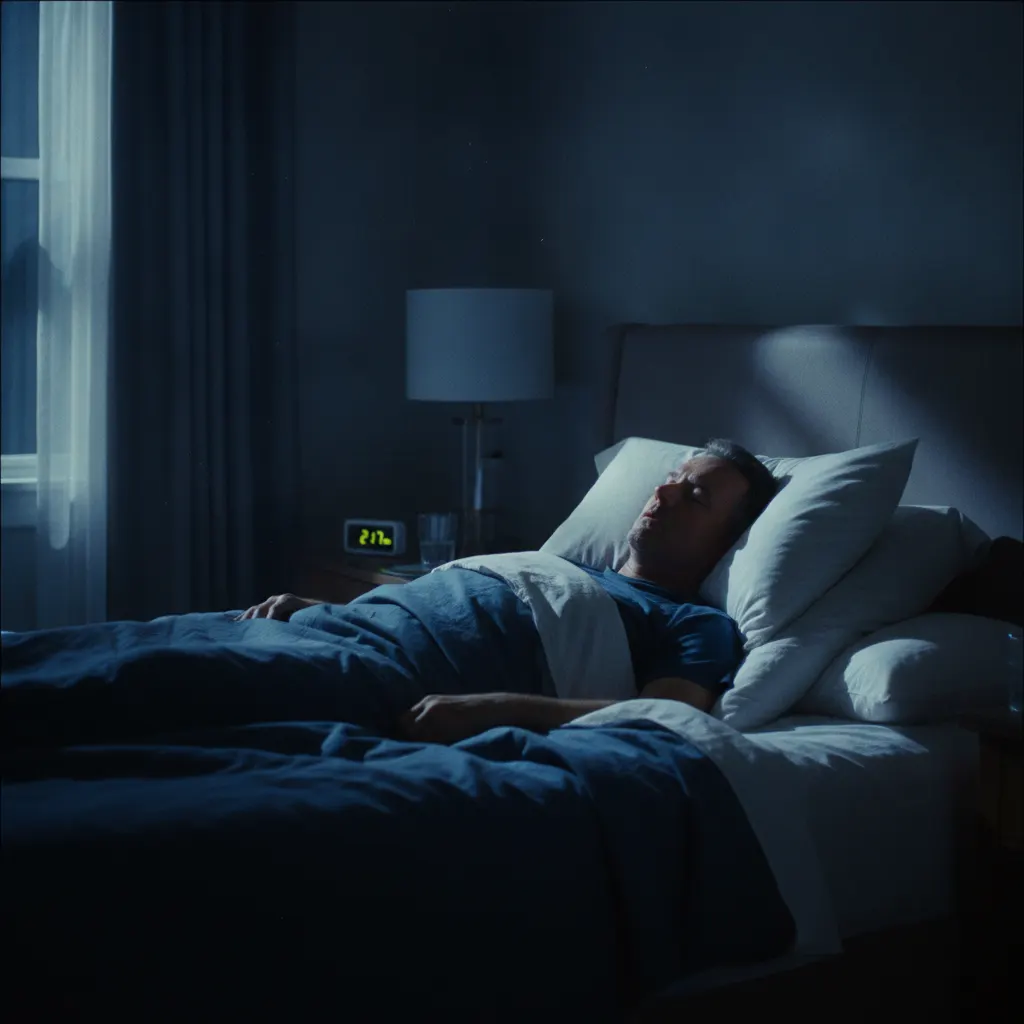
In OSA, muscles and soft tissues in the throat relax during sleep and narrow or close the airway for several seconds or longer. Falling oxygen or rising carbon dioxide can trigger a brief arousal, after which breathing resumes, sometimes with a gasp or snort. This cycle may recur many times an hour. A 2019 study in The Lancet Respiratory Medicine estimated that 936 million adults have mild to severe OSA and 425 million have moderate to severe OSA among those ages 30 to 69.
Severity is commonly described using the apnea-hypopnea index (AHI), the number of breathing events per hour of sleep: 5–15 is mild, 15–30 is moderate, and over 30 is severe. A clinician also considers symptoms, oxygen levels, and other health factors.
How can you recognize sleep apnea?
- Loud, irregular snoring with pauses in breathing, often noticed by a partner;
- waking with choking or gasping;
- morning headaches and a dry mouth;
- marked daytime sleepiness, including dozing while watching television or driving; and
- difficulty concentrating, irritability, or frequent nighttime urination.
Snoring without witnessed pauses or daytime sleepiness may be simple snoring, but symptoms alone cannot rule apnea in or out. We discuss snoring and reflux in Snoring and GERD.
Who is at greater risk?
Risk factors include excess body weight, male sex, age over 40, a larger neck circumference, a narrow throat or enlarged tonsils, alcohol or sedative use near bedtime, smoking, and sleeping on the back. OSA can also occur without these factors.
How is sleep apnea diagnosed?
Testing pathways and referral rules vary by country. A primary-care clinician may refer you for an overnight breathing study. One Slovenian example is the Sleep-Disordered Breathing Laboratory at University Clinic Golnik. Home respiratory polygraphy may be suitable in some cases, while polysomnography in a sleep laboratory provides more detailed measurements. The test usually lasts one night and is noninvasive.
Can upper-body elevation help?
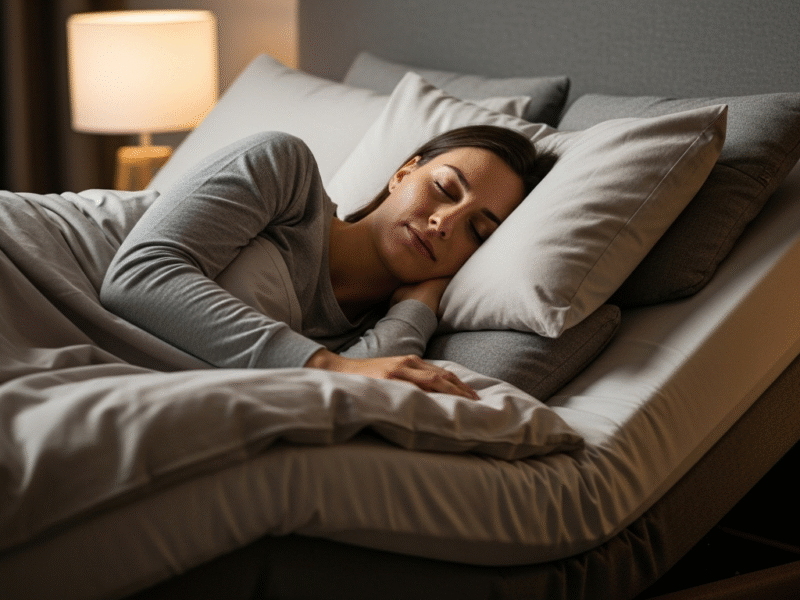
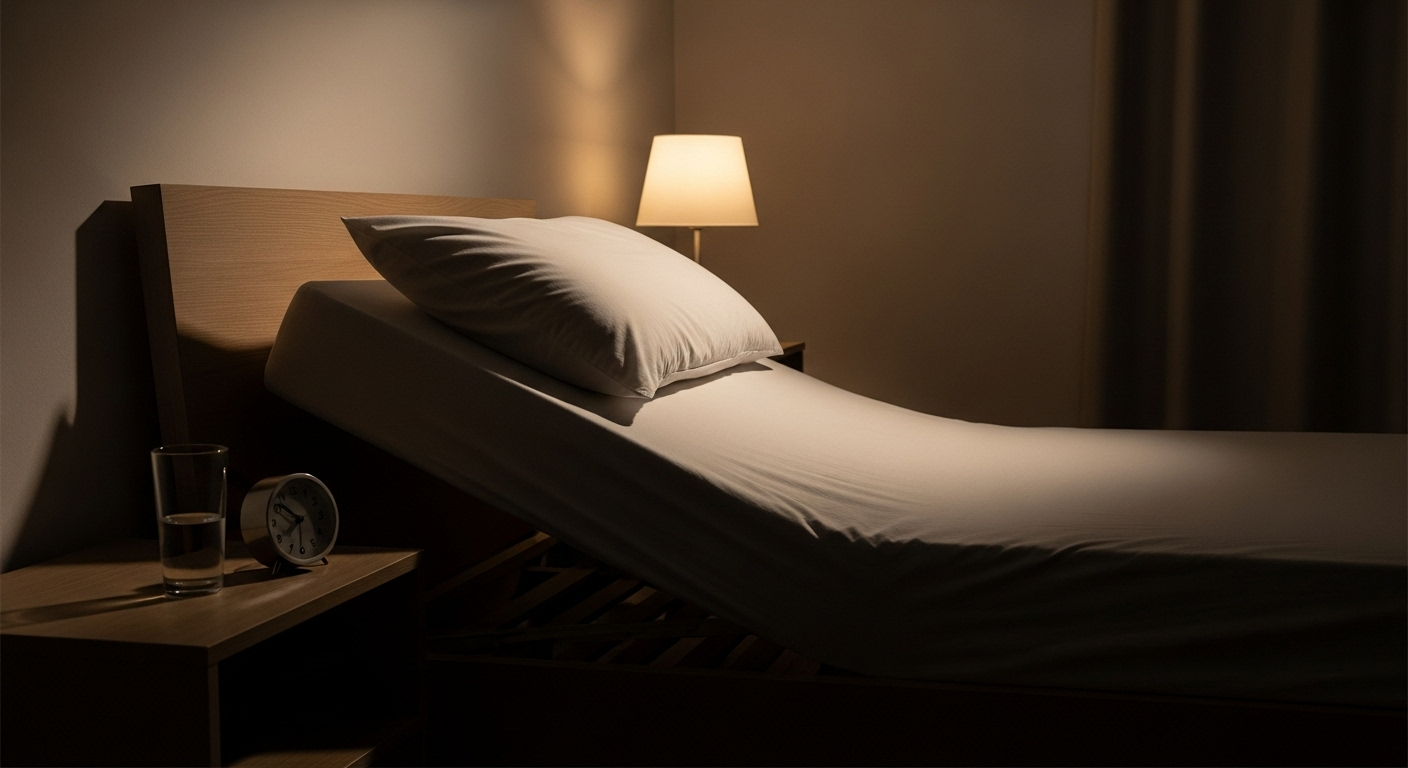
Small studies suggest it may help some people. In a Brazilian study , average AHI fell from 15.7 to 10.7 events per hour with head-of-bed elevation, while the lowest oxygen saturation rose from 83.5% to 87%. A newer experimental study also found the largest effect among people with mild OSA, and participants generally tolerated inclines of 10–35° well. These results do not establish elevation as adequate treatment for every patient.
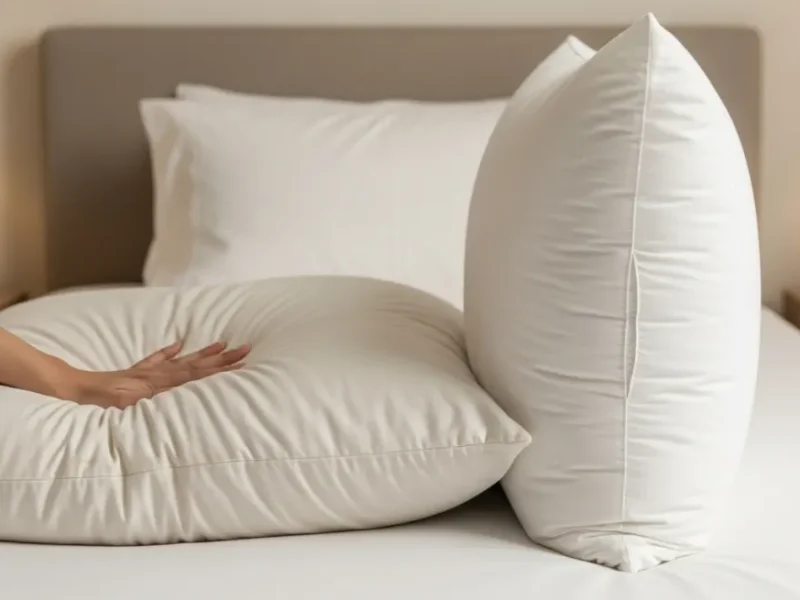
A gradual incline can be created with a wedge pillow such as the ComfortLift wedge pillow . For why stacked pillows do not create the same whole-torso incline, see Sleeping with the Upper Body Elevated. Elevation is an adjunct for selected mild or positional cases. It does not replace CPAP or other prescribed care for moderate or severe OSA.
What other treatments are available?
| Measure | Who may benefit | What to know |
|---|---|---|
| Weight management | People with excess body weight | A weight reduction of 10% may meaningfully lower AHI for some people, but response varies. |
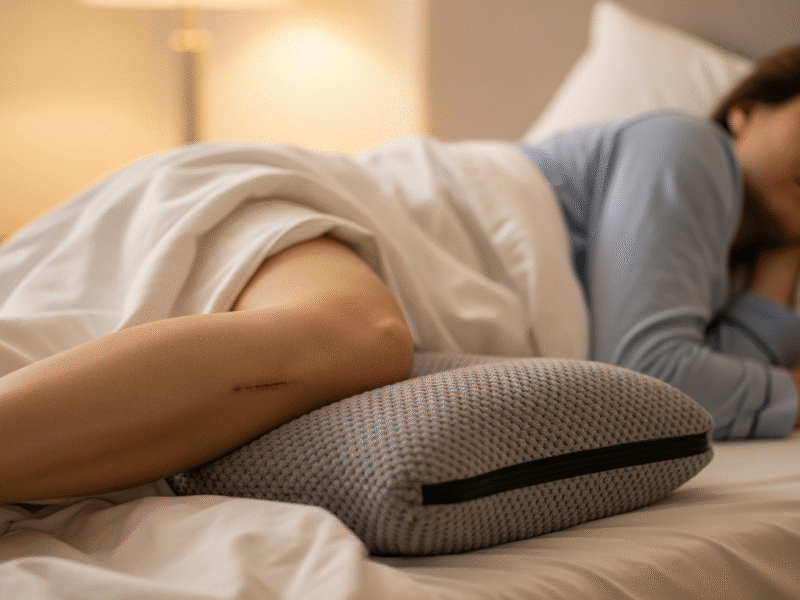
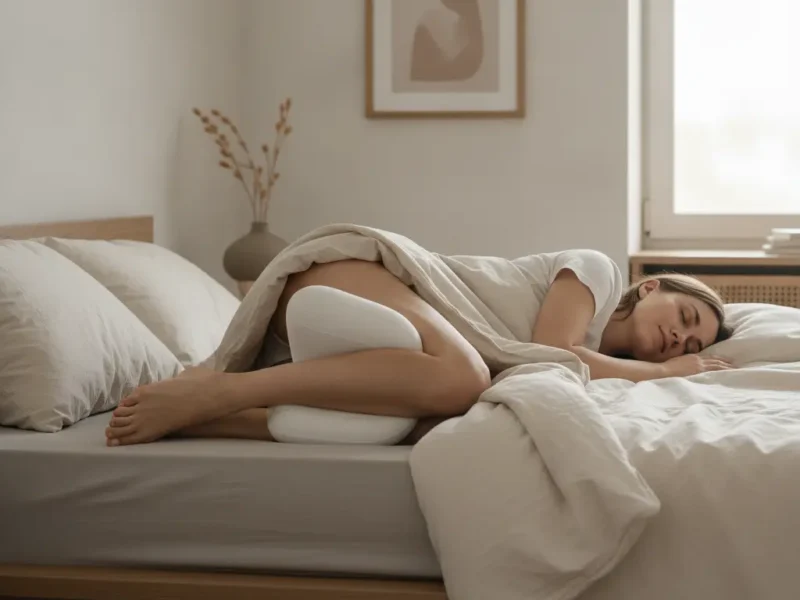
| Side sleeping | People with positional OSA | May reduce supine airway obstruction; a positional aid can help maintain the position. |
| Upper-body elevation (10–35°) | Selected mild or positional OSA | An adjunct supported by small studies, not a replacement for prescribed treatment. |
| CPAP device | Often used for moderate or severe OSA and selected symptomatic cases | Pressurized air helps keep the airway open; treatment choice depends on clinical assessment. |
| Oral appliance | Selected mild to moderate OSA | Holds the lower jaw forward and should be fitted and monitored by a qualified dental sleep specialist. |
| Surgery | Selected cases | Considered when an anatomical obstruction, such as enlarged tonsils or a deviated nasal septum, contributes to OSA. |
Other helpful measures may include limiting alcohol near bedtime, stopping smoking, maintaining a regular sleep schedule, and practicing good sleep habits. See 17 Tips for Better Sleep.
Why should sleep apnea not be ignored?
Untreated OSA causes repeated sleep disruption and oxygen changes and is associated with high blood pressure, abnormal heart rhythms, cardiovascular disease, stroke, type 2 diabetes, and motor-vehicle crashes related to sleepiness. If you may have OSA, arrange medical assessment and do not drive when sleepy.
Frequently asked questions about sleep apnea
What is the difference between snoring and sleep apnea?
Snoring is the sound of vibrating tissue and may occur without apnea. In OSA, airflow repeatedly falls or stops; a partner may notice quiet pauses followed by gasping, and daytime sleepiness may occur. A sleep study is needed to establish the diagnosis.
Can I treat mild sleep apnea by myself?
Lifestyle and positional measures may help selected mild cases, but first obtain a diagnosis. A sleep study determines severity, and a clinician can advise whether self-care measures are sufficient or prescribed treatment is needed.
Does side sleeping help?
It may help positional OSA, in which events occur mainly while sleeping on the back. Side sleeping can reduce events for some people, and a suitable positional aid may help, but it must not compromise safe sleep or cause discomfort.
How high should I elevate my upper body?
Studies have examined inclines of approximately 10–35 degrees. Use a stable whole-torso incline rather than sharply bending only the neck, and ask a clinician whether elevation is appropriate for your diagnosis.
This content is informational and does not replace medical diagnosis or treatment. Consult a doctor if you have signs of sleep apnea.
Related: snoring and sleep apnea.
From our store