
Side-sleeping and knee pillows: a guide
Side sleepers may benefit from two separate supports: a head pillow high enough to keep the neck in line with the spine, and a shaped pillow between the knees to support a comfortable position for the hips and lower back. Without support between the legs, the upper leg may drop forward and rotate the pelvis.
This guide explains how a pillow between the knees may help side sleepers, how it affects the position of the hips and lower back, the available pillow types, and how to choose a suitable height and firmness for both the knees and the head.
Why do side sleepers need a pillow between their knees?
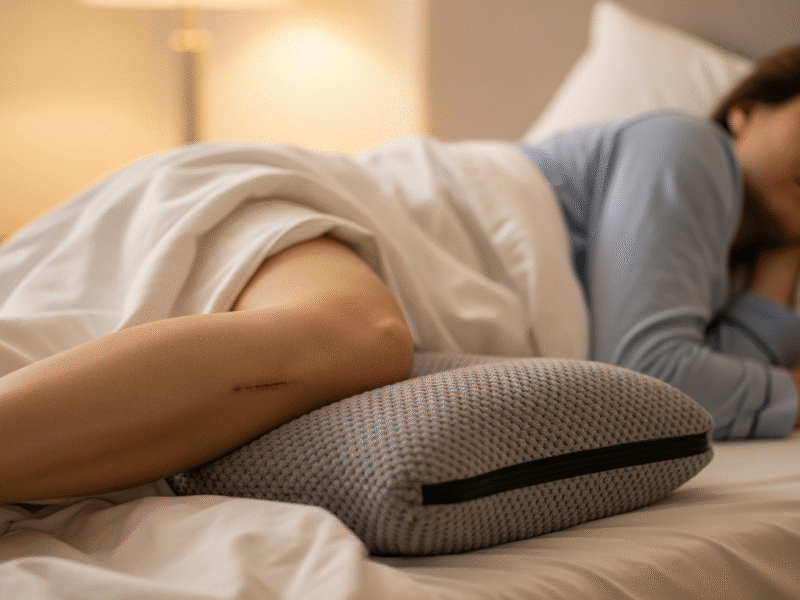
When you sleep on your side, the unsupported upper leg may move forward and down, rotating the pelvis and placing the lower back in an uneven position. A pillow between the knees can keep the legs closer to hip width and support a more neutral, comfortable position.
Side sleeping is the most common sleep position in one study: research a study using wearable movement sensors found that adults spent 54.1% of their time in bed on their side, 37.5% on their back, and 7.3% on their stomach. These figures describe the study participants and do not mean that every side sleeper needs extra support.
A pillow between the knees is also suggested as a simple comfort measure for some people with lower-back pain. The MSD Manuals advises side sleepers to “place a pillow between the knees and draw the knees up slightly toward the chest” if this makes back pain more comfortable. This low-risk adjustment may ease tension, but it does not treat the cause of pain.
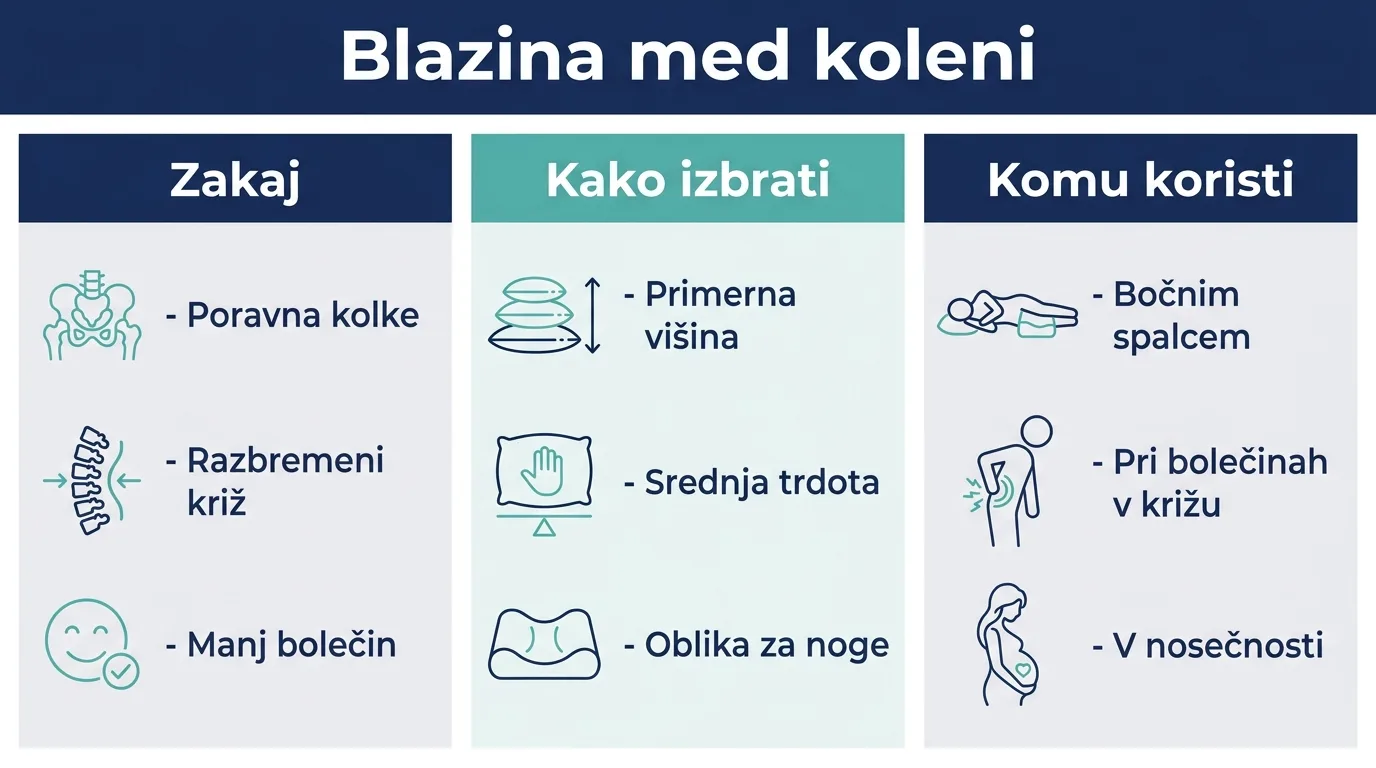
The infographic below summarizes why a knee pillow may feel helpful, how to choose one, and who may want to try it.
How does a pillow between the knees affect the spine, hips, and lower back?
A pillow between the knees acts as a spacer, helping keep the upper leg closer to hip height. This may limit inward rotation of the thigh and pelvis and help the lower back remain in a more neutral position. Comfort and effects vary by person.
Spine alignment
The aim of sleep support is a comfortable, neutral spinal position similar to relaxed upright posture. Viewed from behind, the neck and back should not bend sharply up or down. A knee pillow supports the lower body, while a head pillow of suitable height supports the neck.
Support for the hips
When the upper knee rests directly on the lower one, the position can feel uncomfortable around the hips. A pillow separates the knees so the upper leg is better supported. This may feel useful for sensitive hips and during pregnancy, when side sleeping is common.
Less tension in the lower back
A rotated pelvis may leave the muscles on either side of the lower back in different positions through the night, contributing to stiffness or discomfort for some people. A knee pillow can support a more symmetrical position. A related approach to positioning during recovery appears in our article on sleep after hip surgery.
Which side-sleeping pillow is right for you? Comparing the options
Side sleepers can use different pillows for different purposes: some fit between the knees, while others support the head and neck. Shaped memory-foam knee pillows can provide consistent support, although comfort, fit, and durability depend on the design and user. The table compares common options.
| Type of pillow | Position | Main purpose | Limitations | Best suited to |
|---|---|---|---|---|
| Shaped memory-foam knee pillow | Between the knees | Supports spacing between the knees and is designed to stay in place | May take a few nights to get used to | Side sleepers seeking support between the knees |
| A regular pillow or a rolled-up blanket | Between the knees | Affordable, right at hand | It collapses, slips at night, uneven height | Occasional, temporary solution |
| Body pillow | Along the body, with one leg over it | Supports a leg, arm, and abdomen at the same time | Large, warm, and takes up considerable bed space | Pregnant people and anyone who likes to hug a pillow |
| Contoured memory-foam neck pillow | Under the head | Fills the space between shoulder and head and supports the neck | It is not intended between the knees | Side sleepers who need more neck support |
| Classic soft pillow | Under the head | Soft comfort, low price | May compress and allow the head to tilt downward | People who find it comfortable and adequately supportive |
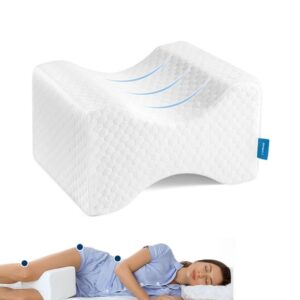
Many side sleepers may prefer a shaped pillow between the knees and a head pillow of suitable height. The first supports the lower body, and the second supports the head and neck. One option designed for use between the knees is the ErgoPlus knee pillow, whose hourglass shape fits between the knees to help it stay in place. Browse the complete range in our support pillows.
How do you choose the height and firmness of a knee pillow?
Choose a knee pillow that supports the upper leg without forcing the knees unusually close together or far apart. It should be firm enough to resist flattening overnight but flexible enough to feel comfortable. A pillow that is too thin may provide little support, while one that is too thick may lift the upper leg uncomfortably.
Finding a suitable height
Lie on your side with the pillow between your knees and notice whether the upper leg feels supported without being pushed upward. If the upper leg still drops forward, the pillow may be too thin. If the knee is forced above the hip, it may be too thick. Body shape and comfort determine the best fit.
Why shape matters
A flat pillow or rolled blanket can flatten or move during the night. A shaped memory-foam pillow is narrower in the center to fit between the knees and may stay in place more reliably as you turn. How well it retains support depends on its materials and construction.
What about your head pillow? Neck support for side sleepers
Side sleepers generally need a head pillow that fills the space between the shoulder and head. If it is too low, the head tilts toward the mattress; if it is too high, the neck tilts upward. Aim for a comfortable position in which the neck continues the line of the upper back.
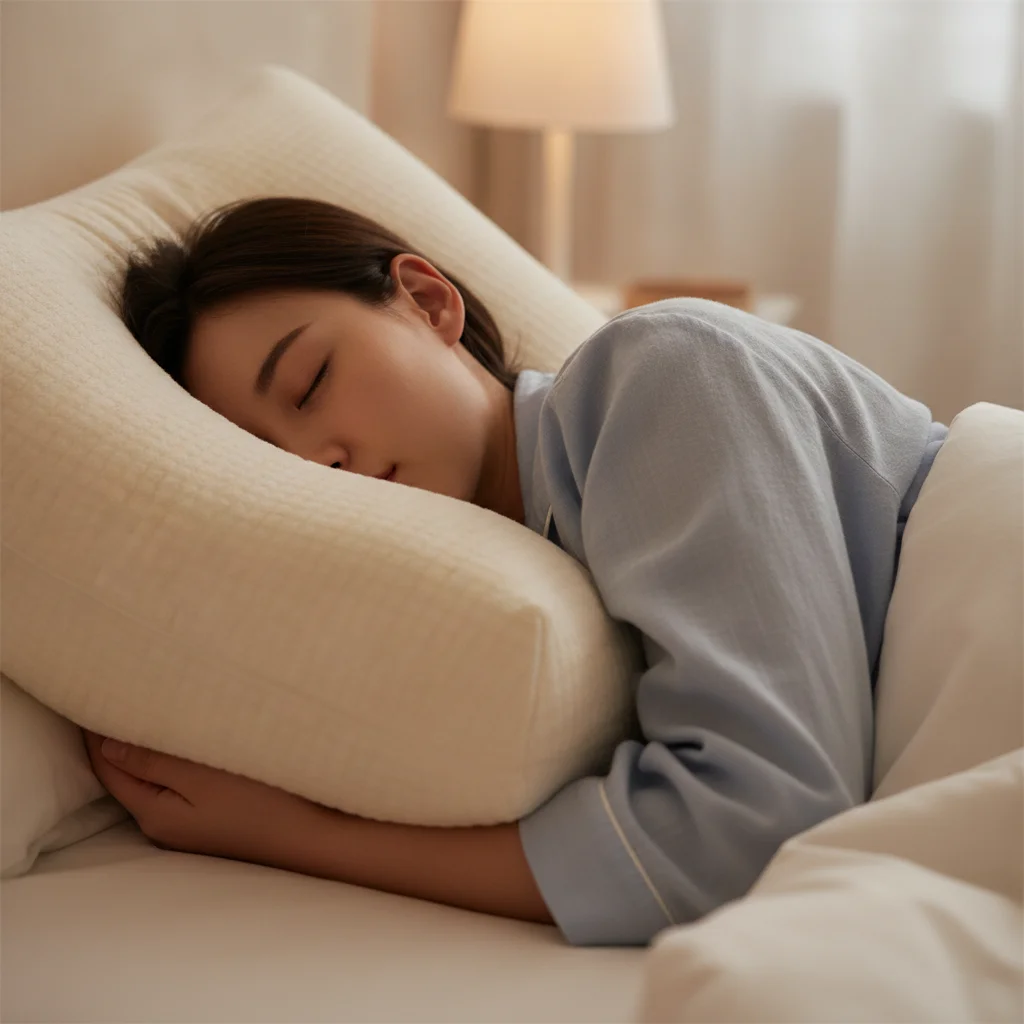
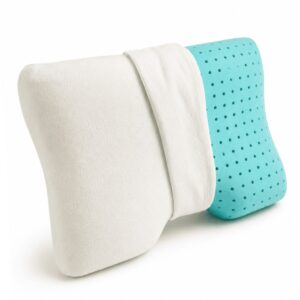
Harvard Medical School advises using a pillow that is higher under the neck than under the head and avoiding one that is so high or firm that it leaves the neck flexed and contributes to morning pain or stiffness. A supportive curve beneath the neck and a recess for the head are features of the Memory neck pillow.
If you often wake up with a painful or stiff neck, also take a look at the article on how to wake up without neck pain. For information about persistent symptoms, see our article on cervical pain.
How should you sleep on your side?
For a comfortable side-sleeping position, use a head pillow of suitable height, support between the knees if helpful, and keep the hips and knees slightly bent. Avoid placing an arm beneath your head if that position strains the shoulder or neck. You can change sides during the night; comfort and a neutral position matter more than staying still.
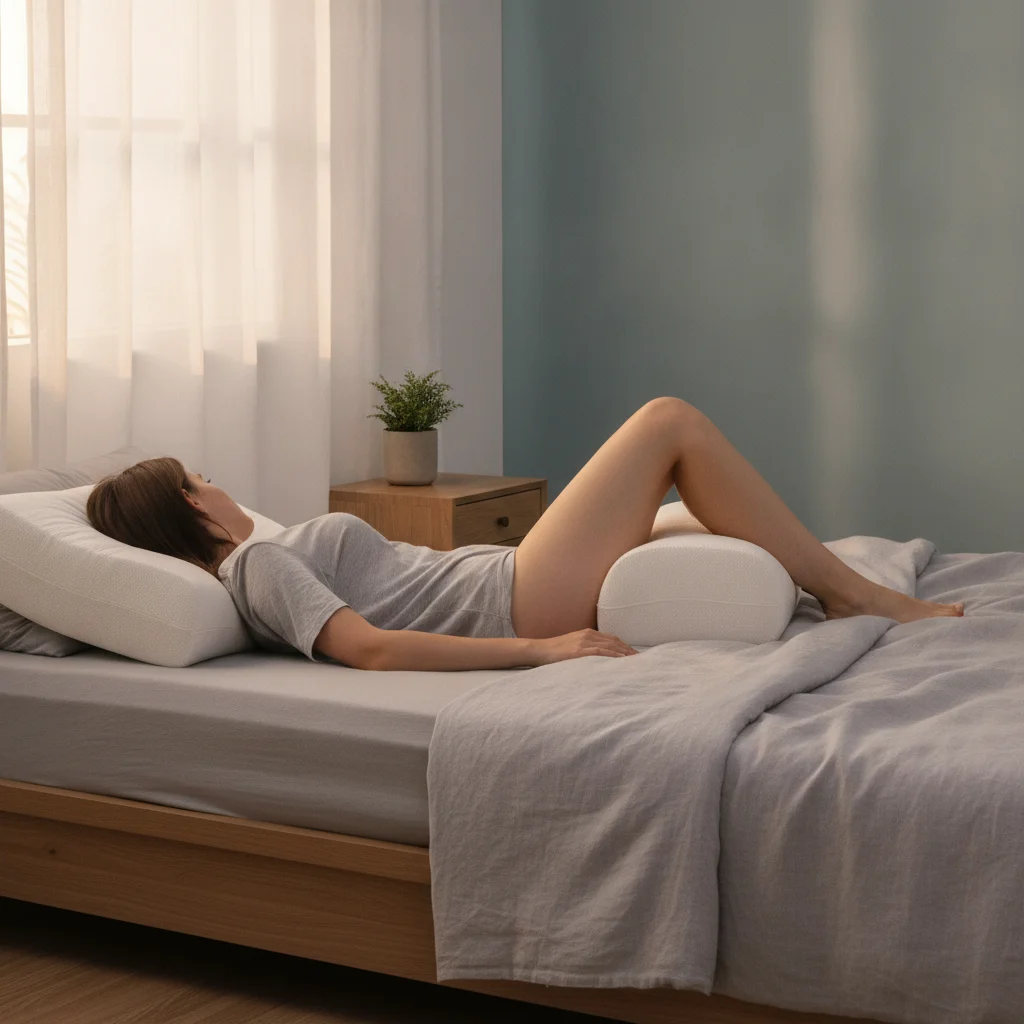
- Pillow: high enough to keep the head and neck in a comfortable line with the upper back, with support beneath the neck.
- Pillow between the knees: supported at a comfortable distance, without the upper leg dropping forward.
- Hips and knees: slightly bent in a relaxed position, rather than tightly curled toward the chest.
- Hands: in front of the body or around a pillow, avoiding positions that strain the shoulder or neck.
- Mattress: supportive enough to prevent pronounced sagging, while allowing the shoulders and hips to settle comfortably.
Good sleep supports overall health. Slovenia’s National Institute of Public Health (NIJZ) describes sleep as an important part of physical and mental health and recommends 7 to 9 hours per night for adults. A 2021 Slovenian survey found that 41.8% of adults reported sleeping fewer than 7 hours on workdays. Comfortable positioning may help reduce sleep disruption caused by discomfort, although a pillow cannot resolve every cause.
When is it time for a new pillow or cushion?
Replace a knee pillow or head pillow when it no longer provides comfortable support, such as when foam remains compressed or the pillow no longer returns to shape. Waking with pain does not necessarily mean the pillow is the cause, but it is a reason to reassess your sleep setup and seek advice if symptoms continue. Read more about when to consider a new pillow.
When should you see a healthcare professional?
A knee pillow and a suitable head pillow may ease nighttime tension, but they do not address every cause of pain. Consult a doctor or physical therapist if pain in the back, hip, or neck lasts more than a few weeks, worsens at night, travels into an arm or leg, comes with tingling, weakness, or numbness, or begins after a fall or injury. Sudden major weakness, numbness around the groin or buttocks, or loss of bladder or bowel control requires urgent medical care. Call local emergency services immediately if symptoms are severe or rapidly worsening.
Frequently asked questions
Is it better to sleep on the left or right side?
Either side can be comfortable for the spine when the body is well supported. The left side may feel better for some people with heartburn or reflux. During pregnancy, follow advice from your maternity care team about sleep position, especially if you have symptoms or complications. Otherwise, choose the side that feels most comfortable and change sides as needed.
How thick should the pillow be between the knees?
It should support the upper leg without pushing the knees unusually close together or far apart. People with wider hips may prefer a thicker pillow, while those with narrower hips may prefer a thinner one. If the upper leg still drops forward, the pillow may be too thin; if the knee is pushed above the hip, it may be too thick.
Does a pillow between the knees help with back pain?
It can help some people. Supporting the upper leg may make the pelvis and lower back feel more comfortable. MSD Manuals suggests a pillow between the knees for side sleepers if it eases back pain. It is a comfort measure, not a cure; seek medical advice for persistent or severe pain.
Can I use a regular pillow instead of a special cushion?
Yes. A regular pillow or folded blanket is a practical way to test the position. It may flatten or move more than a shaped knee pillow, but there is no need for a special product if your existing pillow remains comfortable and supportive.
Do I need both a pillow between my knees and a special pillow?
You do not necessarily need special pillows. The aim is comfortable support: a knee pillow can support the lower body, while a head pillow of suitable height supports the neck. Use whichever combination helps you rest without creating new pressure or discomfort.
The content is for informational purposes and does not replace medical advice. For persistent or severe pain in the lower back, hips, or neck, consult a doctor or physiotherapist.
From our store
ErgoPlus knee pillow