Back braces: when they may help and when they may not
For common nonspecific low back pain, evidence does not support a back brace as a cure or as routine prevention. Some people find that a brace briefly reduces discomfort during a painful flare, but guidance generally emphasizes staying active rather than prolonged rest. This article reviews the evidence and situations in which a clinician may prescribe a brace.
If sitting at a desk aggravates your pain, see our home office ergonomics guide. If you have symptoms of sciatica or possible nerve involvement, read Pinched nerve in the lower back: causes and relief , which also lists warning signs that require urgent medical care.
What is a back brace?
“Back brace” is a broad term for devices ranging from a soft elastic belt to a rigid plastic brace prescribed after surgery. Different types provide compression, limit movement, or stabilize a particular area to different degrees, so their uses are not interchangeable.
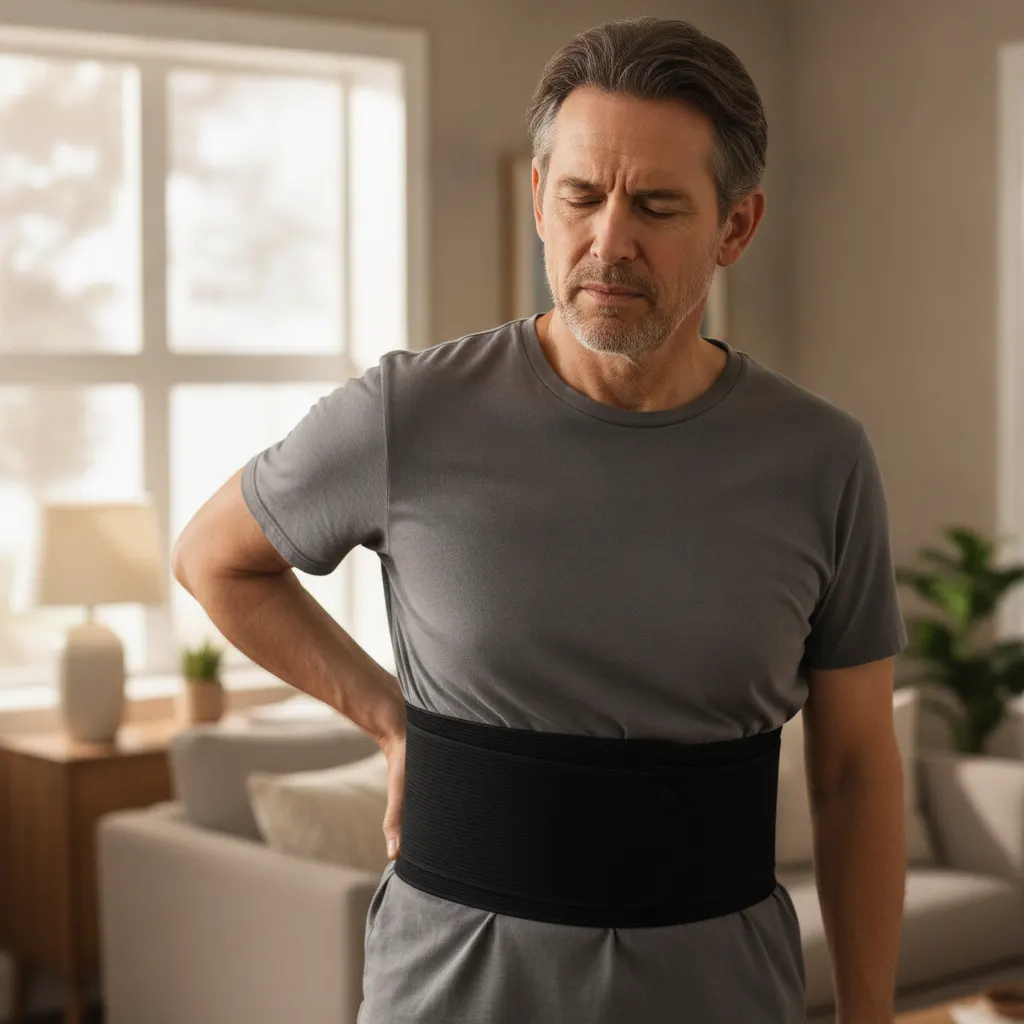
- Elastic lumbar belt: a soft belt made from neoprene or another stretch fabric. It provides light compression and may be used briefly during some activities or a pain flare.
- Posture corrector: a strap-style device that draws the shoulders back. It acts as a reminder while worn and is not a treatment for low back pain.
- Semi-rigid brace: an elastic base with plastic or metal stays. It may be used for selected conditions under guidance from a clinician.
- Rigid brace: a hard-shell device used to restrict movement after certain vertebral fractures or spinal procedures. Use should be prescribed and monitored by a clinician.
Does a brace prevent back pain?
Evidence does not support routine use for prevention. Cochrane systematic review, which pooled five studies with nearly 14,000 participants, found moderate-quality evidence that lumbar supports were no more effective than no support, for preventing low back pain in workers. The review found little or no difference in pain or sick leave.
For treating existing low back pain, the same review found low-quality and inconclusive evidence. Buying a brace “just in case” is therefore not supported as a general strategy to prevent back pain.
Can it help during a pain flare?
The United Kingdom’s National Health Service (NHS) advises people with common nonspecific low back pain to remain active and continue normal activities as tolerated. It discourages prolonged bed rest. A brace is not included among its routine first-line measures.
This does not mean that every brace is useless. Some people find that brief use during a painful flare makes walking, household tasks, or other daily activities more manageable by providing a sense of support. This is temporary symptom support rather than a cure, and it should not replace appropriate movement or medical care.
Can a posture corrector permanently change posture?
Evidence for a lasting effect is limited. In a controlled study of 30 healthy students, participants typed for 30 minutes with and without a scapular posture brace. The device did not significantly change shoulder posture, head position, pain, or fatigue, although it reduced trapezius muscle activity. The study examined only a single short session, so it could not establish long-term effects.
A posture corrector may serve as a physical cue while it is worn, but that does not show that it trains the body to maintain a different position afterward. Concerns that prolonged use could reduce muscle activity are plausible, although long-term weakening has not been established by this short study.
Potential drawbacks of inappropriate brace use
- Reduced muscle use: a brace can reduce the work performed by trunk muscles while it is worn. The clinical effect of prolonged use varies and is one reason to follow professional guidance for long-term bracing.
- False sense of protection: a brace may make someone feel protected even when it does not reduce the risk of injury, which can encourage unnecessary use or unsafe lifting.
- Masking a condition that needs assessment: temporary symptom relief can delay evaluation of conditions such as a herniated disk or spinal stenosis.
When is back pain an emergency?
Back pain is rarely an emergency, but the NHS advises urgent assessment for new loss of bladder or bowel control, inability to urinate, numbness around the genitals or anus, or weakness in both legs. Prompt medical evaluation is also appropriate after a serious injury or when pain occurs with fever, unexplained weight loss, or a history of cancer. For a fuller list of warning signs, read pinched nerve in the lower back.
What may help with low back pain
NHS and American Academy of Family Physicians guidance generally supports remaining active and gradually returning to normal activity. Depending on the cause and your health, useful measures may include:
- Movement and stretching – gentle movement after prolonged sitting can reduce the time spent in one position. Choose movements that do not worsen symptoms.
- Workstation adjustments – home office ergonomics may reduce aggravating factors when you spend long periods at a desk.
- Correct posture while sitting . There is no single perfect position; changing position regularly is often more useful. Read how to improve posture while sitting.
- Less continuous sitting . Break up long periods of sitting with movement as tolerated. See consequences of prolonged sitting.
- If the pain radiates to the leg . Pain traveling down a leg may be sciatica. Learn how to relieve pain from sciatica while sitting.
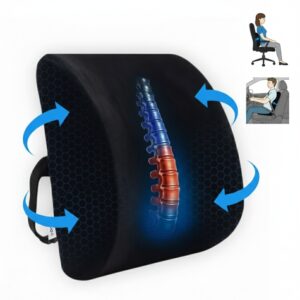
A lumbar cushion may make sitting more comfortable for some people. One option is the Lumbaris back support cushion . It adds support behind the lower back while sitting at home, in an office, or in a car. It should complement movement and exercises rather than replace them.
When a brace may be appropriate
The role of a brace depends on the condition and type of device:
- Brief use during a painful flare: some people use a soft support for selected daily tasks. Ask a clinician if you are unsure how long to wear it.
- A specific condition assessed by a clinician: a rigid brace may be prescribed and monitored after certain vertebral fractures or spinal procedures, or for selected cases of spondylolisthesis. In these situations, spinal stabilization may be part of the treatment plan.
- Physically demanding work: a workplace may require or permit a support for a specific task, but a belt does not replace training, lifting equipment, or safe technique and has not been shown to prevent low back pain routinely.
For common nonspecific low back pain, a brace may offer brief comfort to some people but is not a complete solution. Staying active, using appropriate exercises, and addressing aggravating work or sitting habits are usually more central to recovery.
Frequently asked questions
Can I wear the brace all day?
Do not assume that all-day use is appropriate. Wear a prescribed brace exactly as directed. For a nonprescription support, seek clinical advice if you feel you need it throughout the day or for more than a brief period.
Does a posture corrector really fix slouching?
There is little evidence that it creates a lasting change. It may remind you to adjust your position while worn, but posture does not automatically carry over after you remove it.
Does a brace replace back exercises?
No. A brace may provide temporary support in selected circumstances, but it does not replace activity or an exercise plan appropriate to the cause of your pain.
Which type of brace should I start with?
The right device depends on why you need it. A soft elastic belt may provide brief comfort for some people, while semi-rigid and rigid braces should be selected with a doctor, physical therapist, or orthotist for a specific condition.
When should I see a doctor?
Seek medical advice if pain persists for several weeks, worsens, travels down a leg, or occurs with any of the warning signs described here , including new loss of bladder or bowel control, inability to urinate, saddle numbness, or weakness in both legs. These symptoms require immediate emergency assessment.
Disclaimer: This content is for general information and does not replace professional medical advice. Ask a doctor, physical therapist, or orthotist before using a brace for a diagnosed condition or starting a new exercise program, especially if pain is persistent or recurrent.
Related: causes and relief of sciatica.
Related: does a posture corrector work.
From our store