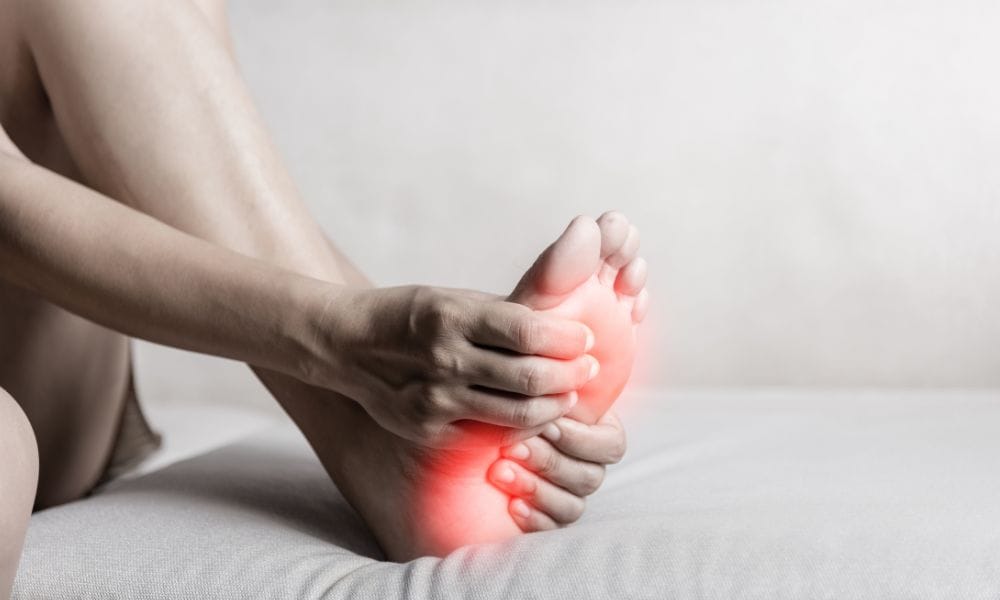
Plantar fasciitis: causes, symptoms, and treatment
Plantar fasciitis is irritation and overuse of the plantar fascia, the band of connective tissue that links the heel bone to the toes and supports the arch. It affects about 10% of people during their lifetime and is recognized by sharp heel pain with the first steps in the morning. The good news is that 75–90% of cases resolve without surgery.
This guide explains how to recognize plantar fasciitis, how it differs from a heel spur, which treatments have the strongest scientific evidence, and what you can do at home starting today.
What is plantar fasciitis?
The plantar fascia is a long, strong band of connective tissue (a ligament, not a tendon) that runs along the sole from the heel bone to the toes. It acts like a taut cord, supporting the arch and absorbing stress with every step. When it is overloaded for a long time, small injuries can develop in the fascia and the irritated tissue begins to hurt. This condition is called plantar fasciitis.
It is the most common cause of heel pain. According to the US StatPearls (NIH) database, it affects about 10% of people during their lifetime, and about 83% of patients are working adults between the ages of 25 and 65. It occurs most often between ages 40 and 60.
How can you recognize the symptoms of plantar fasciitis?
The most characteristic sign is a stabbing pain on the underside of the heel. It is strongest with the first steps after rest and eases with movement. Typical symptoms include:
- sharp heel pain with the first steps in the morning,
- pain after prolonged sitting or standing still,
- pain that becomes worse after, rather than during, physical activity such as running or a long walk,
- tenderness when pressure is applied to the underside of the heel,
- a feeling of tightness in the arch.
Why does the heel hurt most in the morning?
During sleep, the foot points downward, so the plantar fascia shortens and relaxes overnight. With the first steps in the morning, it suddenly stretches to its full length again, which the irritated tissue registers as a sharp, stabbing pain. The pain usually eases after the fascia has “warmed up” during a few minutes of walking. This mechanism is described in detail by the American Academy of Orthopaedic Surgeons (AAOS), and you can learn more about morning heel pain in the article Why Does My Heel Hurt So Much in the Morning?.

What causes plantar fasciitis?
Plantar fasciitis is almost always caused by long-term overuse rather than a single injury. Research (AAFP, 2019) identifies the following as the most important risk factors:
- Tight calf muscles: according to the AAFP, limited upward movement of the ankle is the strongest risk factor in people who are not athletes.
- Excess body weight: the risk increases significantly at a body mass index above 25–27.
- Jobs that require standing: occupations that involve prolonged standing on hard surfaces, including healthcare, manufacturing, education, and retail.
- Running and a sudden increase in activity: plantar fasciitis affects 5–22% of runners.
- Foot shape and biomechanics: flat or very high arches and increased pronation. You can identify your foot type with the guide Pronation or Supination.
- Unsuitable footwear: worn soles, flip-flops, and shoes without arch support.
Plantar fasciitis or a heel spur: what is the difference?
Plantar fasciitis is irritation of soft tissue (the fascia), while a heel spur is a bony growth on the heel bone that can form in response to long-term pulling by the fascia. The two are often confused, but the irritated fascia is generally what causes the pain. According to the AAOS most people with heel spurs have no pain at all, and pain can resolve without removing the spur. You can find a detailed comparison in the article Heel Spurs: Causes, Symptoms, and Treatment.
How is plantar fasciitis diagnosed, and when should you see a doctor?
A doctor or physical therapist can generally make the diagnosis from your history and a clinical examination of your foot. Imaging tests such as ultrasound, X-ray, or MRI are needed only when another problem is suspected, such as a tear in the fascia, a stress fracture, or a pinched nerve.
According to guidance from the UK’s NHS , you should see a doctor if:
- the pain is severe or prevents you from doing your usual activities,
- the pain has not improved after two weeks of self-care,
- you have tingling, numbness, or loss of sensation in your foot,
- you have diabetes, as foot problems in people with diabetes require prompt assessment.
How is plantar fasciitis treated?
Treatment almost always begins with conservative care, without surgery. The table below summarizes what research shows about each method:
| Method | What the research shows | When it may be appropriate |
|---|---|---|
| Stretches for the fascia and calf muscles | The self-care approach with the strongest evidence; in a study cited by the AAFP, targeted fascia stretching was markedly more effective than stretching the Achilles tendon alone | A first option for anyone, starting on day one |
| Arch-support insoles | Reduce pain in the short term; according to a Cochrane review, over-the-counter insoles are as effective as custom-made insoles | For everyday walking, jobs that require standing, and sports |
| Adjusting activity and footwear | Reduces the daily load on the fascia and allows it to heal | Always, to support other methods |
| Night splints | The evidence is mixed; they help some people when combined with insoles | For pronounced morning pain |
| Extracorporeal shock wave therapy (ESWT) | A meta-analysis of 9 studies involving 935 patients found a moderate but demonstrated benefit | When conservative treatment has not helped after several months |
| Surgery | Needed in only 5–10% of patients | Only after 12 months of unsuccessful treatment |
1. Stretching exercises: the method with the strongest evidence
Evidence suggests that targeted stretching of the plantar fascia is the most effective first step. In a clinical study summarized by the American Academy of Family Physicians (AAFP), 52% of patients improved after eight weeks of targeted fascia stretching, compared with 22% who stretched only the Achilles tendon. Stretch the fascia in the morning before you get out of bed and after every prolonged period of sitting. You can find five exercises with instructions in the article 5 Key Exercises for Plantar Fasciitis.
As a complement to the exercises, you can also loosen the fascia by massaging the arch with your thumbs or rolling your foot over a massage roller or chilled bottle.

2. Insoles and arch support
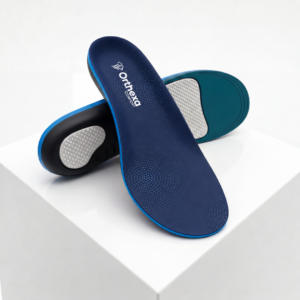
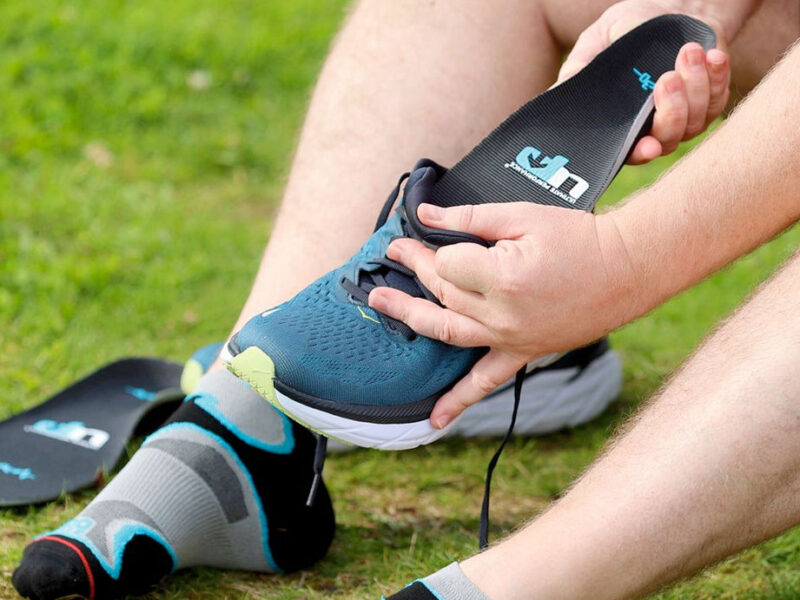
Insoles with arch support and softer heel cushioning take some of the load off the fascia with every step. They can be particularly helpful if you walk a lot or work on your feet. A Cochrane review of the research found that insoles reduce pain in the short term, with over-the-counter insoles performing as well as expensive custom-made insoles. Suitable for everyday use are Comfort shoe insoles, and you can find the full range under shoe insoles.
3. Adjusting activity, footwear, and body weight
Complete rest is not necessary. Walking in comfortable shoes is acceptable as long as the pain remains tolerable. Temporarily reduce high-impact activities such as running and jumping, and replace them with cycling or swimming. Choose shoes with cushioning, arch support, and a firm heel counter. Avoid flip-flops, ballet flats, and high heels while recovering. Because the risk rises significantly even at a body mass index above 25, weight management is often part of the long-term approach.
4. Night splints and shock wave therapy
Night splints keep the foot in a stretched position, but evidence for their effectiveness is mixed. They help some patients, especially when combined with insoles. According to a meta-analysis of nine studies involving 935 patients , extracorporeal shock wave therapy (ESWT) is more effective than placebo, but the benefit is moderate. Experts therefore recommend it only when several months of conservative treatment have not led to improvement.
How long does recovery take?
In 75–90% of patients, plantar fasciitis resolves within 10–12 months with simple conservative measures, and most begin to improve after just a few weeks of consistent stretching and reduced loading. Surgery is considered for only 5–10% of patients, and only after at least 12 months of unsuccessful nonsurgical treatment. A simple rule applies: the longer you delay addressing the pain, the longer recovery may take, so begin taking appropriate steps early.
How can you prevent it from returning?
- Stretch your calf muscles and the sole of your foot regularly, even after the pain resolves.
- Increase physical activity gradually (a general rule is no more than about 10% per week).
- Replace worn-out footwear and use arch support.
- Maintain a healthy body weight.
- If your job requires standing, take short breaks and use a softer surface where possible.
Frequently asked questions about plantar fasciitis
Does plantar fasciitis go away on its own?
In about 75% of people, symptoms resolve within 12 months even without specific treatment. Stretching exercises, suitable footwear, and arch support can speed recovery and reduce the risk of the pain becoming chronic.
Is walking harmful if you have plantar fasciitis?
No. Moderate walking in supportive footwear is acceptable and can be beneficial as long as the pain remains mild. Overdoing it can cause problems: prolonged standing, walking barefoot on hard floors, and high-impact activities generally worsen pain during the acute phase.
What shoes are best for plantar fasciitis?
Choose shoes with good heel cushioning, arch support, and a firm, stable heel counter. Avoid flip-flops, completely flat soles, and high heels. You can add support to your existing shoes with insoles.
Are custom-made insoles better than over-the-counter insoles?
According to a Cochrane review of the research, no: prefabricated, over-the-counter insoles with arch support are as effective for pain relief as much more expensive custom-made insoles. What matters most is that the insole supports the arch and cushions the heel, and that you wear it consistently.
When should I see a doctor?
See a doctor if the pain is severe, has not improved after two weeks of self-care, or if you have tingling or numbness in your foot or have diabetes. A doctor can rule out other causes of heel pain and recommend further tests if needed.
This content is for informational purposes and is not a substitute for consultation with a doctor or physical therapist. Seek professional advice for severe or persistent pain.
From our store