Tailbone pain: causes, sitting comfortably and reducing pressure
Tailbone pain, also called coccydynia, affects the very base of the spine and is often worse when sitting down or standing up. It may follow a fall onto the buttocks, childbirth or prolonged sitting on a hard surface. Symptoms can improve over weeks or months with measures such as reducing pressure, using a suitable coccyx cushion, changing sitting habits and appropriate pain relief.
This guide explains possible causes, ways to sit more comfortably, what to look for in a cushion and when to seek medical advice.
What is the tailbone, and why can it hurt?
The tailbone (coccyx) is the small, slightly curved end of the spine, made up of three to five fused vertebrae. Pelvic floor muscles attach to it, and it bears some weight while sitting, especially when leaning back. According to Cleveland Clinic , women are affected more often than men because of pelvic anatomy and childbirth. Common causes include:
- a fall onto the buttocks (on stairs, on ice or during sport), causing bruising, a sprain or sometimes a fracture;
- childbirth , when pressure from the baby’s head in the birth canal can injure the coccyx;
- prolonged sitting on a hard or uncomfortable surface, such as while cycling or working at a desk;
- repeated strain from activities such as rowing or cycling;
- less commonly, joint wear, excess body weight or very low body weight, which provides less cushioning.
The pain is usually felt at the very base of the spine. It may worsen on a hard seat, when getting up, during long drives and sometimes during menstruation.
How can you reduce pressure while sitting?
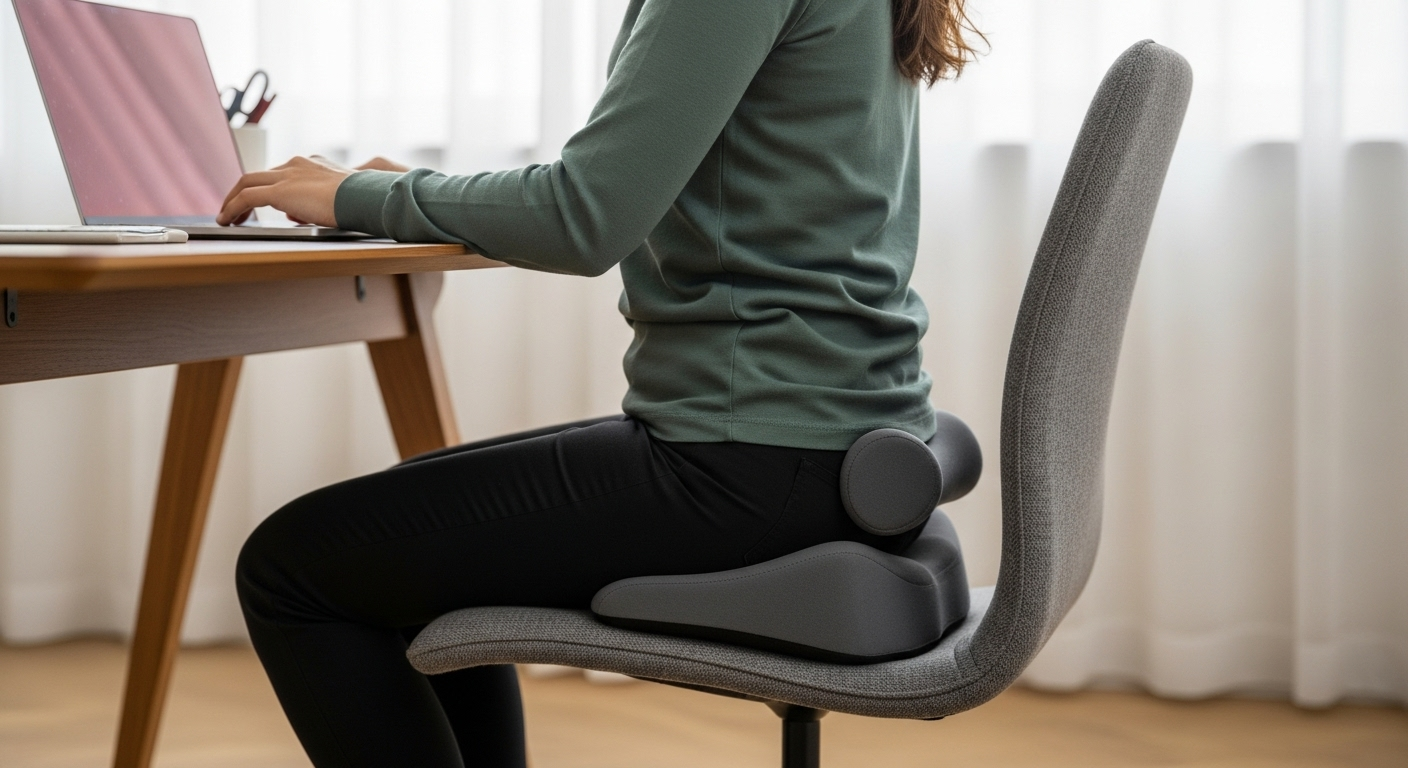
- Try a slight forward lean: an upright or gently forward-leaning position may shift more weight onto the sitting bones and away from the tailbone.
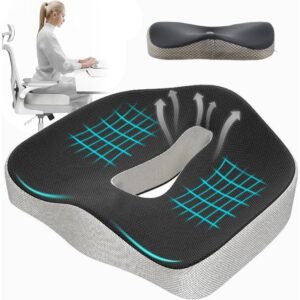
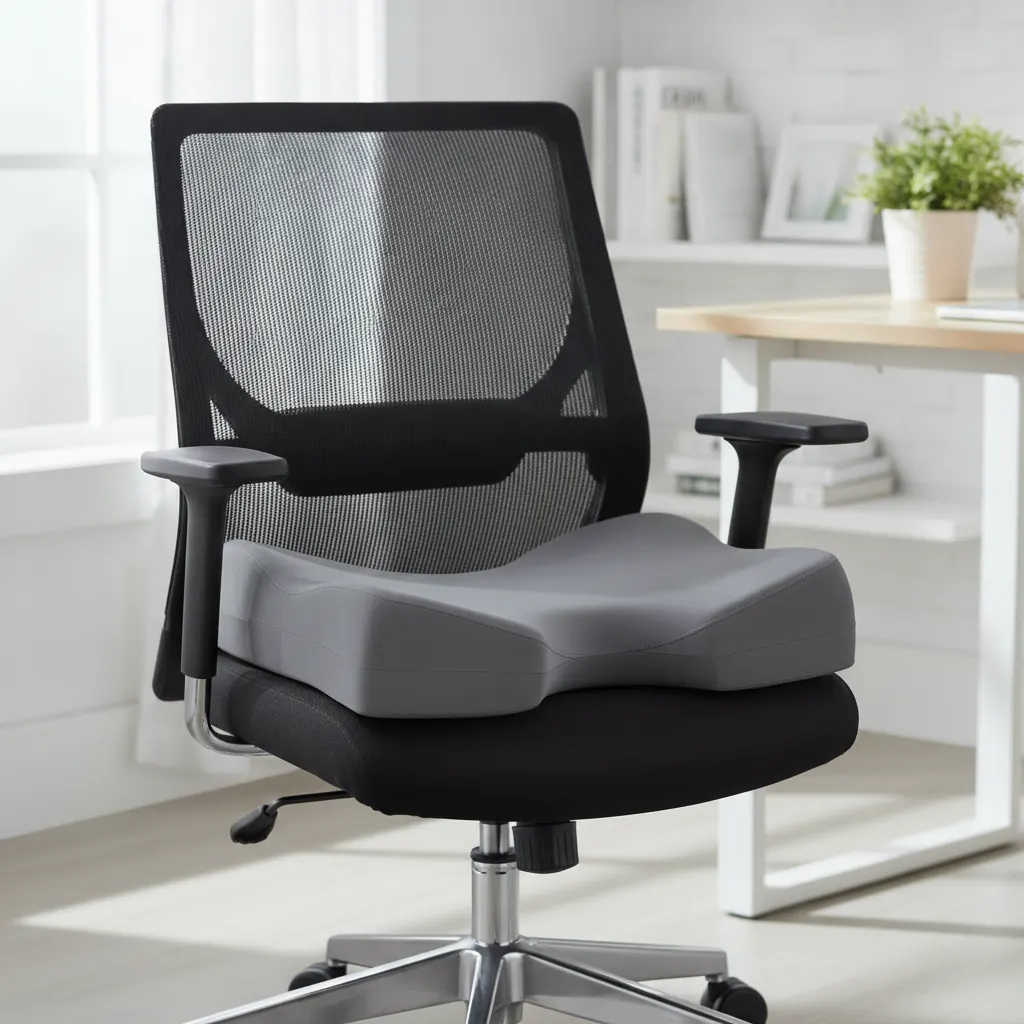
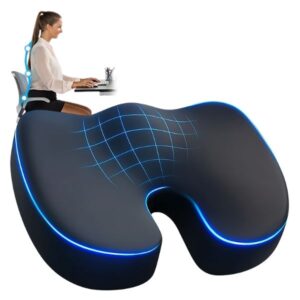
- Consider a cushion with a rear cutout: this design is intended to reduce direct pressure on the coccyx. Check that the cutout is positioned correctly and feels comfortable.
- Take sitting breaks: get up every 20–30 minutes and vary your position during the day.
- Keep your feet supported and your knees around hip height . Adjust your chair to suit your body; see our sitting posture tips.
How should you choose a tailbone cushion?
Look for a seat cushion with a rear cutout or opening, supportive memory foam that holds its shape and a nonslip base. One design to consider is the ComfortSit seat cushion. For a comparison of cutout, wedge and ring designs, see our seat cushion buying guide. Take care with soft inflatable rings, as the edge may increase pressure around a sensitive area.
What else may help with tailbone pain?
- Cold packs during the first days after an injury (15–20 minutes, with a towel between the pack and skin) may help. Some people find warmth more comfortable later, such as a warm bath or a covered hot-water bottle.
- Over-the-counter pain relief , such as acetaminophen (paracetamol) or ibuprofen, may be an option for short-term use. Follow the label and ask a pharmacist about suitability.
- Keeping stools soft with fiber and adequate fluids may help if bowel movements are painful.
- Gentle stretching of the pelvic floor and gluteal muscles may be considered; persistent pain may benefit from guided physical therapy.
- For longer drives , check whether a cutout cushion fits your car seat comfortably and securely. More tips are in Long drives with less back discomfort.
How long can it last, and when should you see a doctor?
Tailbone pain may improve after a few weeks of reducing pressure, but recovery after childbirth or a significant fall can take longer. Seek medical advice if it is not improving after a few weeks or affects normal activities, rather than waiting a fixed 6–8 weeks. Get prompt help after a significant injury or with numbness, changes in bowel or bladder function, fever, unexplained weight loss or worsening night pain. A clinician may consider imaging, physical therapy, an injection or specialist assessment depending on the cause.
Frequently asked questions about tailbone pain
Does tailbone pain mean it is broken?
Not necessarily. Bruising, a sprain or repeated strain can also cause pain. Even when there is a fracture, treatment may focus on reducing pressure, using a cushion and suitable pain relief. A clinician decides whether imaging is needed.
Why does it hurt when I stand up from a chair?
The coccyx moves as you stand, and the pelvic floor muscles pull on it. Irritated tissue may respond with sharp pain. A slight forward lean and using the chair’s armrests may make getting up easier, while a suitable cutout cushion may reduce pressure during sitting.
How can I sleep more comfortably with tailbone pain?
Lying on your side, with a pillow between your knees if comfortable, can reduce pressure on the tailbone. Some people prefer lying on their front. If you sleep on your back, a pillow under the knees may help you find a more comfortable pelvic position.
Can tailbone pain go away on its own?
It may improve over a few weeks when pressure is reduced and sitting habits are adjusted. Continuing to sit for long periods on a hard surface can keep the area irritated. Seek advice if symptoms persist or worsen.
This content is for information only and does not replace advice from a doctor or physical therapist. Seek medical help for the warning signs described above.
From our store
ComfortLux seat cushion