Posture supports: how they work and how to choose
A wearable posture support may provide a physical cue when you slouch, encouraging you to change position. It does not permanently correct posture, strengthen muscles, or treat back pain. Lasting comfort and function depend more on varied movement, suitable activity, and a workspace that fits you.
This guide explains what a posture support is, its limited role as a reminder, who may want to try one, how to use it safely, and what to consider when choosing a model.
What is a posture corrector and how does it work?
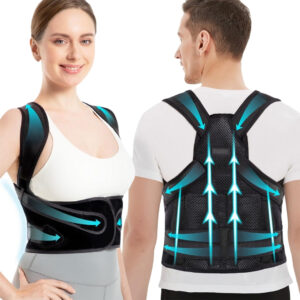
A posture support is an elastic wearable with shoulder straps that applies gentle tension when the shoulders move forward. It is intended as a sensory cue rather than a rigid brace. It should not force the body into one position or be relied on to hold the back upright.
Posture changes how the body is loaded, but there is no single ideal position that prevents pain. The MSD Manual says that comfortable upright posture can reduce back strain and advises avoiding prolonged slouching. Regularly changing position is also important because any fixed posture can become uncomfortable.
Back pain, which is often attributed to poor posture, is extremely common. The British health service NHS notes that back pain, especially lower-back pain, is very common. Pain has many possible causes, and its presence does not prove that posture is the cause or that a wearable support will help.
Does a posture support work?
It can provide a short-term cue that helps some users notice shoulder or upper-back position. Evidence does not show that it permanently corrects posture or treats pain. If you use one, combine it with comfortable movement, appropriate exercise, breaks from sitting, and workspace adjustments.
Long-term function depends on movement and muscle capacity, rather than passive support alone. Merck Manual states that strengthening abdominal and back muscles can support the spine and that regular physical activity is an important part of preventing recurrent lower-back pain. Exercise should suit the individual and does not guarantee prevention.
Rigid spinal braces and traction are different from lightweight posture reminders, and evidence for one cannot simply be transferred to the other. The MSD Manual says spinal braces and traction are generally not helpful for ordinary lower-back pain. A posture support should therefore be treated only as an optional cue, not a treatment.
The table below fairly summarizes what you can expect from a posture corrector and what you cannot:
| What a posture corrector can do | What a posture corrector cannot do |
|---|---|
| Provides a cue when you slouch | Permanently “fix” posture |
| May increase awareness of shoulder position | Replace strengthening exercises |
| May provide a temporary feeling of support | Strengthen weakened muscles instead of you |
| May help some people practice position changes | Treat pain or a spinal condition |
Who is the posture corrector intended for?
People who spend long periods seated and want a physical reminder may choose to try a posture support. It is not necessary for everyone with rounded shoulders or upper-back tension, and it is not a medical treatment. Persistent pain or a visible change in spinal shape needs appropriate assessment.

Comfortable movement and strength matter at every age. The MSD Manual states that lower-back pain becomes more common with age and affects more than half of people over 65. That statistic does not establish posture as the cause. Regular activity may support general health and function.
A posture corrector can be useful if:
- you sit for much of the day and want a cue to change position;
- you notice yourself slouching and the device remains comfortable;
- you want to become more aware of your position;
- you plan to use it briefly alongside movement rather than as treatment.
If sitting is associated with tension between the shoulder blades, our article explains practical steps for pain between the shoulder blades managing discomfort between the shoulder blades how to improve comfort and posture while sitting.
How can you use a posture support safely?
Follow the product instructions and begin with a brief trial to check fit and skin comfort. There is no evidence-based universal schedule or one-hour maximum for every posture support. The aim is a gentle cue, not forced retraction of the shoulders. Remove it if it causes pain, numbness, tingling, skin irritation, or restricted breathing.
A posture support should not replace movement or exercise. The American Academy of Orthopaedic Surgeons resource (OrthoInfo) recommends combining aerobic activity such as walking or swimming with exercises that maintain back and abdominal strength and flexibility. Choose activity appropriate to your health and symptoms.
Basic safety points:
- Start with a brief trial: check the fit, skin, comfort, and breathing, then follow the manufacturer’s instructions.
- Avoid prolonged wear: take regular breaks and do not use it as a substitute for moving or changing position.
- Set the correct tension: straps should provide only a gentle cue and must not dig in or restrict breathing.
- Combine with movement: change position and move regularly rather than relying on a fixed 30–45 minute rule.
- Stop if symptoms occur: remove it if it causes pain, tingling, numbness, weakness, skin changes, or breathing restriction.
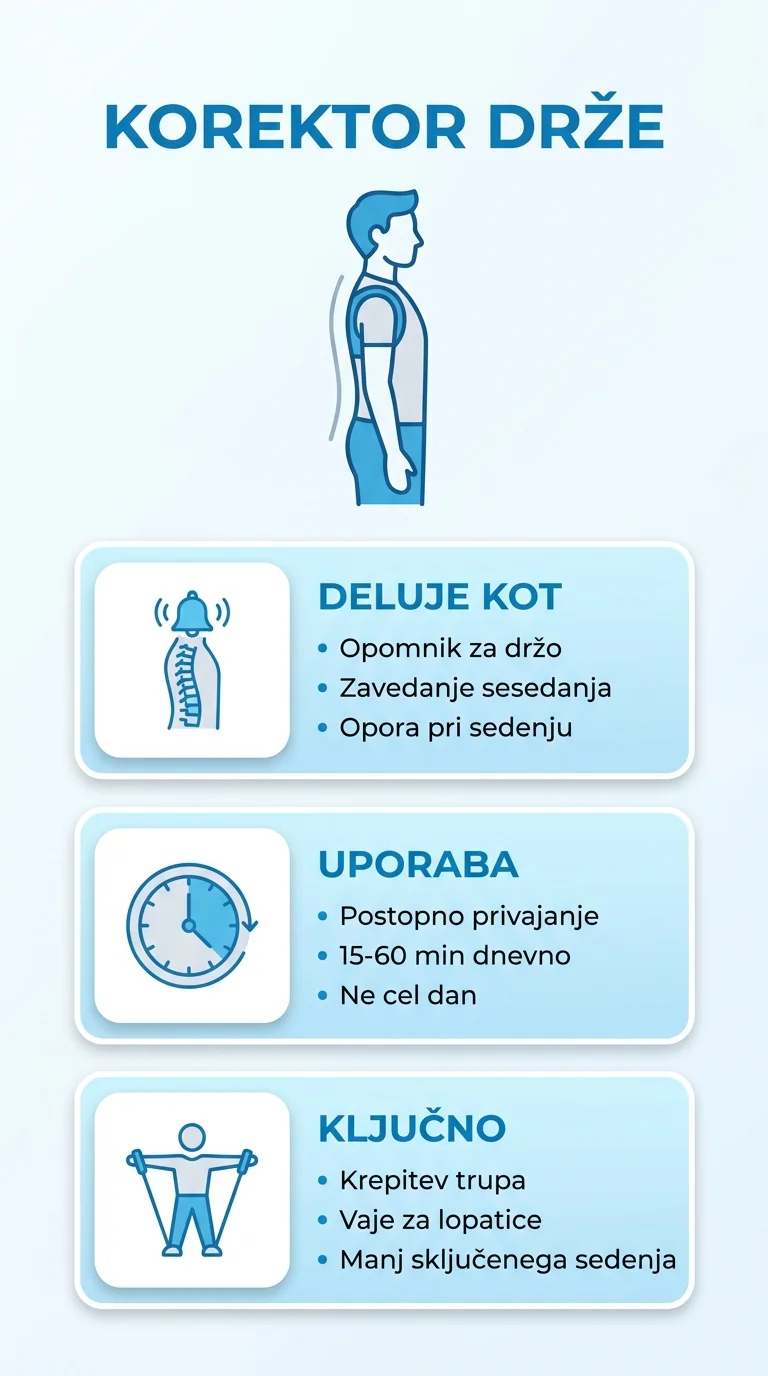
The infographic below summarizes how a posture corrector works, how to use it, and what else improves posture, all at a glance.
How to choose a posture corrector?
Choose the size from the product’s measurement chart, then check adjustability and comfort. A device that digs into the armpits, slips, rubs, or restricts breathing is unsuitable. Breathable fabric and wider straps may feel more comfortable, but product claims should be checked against the actual specification.
What to pay attention to:
| Criterion | What to look for | Why is it important |
|---|---|---|
| Size | Use the product’s chest or waist measurement chart | The wrong size may slip, rub, or restrict movement |
| Shoulder straps | Wide, padded, adjustable | Distributes strap pressure and reduces rubbing |
| Material | Breathable, soft fabric | May improve comfort and moisture management |
| Lower-back panel | Elastic reinforcement belt | Changes the feel of support; does not treat back pain |
| Profile | A low-profile design if worn under clothing | May be less visible at work |
Use the size chart for the exact product. One option in our range is the Spineo posture corrector, with widened shoulder straps and an elastic panel. It is available in four waist-size ranges: S 59–75 cm, M 76–94 cm, L 95–109 cm, and XL 110–120 cm. It may provide a posture cue while sitting, but it does not correct posture or treat pain. Find it in our back-support range, where there are also other forms of support for the upper and lower back.
Which habits support comfort and function over time?
Regular movement, strength, and less time in one fixed position matter more over time than a wearable reminder. OrthoInfo emphasizes safe standing, sitting, and lifting and notes the role of physical therapy when instruction is needed. A posture support is optional.
Useful everyday habits include:
- Strengthen the core: use suitable exercises to build trunk capacity gradually.
- Open the chest: gentle chest movement and shoulder-blade exercises may feel helpful after prolonged sitting.
- Interrupt sitting: change position and take movement breaks regularly.
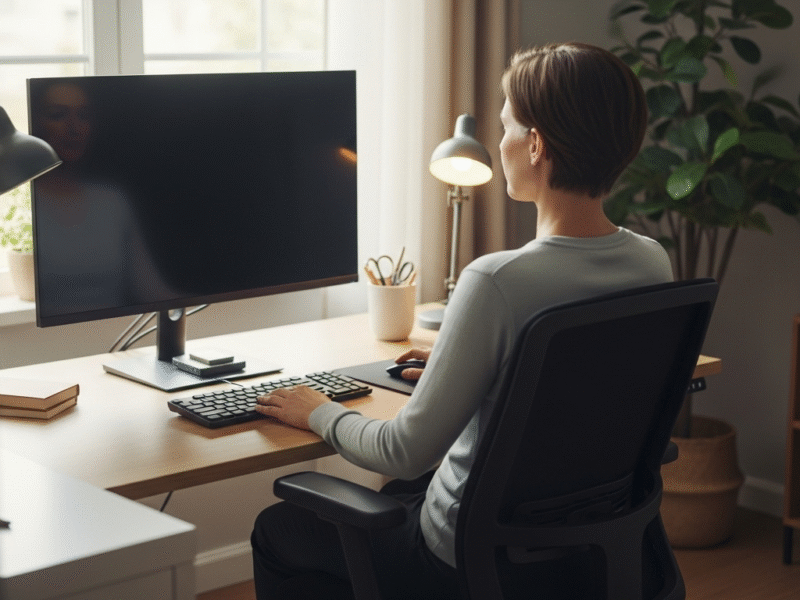
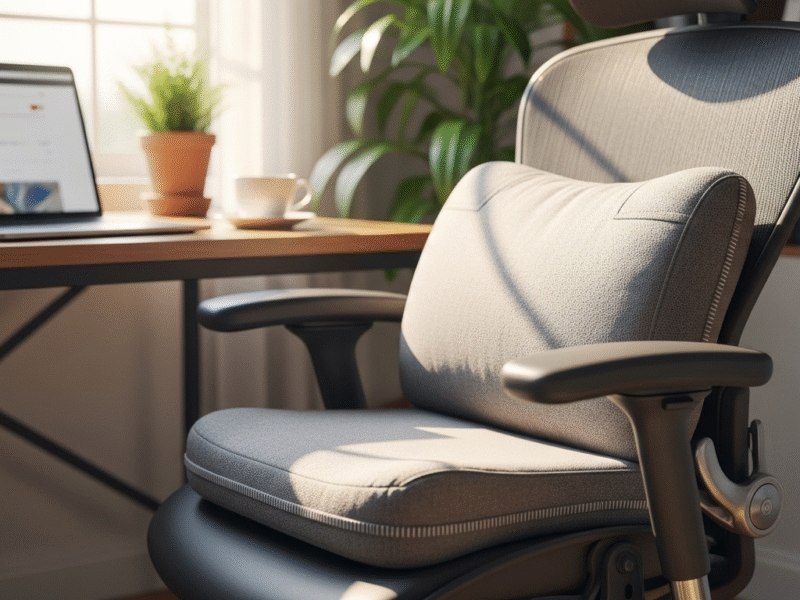
- Adjust your workspace: position the screen, chair, and feet for comfort, and vary your position through the day.
- Stay active: walking, swimming, yoga, or other suitable activity can support general mobility and strength.
If you are considering a lower-back support, read our article on whether a back brace helps with lower-back pain. Support should follow condition-specific advice and should not replace appropriate activity.
For an easier understanding, also watch the video on this topic:
When should you seek medical advice?
A posture support is not treatment. Pain, a new or marked change in spinal shape, or neurologic symptoms should be assessed rather than attributed automatically to a habit or weak muscles.
Make an appointment with a doctor or physiotherapist if:
- back pain persists for several weeks or worsens,
- the upper back becomes rounded quickly or noticeably;
- pain is accompanied by tingling, numbness, or weakness in an arm or hand;
- a child or teenager develops a visible asymmetry, such as uneven shoulders.
Many episodes of back pain improve over time. The NHS advises staying active and continuing ordinary activities as tolerated rather than remaining in bed for long periods. Seek advice when symptoms are severe, worsening, or accompanied by warning signs.
The content is for informational purposes and does not replace consultation with a doctor. In case of prolonged or severe pain, sudden changes in posture, or neurological signs, consult a doctor or physiotherapist.
Frequently asked questions about posture supports
Does a posture corrector permanently fix posture?
No. It may provide a temporary cue, but it does not permanently change posture by itself. Regular movement, suitable strengthening, varied positions, and workspace adjustments have a larger role.
How long should I wear a posture support?
There is no universal evidence-based daily duration. Start with a brief comfort and fit check, follow the manufacturer’s instructions, and avoid prolonged dependence. Remove it for pain, numbness, tingling, skin irritation, or restricted breathing.
Can a posture support relieve back pain?
It is not a treatment for back pain. Some users may find the reminder or temporary sense of support comfortable, while others may not. Persistent or severe pain needs assessment, and appropriate movement is generally more useful than relying on a wearable device.
How do I choose the right size posture corrector?
By waist measurement, not by eye. Measure the circumference and compare it with the product size chart. The correct size gently pulls the shoulders back without cutting into the armpits or restricting breathing. Adjustable straps allow you to adjust the tension for comfort as needed.
Is the posture corrector suitable for children?
Do not use a posture support for a child or teenager without advice from a qualified healthcare professional. A growing spine, pain, or visible asymmetry such as uneven shoulders needs assessment.
From our store