Sciatica and Sitting: How to Ease the Pain
Sciatica describes pain that travels from the lower back or buttock down the leg because a spinal nerve root is irritated or compressed, often by a bulging or herniated disc. Sitting can aggravate symptoms for some people, which makes desk work difficult. Many episodes improve within four to six weeks, and an estimated 80–90% recover without surgery.
This guide explains why sitting may worsen sciatica, measures that can ease symptoms at home, exercises that may help, and warning signs that require urgent medical care.
What is sciatica, and what causes it?
The sciatic nerve is the longest and thickest nerve in the body. Its component nerve roots leave the lower spine, and the nerve continues through the buttock and down the back of the leg toward the foot. Irritation or compression of a nerve root can cause pain along this path. According to StatPearls (NIH) , sciatica affects an estimated 10% to 40% of people during their lifetime. Causes include:
- a bulging or herniated disc that compresses or irritates a nerve root, the most common cause;
- narrowing of the spinal canal , known as spinal stenosis, which is more common after age 60;
- piriformis syndrome or deep gluteal syndrome , in which structures deep in the buttock may irritate the sciatic nerve and symptoms can be aggravated by prolonged sitting; and
- spondylolisthesis, injury, and less common causes.
Why can sitting make sciatica worse?
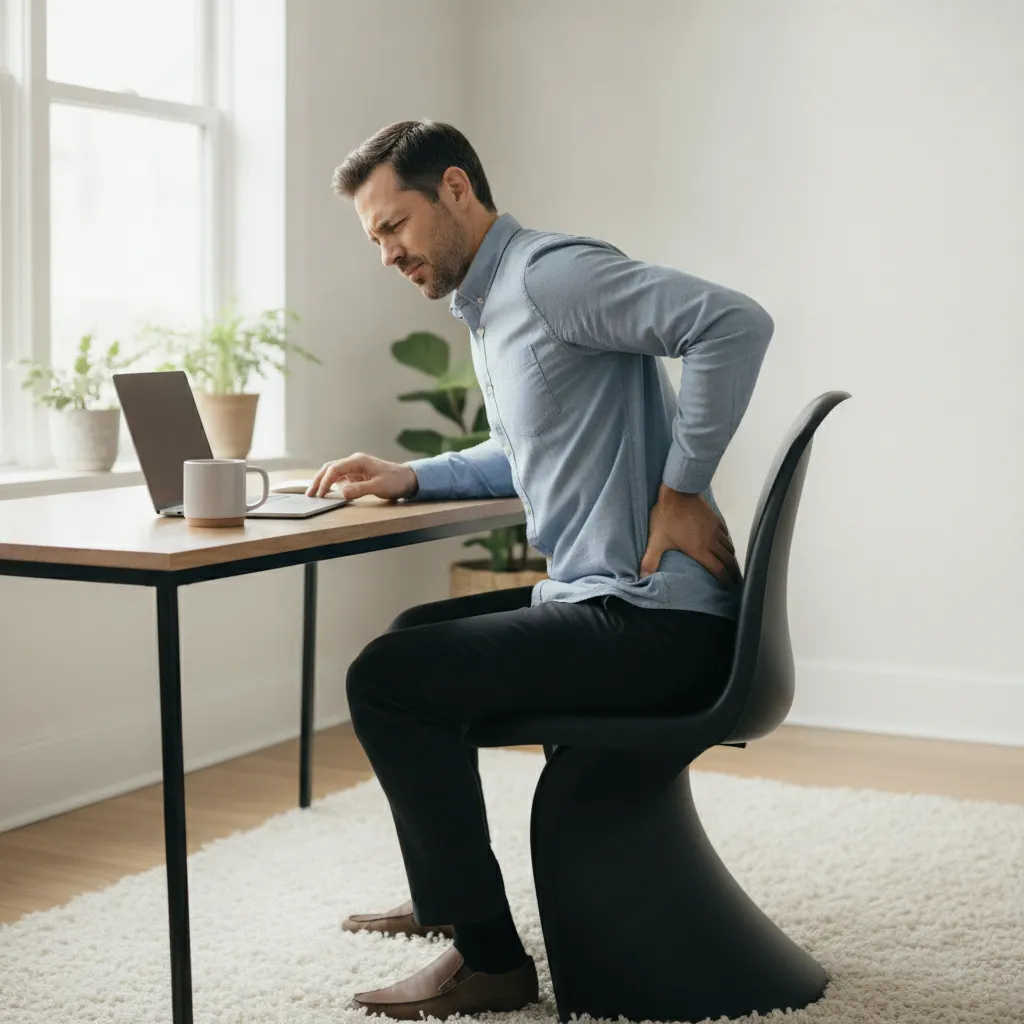
A slouched sitting posture can increase loading on the intervertebral discs.In vivo measurements suggest that relaxed sitting can produce loading comparable to standing, while slouched sitting may be more demanding. Pressure on the buttock and prolonged hip flexion can also aggravate symptoms in some people. This is why long hours at a computer or behind the wheel may feel particularly uncomfortable, and why adjusting how long and how you sit can form part of symptom management.
How can you recognize symptoms of sciatica?
- Pain that travels from the lower back or buttock down the back of the leg, sometimes as far as the foot;
- burning, electric, or stabbing pain, usually on one side;
- tingling or numbness in the leg or foot;
- symptoms that worsen with sitting, coughing, sneezing, or bending; and
- in more severe cases, weakness in the leg muscles.
How can you ease symptoms at home?
1. Stay gently active and avoid prolonged bed rest
UK guidance from NICE (NG59) advises people with low back pain and sciatica to continue normal activities where possible rather than remain in bed. Short, frequent walks may help you maintain movement without sitting for long periods. Keep activity within a tolerable range and stop if symptoms worsen substantially.
2. Adjust your sitting position
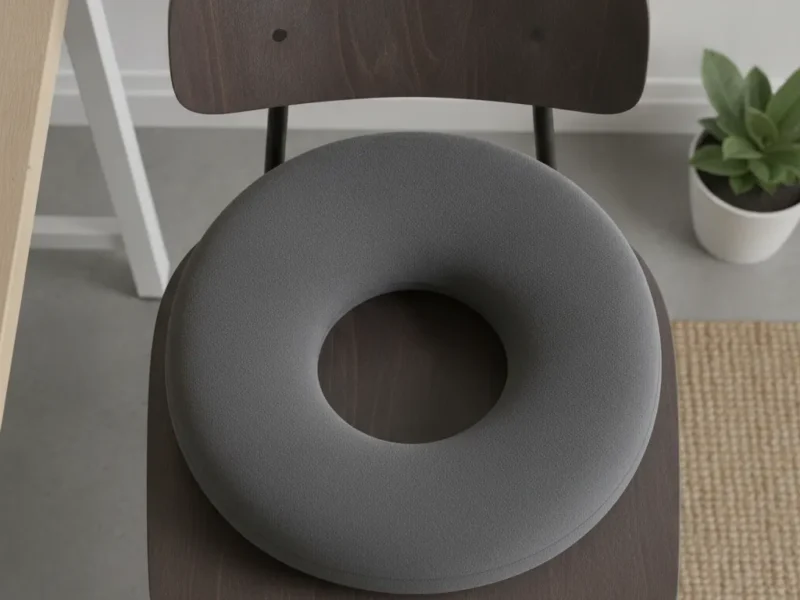
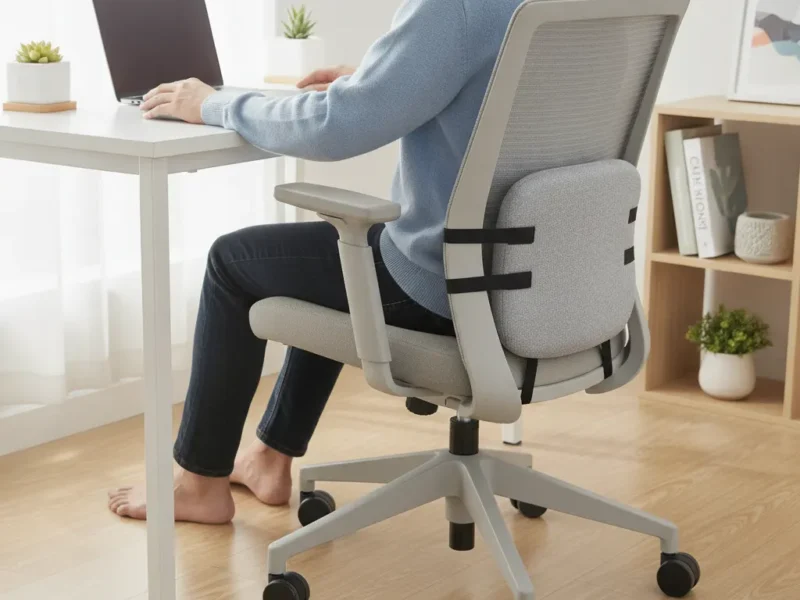
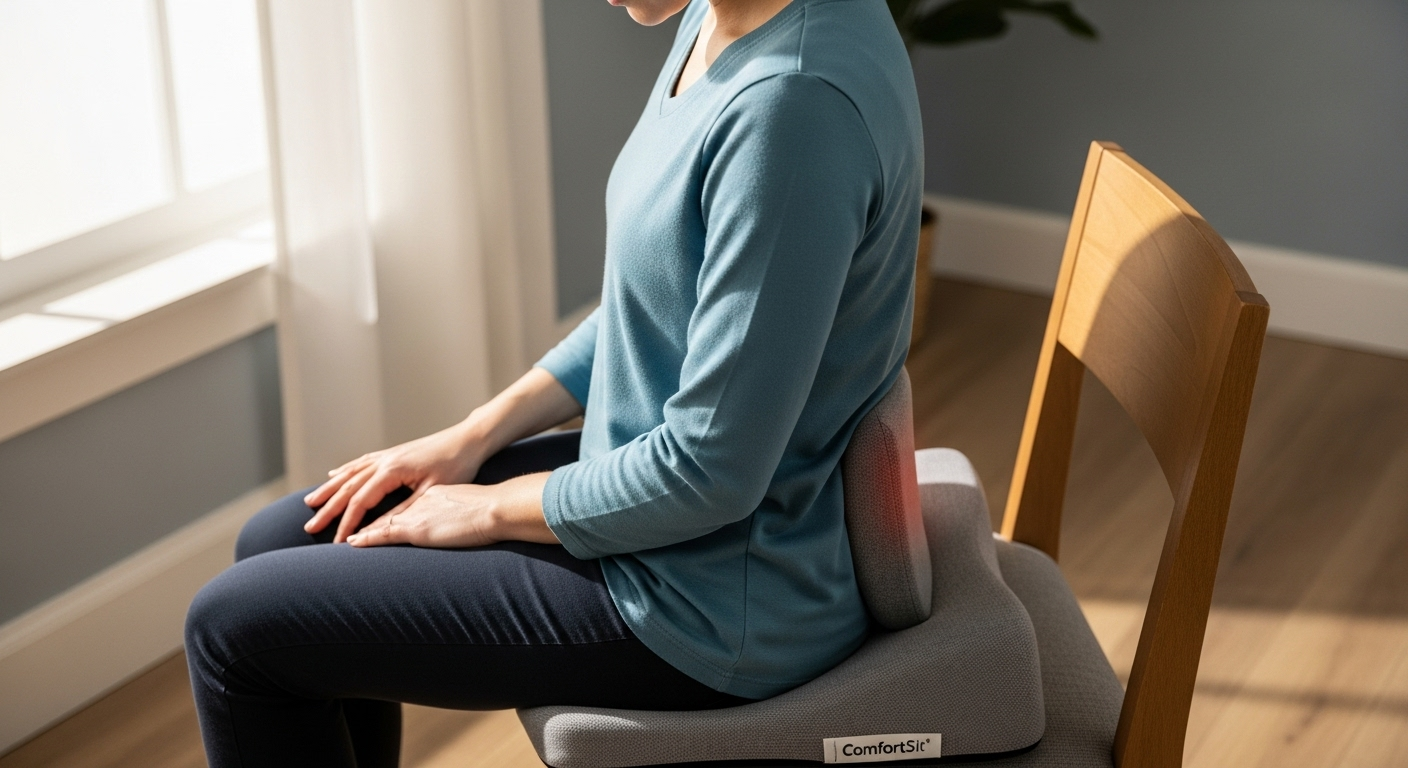
Stand and walk every 30–45 minutes. Sit with your feet supported and your lower back comfortable. If a hard seat aggravates pressure on the buttocks or tailbone, a contoured memory-foam cushion such as the ComfortSit seat cushion may feel more comfortable, although a cushion does not treat the underlying cause of sciatica. For guidance on adjusting your chair and desk, see Home Office Ergonomics.
3. Heat and cold
A cold pack or heat pack applied for 15–20 minutes may provide temporary relief. Protect the skin and use whichever feels better; evidence does not require a fixed sequence of cold first and heat later.
4. Gentle exercises
NICE guidance supports exercise as part of care for low back pain and sciatica, with the type chosen for the person’s needs and abilities. The following gentle movements may suit some people, but they are not appropriate for every cause of sciatica:
- Figure-4 piriformis stretch: Lie on your back, cross one ankle over the opposite knee, and gently draw the thigh toward your chest. Hold for 30 seconds and repeat 3 times on each side, stopping if leg symptoms increase.
- Knee-to-chest stretch: Lie on your back, hold one knee, and slowly draw it toward your chest. Hold for 30 seconds, then switch legs. Stop if the movement sends pain farther down the leg.
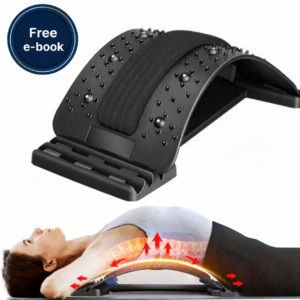
For more movements that break up sitting, read 5 Stretches After Every Hour of Sitting. For gentle positioning of the lower back, you can also read about the BackFix back stretcher.
How long does sciatica last?
Many episodes improve substantially within 4–6 weeks. A Dutch primary-care study found that about 70% of patients recovered within three months, while an estimated 80–90% recover without surgery. If pain persists beyond six weeks despite self-care, arrange an assessment. NICE advises against routine imaging in non-specialist care and recommends considering imaging only when the result is likely to change management. A clinician can discuss physiotherapy and other options.
When should you seek immediate medical care?
The following signs require urgent medical assessment:
- difficulty urinating or passing stool, or loss of bladder or bowel control;
- numbness around the genitals, buttocks, or inner thighs, known as saddle numbness;
- rapidly worsening weakness in the leg or foot, such as foot drop; or
- pain after a fall or injury, severe pain at night, unexplained weight loss, or fever.
Frequently asked questions about sciatica and sitting
How should I sit to make sciatica less painful?
Sit in a comfortable, supported position with your feet on the floor and your knees approximately level with your hips. Distribute your weight evenly. A contoured cushion may reduce pressure on the buttocks for some people. Most of all, avoid staying in any one position too long; stand every 30–45 minutes.
Is walking good for sciatica?
Short, frequent walks are often well tolerated and can help maintain mobility. NICE recommends continuing normal activities where possible and discourages prolonged bed rest. Adjust the distance and pace if walking increases symptoms.
Does sciatica resolve on its own?
Often it does. Many episodes settle within 4–6 weeks, and an estimated 80–90% of people recover without surgery. Remaining active within tolerable limits and varying your position can support recovery, although no self-care measure guarantees faster recovery or prevents recurrence.
Can I exercise while I have sciatica?
Often yes, with appropriate adjustments. Walking, swimming, and individually selected mobility or strengthening exercises may be suitable. Avoid any activity, including heavy lifting, deep forward bending, or forceful twisting, if it clearly worsens symptoms. A physiotherapist can help select exercises for the underlying cause.
This content is for informational purposes and is not a substitute for consultation with a doctor or physiotherapist. Seek urgent medical care for any of the warning signs described above.
Related: a complete guide to sciatica.
From our store
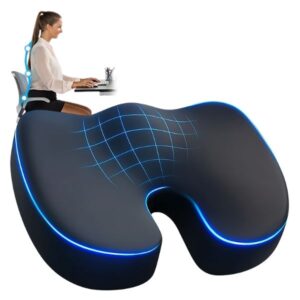
COMFORTLUX Seat Cushion