Sciatica: causes, symptoms, and what may help
Sciatica describes pain that travels through the buttock and down a leg, usually because a lumbar or sacral nerve root contributing to the sciatic nerve is irritated or compressed. A herniated lumbar disk is a common cause. Many cases improve without surgery, but new bladder, bowel, saddle-sensation, or worsening weakness symptoms require emergency assessment.
This guide reviews symptoms, causes, recovery, self-care limits, and warning signs.
What is sciatica?
Sciatica is a symptom pattern rather than a disease. It usually reflects irritation of one or more nerve roots that form the sciatic nerve. The NHS describes pain along the sciatic distribution from the lower back or buttock into a leg. Symptoms usually affect one side, although bilateral symptoms can occur and need careful assessment.
Sciatica is common. A review in StatPearls estimates lifetime incidence at 10%–40%, with a peak in the fourth decade. This range does not mean that almost everyone experiences sciatica.
What are the symptoms of sciatica?
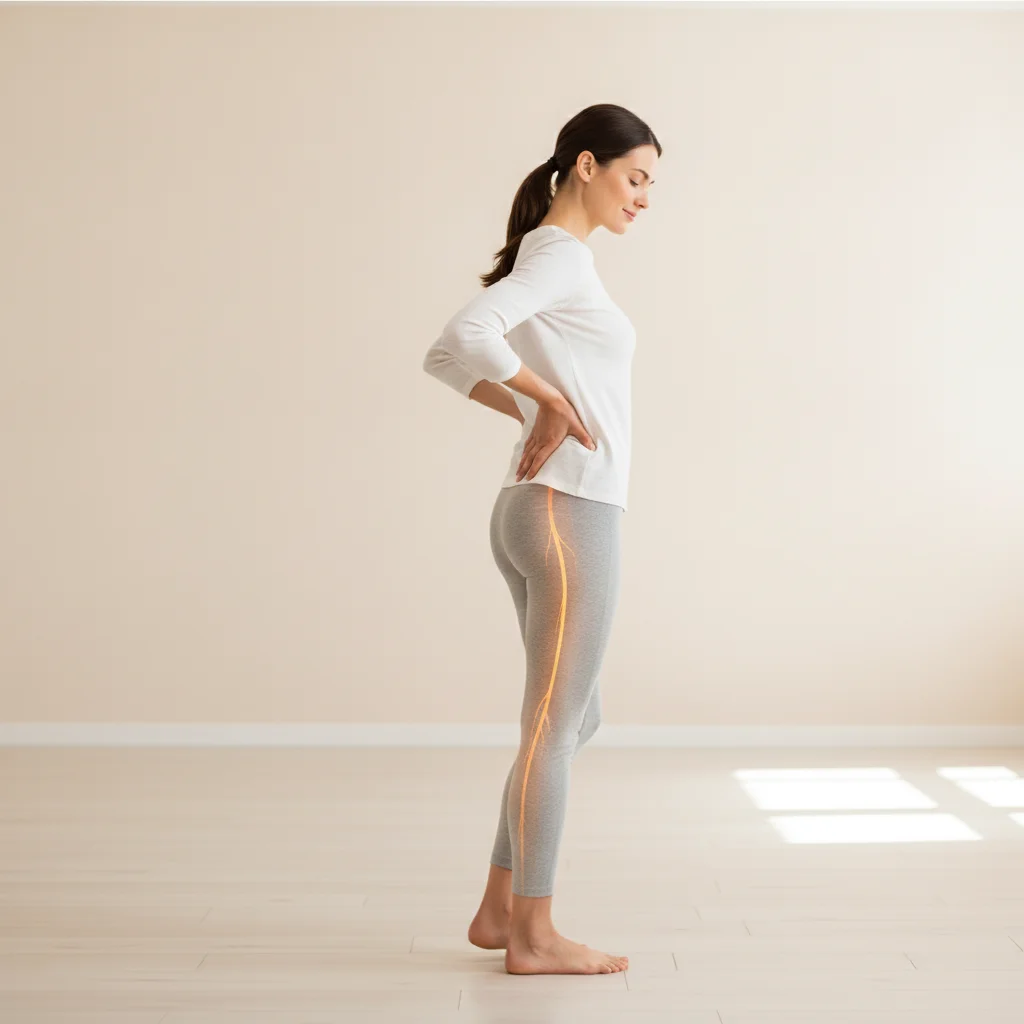
Pain may travel from the back or buttock into the thigh, calf, ankle, or foot and can be worse in the leg than in the back. Tingling, numbness, or weakness may occur. Coughing, sneezing, or some movements can aggravate symptoms.
Symptoms described by the NHS include:
- sharp, stabbing, or burning pain along the back of the leg,
- tingling, as if the leg has ‘fallen asleep’,
- numbness in the leg or foot,
- a feeling of weakness in the affected leg.
AAOS OrthoInfo describes sciatica as sometimes feeling like a severe leg cramp or sharp, electric pain. Radiating leg symptoms help distinguish it from pain confined to the lower back, although diagnosis still requires clinical context.
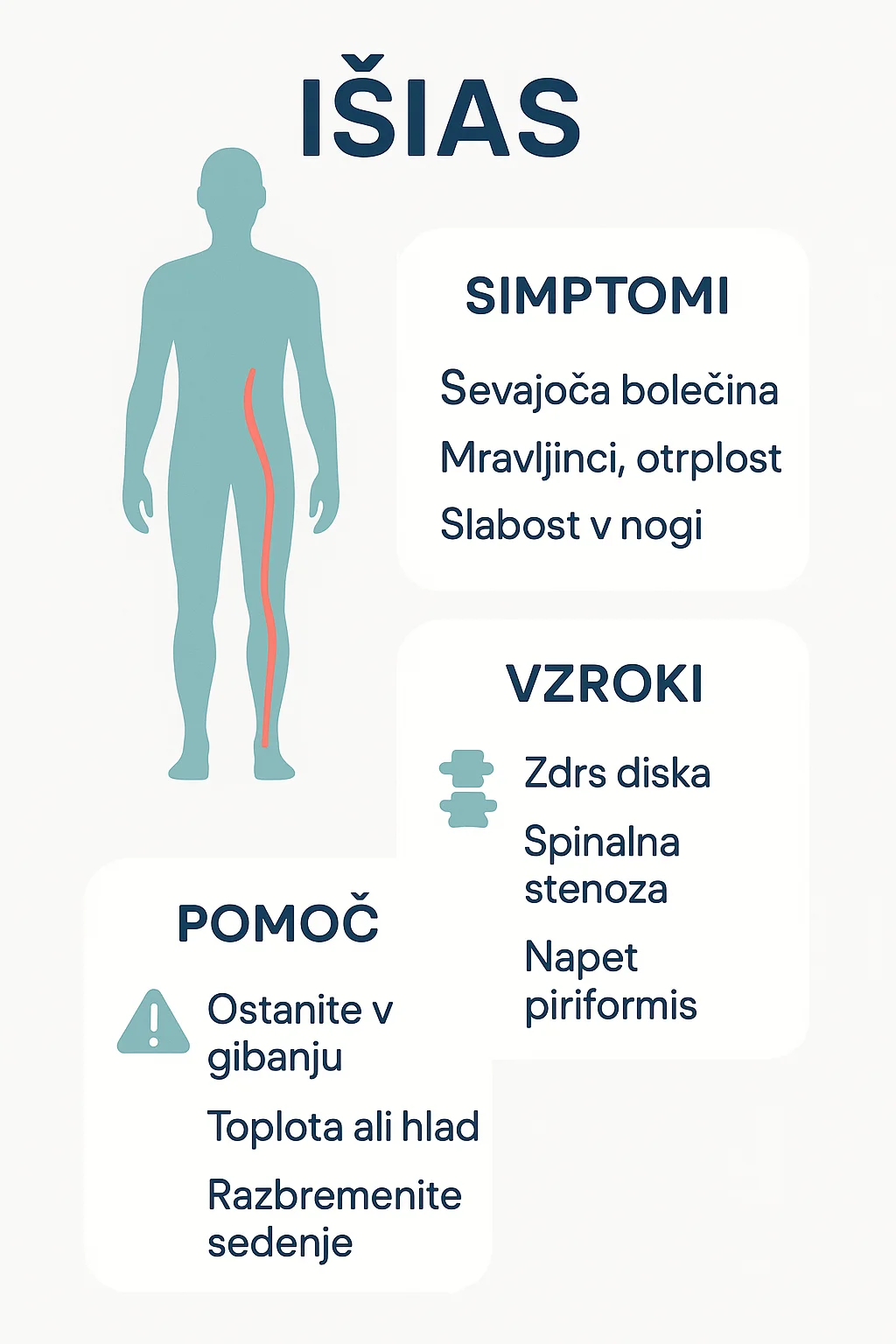
The infographic below summarizes the most common symptoms, main causes, and first measures for sciatica at a glance.
What causes sciatica?
A herniated lumbar disk is a common cause when disk material irritates or compresses a nerve root. Other causes include spinal stenosis, spondylolisthesis, bone spurs, and less commonly sciatic-nerve irritation outside the spine, sometimes called deep gluteal or piriformis syndrome.
Causes vary with age and health. Disk herniation is more common in younger and middle-aged adults, while degenerative narrowing and bone spurs become more common later. These are tendencies rather than diagnostic age cutoffs.
| Cause | What happens | More common in |
|---|---|---|
| Slipped (herniated) disc | Disk material irritates or compresses a lumbar or sacral nerve root | Younger and middle-aged adults |
| Spinal stenosis | The spinal canal or nerve-root opening narrows | Older adults, although it can occur earlier |
| Bone spurs and osteoarthritis | Degenerative changes can narrow space around a nerve root | Older adults |
| Piriformis syndrome | The sciatic nerve may be irritated in the deep buttock region | Runners and people who sit for long periods are sometimes affected, but diagnosis is debated |
| Spondylolisthesis | One vertebra shifts relative to another and may narrow space for nerves | Various ages, depending on the cause |
Sitting can aggravate symptoms for some people but does not by itself prove disk damage. For practical adjustments, read sciatica and sitting. For more about lumbar nerve-root symptoms, see lumbar radiculopathy and symptom relief.
How long does sciatica last?
Many acute cases improve over several weeks, but recovery varies. StatPearls describes resolution within about 4–6 weeks for many cases, while some last longer or recur.
This is also confirmed by OrthoInfo: AAOS reports that about 80%–90% of people improve without surgery, often within several weeks when disk herniation is the cause. NHS guidance notes that symptoms can take weeks to months. Seek assessment sooner for worsening weakness or other warning signs, and when pain is persistent or worsening.
What may help at home?
When no warning signs are present, guidance generally favors remaining active as tolerated and avoiding prolonged sitting or bed rest. Heat or cold may provide temporary comfort. Exercises should match symptoms and diagnosis rather than follow one universal routine.
1. Stay active, not in bed
Prolonged bed rest is generally discouraged. Short rest during a severe flare may be reasonable, followed by a gradual return to comfortable daily activity. Stop and seek advice if activity causes increasing weakness or neurologic symptoms.
2. Use heat or cold
Either may provide temporary comfort. Protect the skin, limit exposure, and use the option that feels helpful. The fixed “cold for 48 hours, then heat” rule is not specific to sciatica and neither treatment decompresses a nerve root.
| When | Effect | |
|---|---|---|
| Cold | When cold feels comfortable during a flare | May temporarily reduce pain; it does not treat nerve compression |
| Heat | When heat feels comfortable for muscle tension | May temporarily ease muscle discomfort |
3. Adjust sitting and take breaks
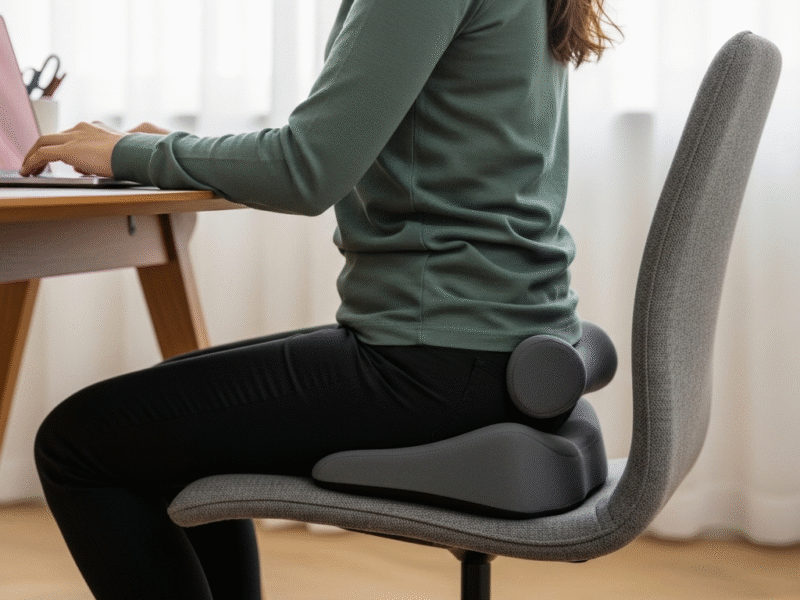
If sitting aggravates symptoms, change position frequently and avoid a seat setup that increases leg pain. One comfort product is the ComfortSit cushion, while lumbar support is available in the Lumbaris cushion. You can find both among orthopedic pillows. A cushion does not treat sciatica, but a different sitting setup may improve comfort for some people.
4. Use comfortable movement rather than one “perfect” posture
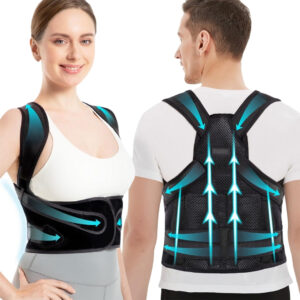
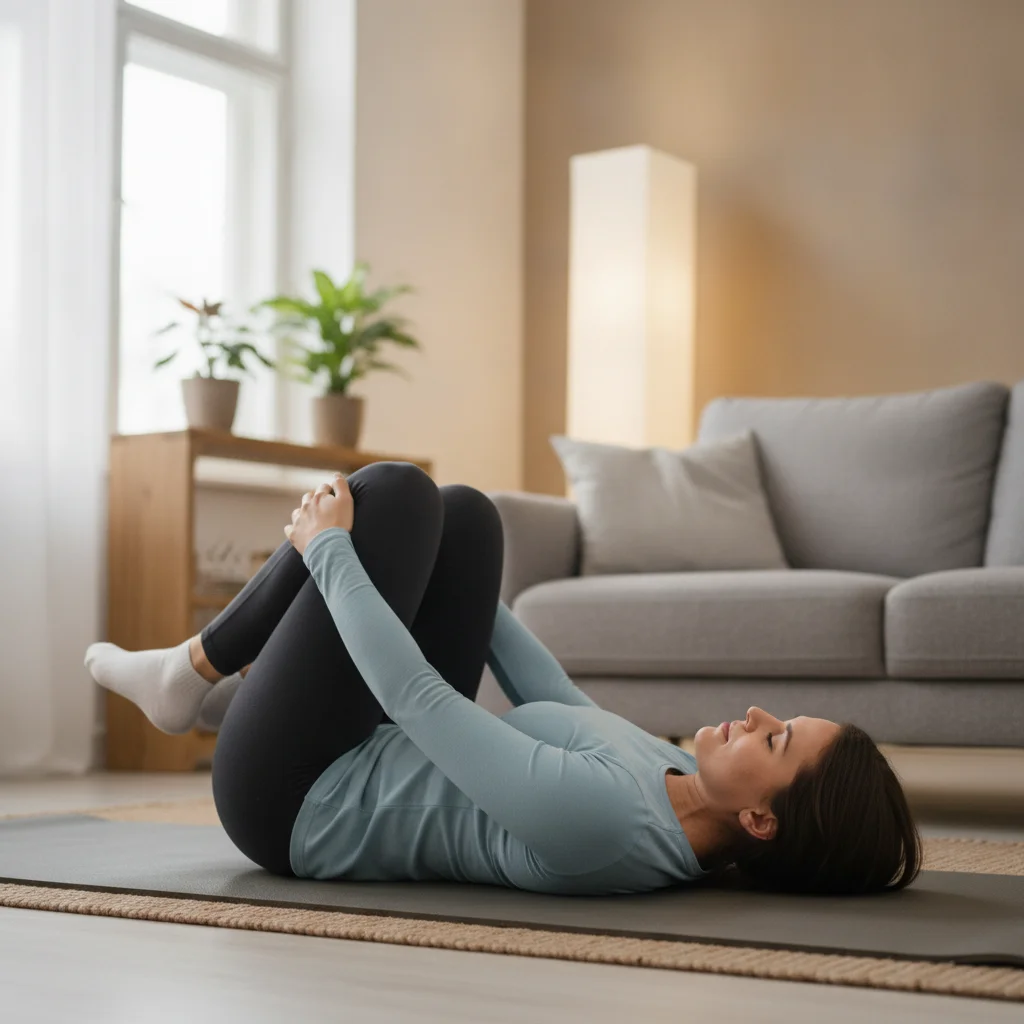
No single upright posture prevents or cures sciatica. Vary position and adjust the workstation. One consumer reminder product is the Spineo posture corrector. It does not correct a disk or nerve-root problem. See how to improve posture Use gentle exercises only when they do not increase radiating pain, numbness, or weakness. A physical therapist can select movements based on the pattern of symptoms.
5. Ask whether a brace is appropriate
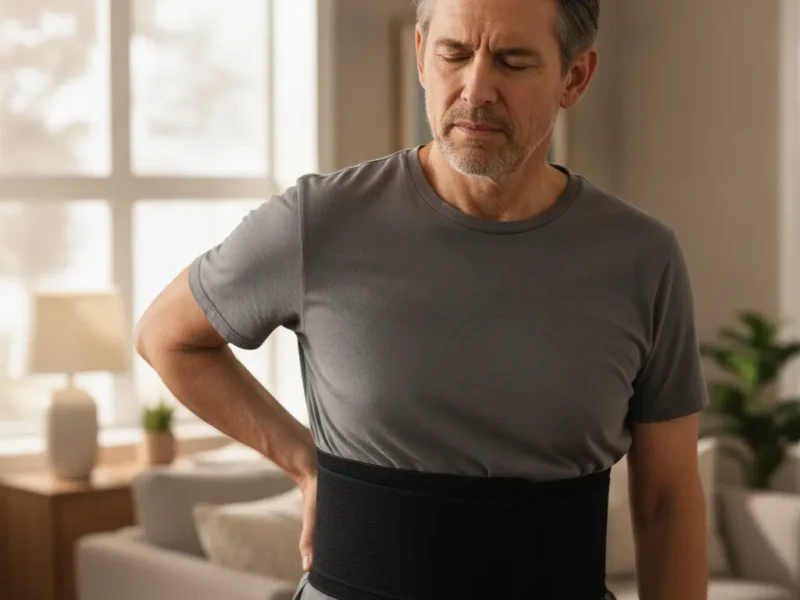
Some people report temporary support from a lumbar brace, but evidence for routine sciatica treatment is limited. Read does the brace help. A brace should not replace activity or diagnosis-specific rehabilitation.
Can recurrence risk be reduced?
Sciatica can recur. General measures include maintaining activity, using graded strengthening when appropriate, adjusting repeated aggravating tasks, and managing relevant health factors. No program prevents every recurrence.
- Strengthen the core: A clinician-guided program may improve trunk strength and function.
- Interrupt sitting: Change position every 30–45 minutes when practical and symptoms allow.
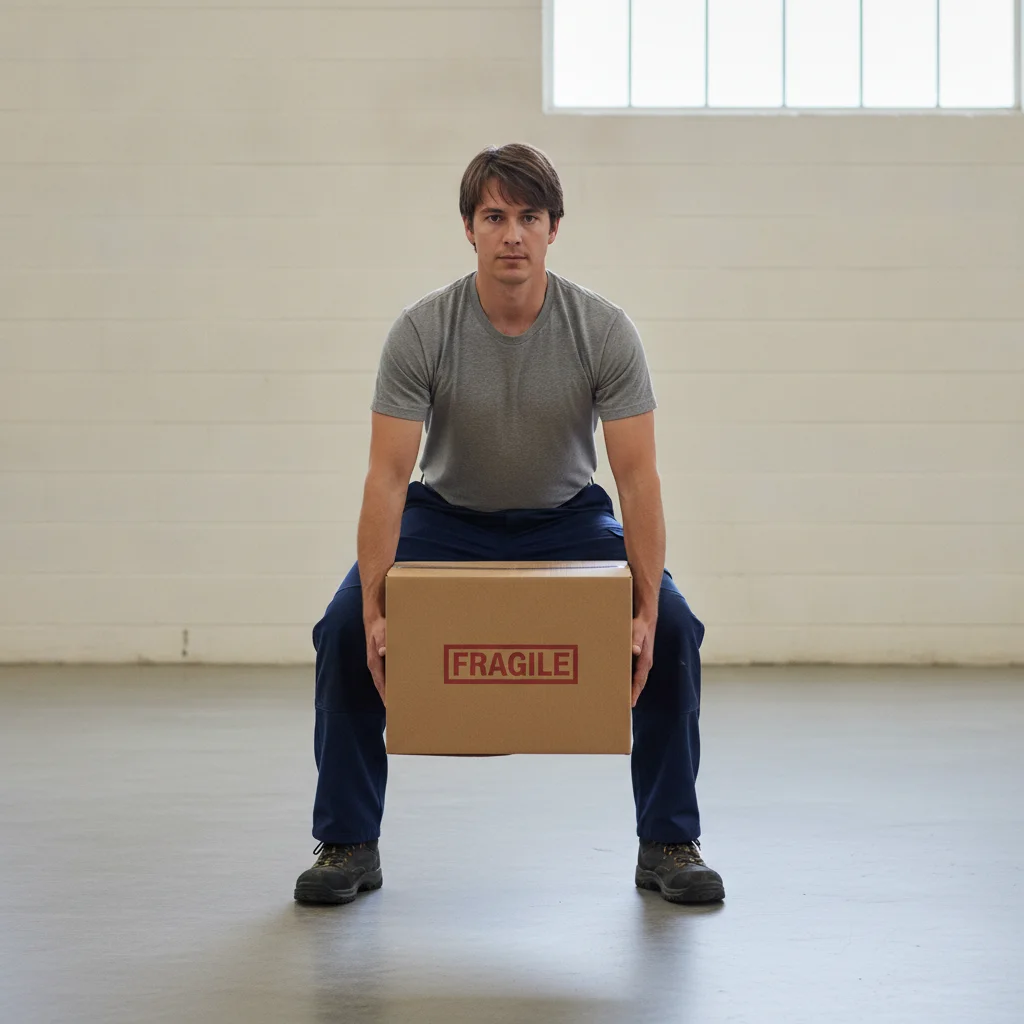
- Lift correctly: Keep the load close, use a stable stance, and choose a technique suited to the object and your ability. There is no single safe lifting posture for every task.
- Stay active and address health factors: regular activity supports general health. Body weight is one of several risk factors and should be discussed without assuming it is the cause of an individual episode.
- Adjust the workstation: support the feet and forearms, place the screen comfortably, and change position regularly.
For an easier understanding, also watch the video on this topic:
When should you seek medical care?
Call local emergency services immediately for new numbness around the genitals, anus, buttocks, or inner thighs; new inability to urinate; loss of bladder or bowel control; or new severe or bilateral leg weakness. These can indicate cauda equina syndrome.
Seek prompt medical assessment if:
- pain persists, worsens, or substantially limits function;
- leg or foot weakness is new or worsening or walking becomes difficult;
- pain occurs with fever, chills, unexplained weight loss, or a history of cancer;
- symptoms began after a significant fall or injury.
This content is for general information and does not replace medical advice, diagnosis, or treatment. Seek emergency care for cauda equina signs and prompt assessment for worsening weakness or other warning signs.
Frequently asked questions about sciatica
Am I allowed to exercise and walk with sciatica?
Moderate movement is usually encouraged when no warning signs are present. Continue ordinary activity as tolerated, avoid prolonged bed rest, and stop exercises that sharply increase radiating pain or neurologic symptoms.
Is it better to rest in bed with sciatica?
Prolonged bed rest does not speed recovery. Brief rest may be reasonable during severe pain, followed by a gradual return to comfortable activity.
Heat or cold: which is better?
Use whichever provides short-term comfort, with skin protection and limited exposure. There is no evidence-based rule that cold is required first or that alternating the two treats the cause.
Does a seat cushion help with sciatica?
A cushion may make sitting more comfortable for some people, but it cannot decompress a nerve root or treat the cause. Change position and take breaks rather than relying on a cushion alone.
When is surgery necessary for sciatica?
Most people do not need surgery. It may be considered for cauda equina syndrome, severe or progressive weakness, or disabling symptoms that persist despite appropriate nonsurgical care. The decision depends on examination and imaging findings.
From our store
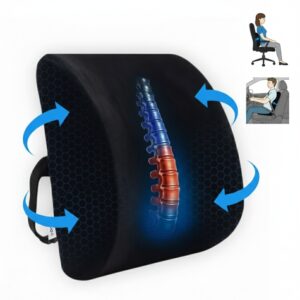
LUMBARIS Back Support Cushion
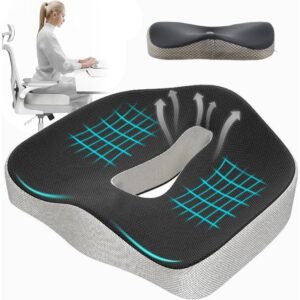
COMFORTSIT Seat Cushion