Achilles Tendon Pain: Causes, Treatment, and Exercises
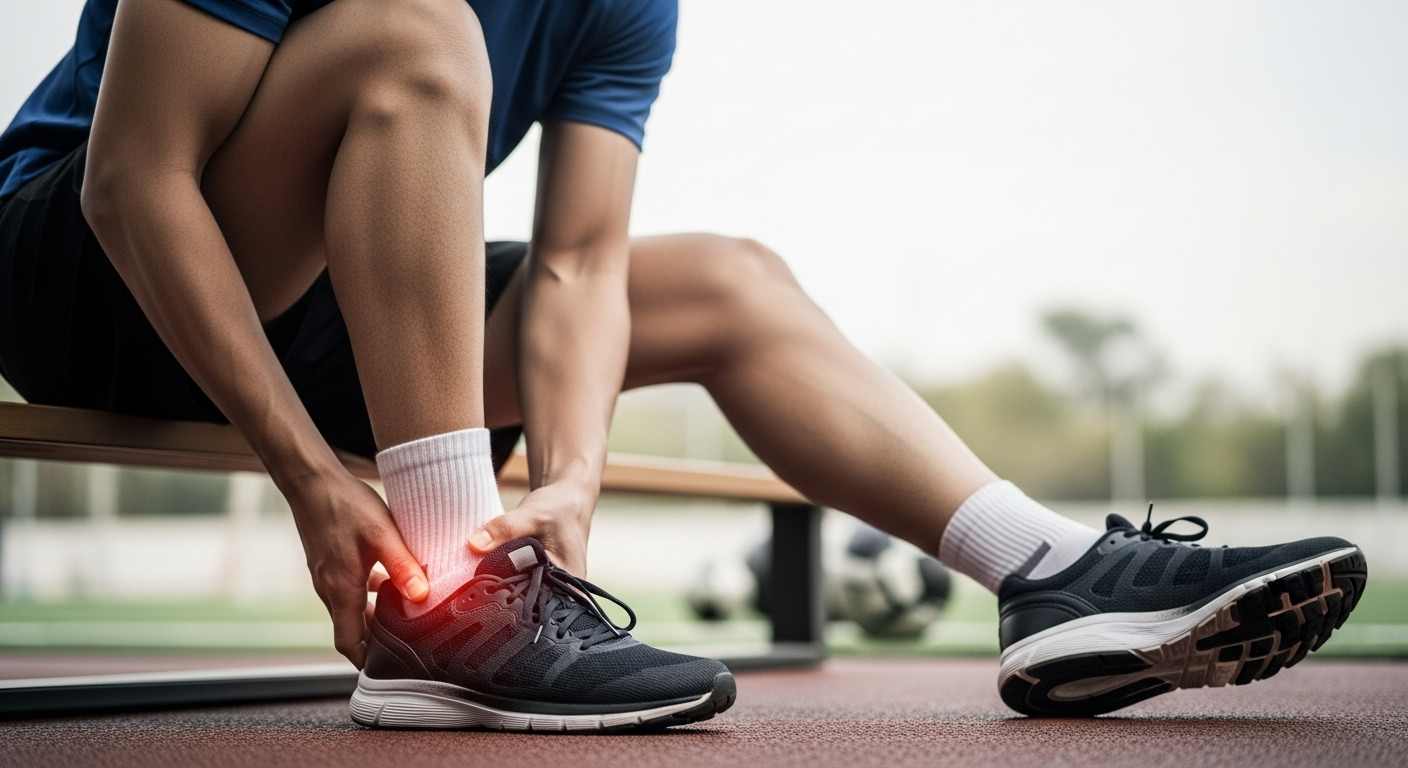
Achilles tendinopathy usually develops when tendon loading exceeds its capacity over time. Complete rest rarely restores that capacity; treatment generally uses gradual, controlled loading. Eccentric heel-lowering exercises are well studied, but they are one of several effective loading approaches. This guide explains midportion and insertional pain, exercise differences, footwear and inserts, and signs of a possible rupture that need urgent assessment.
What is Achilles tendinopathy?
The Achilles tendon connects the gastrocnemius and soleus calf muscles to the heel bone and helps propel the body during walking, running, and jumping. For persistent symptoms, modern practice often uses the term tendinopathy, describing tendon pain and impaired function associated with altered structure and loading capacity. According to the American Academy of Orthopaedic Surgeons (AAOS/OrthoInfo) , two forms are commonly distinguished because their exercise modifications differ.
Midportion and insertional tendinopathy compared
Midportion tendinopathy affects the tendon 2–6 cm above the heel bone and is common in active runners. Insertional tendinopathy occurs where the tendon attaches to the heel and may coexist with a bony prominence such as Haglund deformity or a spur. According to Cleveland Clinic , pain and swelling in insertional disease occur directly at the heel attachment. Location matters when selecting exercises.
| Feature | Midportion | Insertional |
|---|---|---|
| Pain location | 2–6 cm above the heel bone, in the tendon’s middle portion | At the tendon’s attachment to the heel bone |
| Commonly seen in | Active runners and younger adults | People of any age, sometimes with a bony prominence |
| Heel-lowering exercise | The heel may move below step level if tolerated and clinically appropriate | Lower the heel only to level ground; deep dorsiflexion over a step can compress the insertion and aggravate pain |
| Calf stretching | May be useful if tolerated | Use caution because aggressive stretching can aggravate symptoms |
This table summarizes general practice. A physiotherapist should tailor the program to the diagnosis and current capacity.
Why does Achilles tendon pain develop?
Symptoms usually reflect a combination of load change and individual risk factors. A rapid increase in training is a common trigger; calf capacity, footwear, health conditions, and biomechanics may also contribute.
- Sudden increase in load: A rapid rise in running distance, intensity, or frequency, such as adding hills or sprints or returning too quickly after a break, is a common trigger according to AAOS/OrthoInfo . Heel pain while running is therefore common among new runners and after training changes.
- Calf stiffness or weakness: Limited ankle movement or reduced calf capacity may alter how load is distributed through the tendon.
- Unsuitable or worn footwear: A sudden switch from shoes with a heel-to-toe drop to very flat footwear can increase tendon demand. Comfort and training history matter more than any universal shoe type.
- Foot biomechanics: Pronation, a flat or high arch, and movement patterns can influence loading, but none alone proves the cause. Learn more in Pronation or Supination.
- Age and previous injury: Tendon properties change with age, and prior injury or some health conditions can affect recovery.
Pain at the heel attachment can overlap with other causes of heel pain, including a heel spur . These involve different structures and need careful assessment.
What helps? Progressive tendon loading
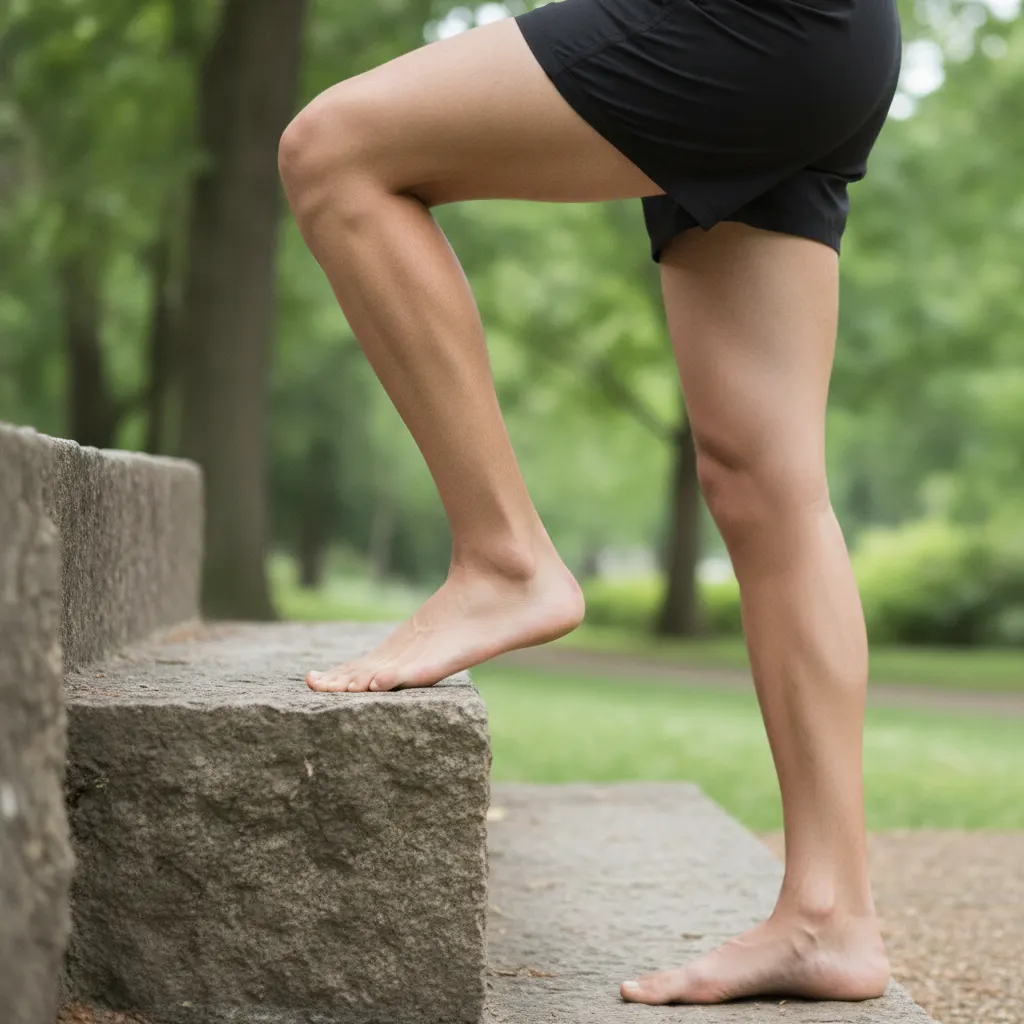
Eccentric strengthening, which emphasizes slow controlled heel lowering under load, has a substantial research base. It is not the only supported approach; progressive calf raises and heavy slow resistance can also be used. A systematic review of 8 randomized trials involving 401 tendons in 371 patients, published in the Journal of Orthopaedic Surgery and Research, found that eccentric exercise reduced pain and improved function compared with several controls. It also cautioned that “wait-and-see or wait-and-rest approaches are probably not useful in managing Achilles tendinopathy” (PMC9878810).
Longer-term results were reported in a 5-year follow-up of 46 patients with 58 affected tendons after the Alfredson program. Mean VISA-A score improved from 49.2 at baseline to 83.6 after five years, and 39.7% reported no pain (PMC3277725). Some participants still had symptoms, so these results do not promise complete recovery.
| Exercise | How to perform it | Example dose |
|---|---|---|
| Eccentric lowering with a straight knee | At a step, rise using both legs, shift weight toward the affected leg, and slowly lower for 3–4 seconds. For midportion disease, a clinician may allow the heel below step level. Use the other leg to rise again. | 3 sets of 15 repetitions, 2 times daily in the classic protocol; many people need a lower starting dose |
| Eccentric lowering with a bent knee | Use the same movement with the affected knee slightly bent to place more demand on the soleus. | 3 sets of 15 repetitions, 2 times daily in the classic protocol; many people need a lower starting dose |
| Static calf stretch | Step forward on the unaffected leg while keeping the affected leg behind and the heel down. Limit or omit stretching in insertional disease if heel pain increases. | 3 holds of 30 seconds |
Some discomfort during loading may be acceptable, but sharp or progressively increasing pain means the load should be reduced and the diagnosis reviewed. The classic Alfredson protocol lasts 12 weeks. A physiotherapist can adjust load, range, and frequency rather than requiring everyone to follow the original high-volume schedule.
Why rest alone is usually insufficient
Temporarily reducing painful activity can settle symptoms, but prolonged complete rest reduces capacity and may make return to activity harder. The systematic review cited above (PMC9878810) found that continued moderate tendon loading during rehabilitation did not worsen pain or function outcomes. Modify aggravating activity, keep tolerable movement, and use cold for up to 20 minutes if it provides short-term comfort, while protecting the skin.
Inserts, heel lifts, and footwear: support rather than a cure
Shoe inserts or heel lifts may reduce symptoms for some people while a loading program is under way, but evidence varies and they do not replace rehabilitation. A heel lift temporarily reduces ankle dorsiflexion and tendon strain; it should fit securely and usually be used consistently on both sides when advised.
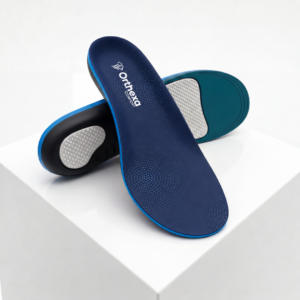
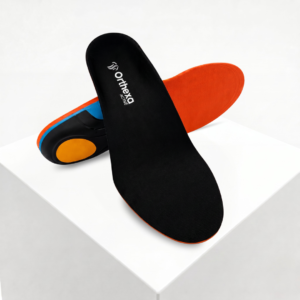
- For runners and active people seeking cushioning and arch support during sport, one product option is Shoe insoles – Active.
- For everyday shoes and prolonged standing, an option intended for general foot support is Shoe insoles – Comfort.
- Choose comfortable footwear that does not rub the painful insertion. Running-shoe lifespan varies, but 600–800 km is a commonly quoted replacement range rather than a medical rule.
Relying on an insert without rebuilding calf and tendon capacity is unlikely to prepare the tendon for full activity.
A gradual return to running
Return-to-run timing should be based on symptoms, strength, hopping capacity, and response to loading, ideally with professional guidance, rather than a single pain-free exercise. According to the UK Guy’s and St Thomas’ NHS Foundation Trust , recovery can take 6 to 9 months of consistent rehabilitation and sometimes up to a year. Begin with walk-run intervals if appropriate and increase only when symptoms remain stable. A 10% weekly increase is a planning guide, not an evidence-based limit for everyone. Delay hills and sprints until basic loading is tolerated. If ankle instability follows a sprain, see Exercises to Strengthen the Ankle After a Sprain.
Warning: A sudden sensation of being kicked in the calf or heel, sometimes with a pop and inability to rise onto the toes or push off, may indicate an Achilles tendon rupture. Mayo Clinic describes a kicked-in-the-calf sensation, sharp pain, and inability to stand on the toes of the affected leg. Do not begin exercises; seek urgent medical assessment through an urgent-care or emergency service.
When should you see a doctor?
Many cases can be managed without surgery using progressive exercise and load modification. According to AAOS/OrthoInfo , surgery may be considered only after at least 6 months of well-supervised nonsurgical treatment has failed. Seek medical care if:
- you heard or felt a sudden pop with sharp pain, which may indicate rupture and needs urgent assessment;
- you cannot rise onto your toes or bear weight normally;
- there is severe swelling, redness, or warmth, which may indicate infection or another acute problem;
- pain is worsening or not improving after several weeks of an appropriate program; or
- you have diabetes or another condition that affects tissue healing, in which case obtain advice before beginning exercises independently.
Frequently asked questions about the Achilles tendon
Should I rest completely when my Achilles tendon hurts?
Usually not for persistent tendinopathy. Reduce activities that cause sharp or escalating pain, but use graded loading suited to your diagnosis and capacity. Acute injury or suspected rupture is different and needs assessment before exercise.
How long does Achilles tendon pain take to improve?
The cited NHS guidance says return to full pain-free activity often takes 6 to 9 months and sometimes up to a year. Timelines vary with diagnosis, duration, health, and loading demands.
Can inserts alone cure Achilles tendon pain?
No. Inserts and heel lifts may temporarily change load or improve comfort, but they do not replace progressive tendon rehabilitation. Eccentric exercise is well studied, while other progressive loading programs also have evidence.
How can I distinguish tendinopathy from a rupture?
Tendinopathy usually develops gradually and fluctuates with activity. Rupture is typically sudden, sometimes with a blow or pop sensation, sharp pain, and difficulty pushing off or standing on the toes. Seek urgent assessment and do not test it with exercises.
Does the precise pain location matter?
Yes. Midportion and insertional tendinopathy use somewhat different exercise ranges. For insertional pain, heel lowering is often limited to level ground because deep dorsiflexion over a step can compress the tendon against the heel and aggravate symptoms.
This content is informational and does not replace advice from a doctor or physiotherapist. Seek urgent medical care for a suspected rupture, including a sudden pop or inability to push off.
Related: foot massage and care.
Related: insoles for running pain.
From our store
ACTIVE Sports Insoles