
Ankle exercises after a sprain: mobility, strength, and balance
Recovery from an ankle sprain usually involves gradual, controlled movement rather than prolonged complete rest. Rehabilitation progresses from protecting the injured joint and managing swelling to restoring motion, strength, balance, and sport-specific function. A review found that proprioceptive training reduced recurrent sprains by about one-third among people with a previous sprain. This guide explains common stages, exercises, return-to-sport assessment, and signs that need medical evaluation.
Why does rehabilitation matter after an ankle sprain?
An ankle sprain stretches or tears one or more stabilizing ligaments. The most common type affects the outer ankle after the foot rolls inward. Rehabilitation does not simply “strengthen” a ligament. It restores joint motion and muscle strength and retrains neuromuscular control and balance. Incomplete recovery can contribute to recurrent sprains, persistent symptoms, or chronic ankle instability.
Recovery stages: when should exercises begin?
Recovery varies with injury severity, previous injuries, and other health factors. Progress based on function and symptoms rather than dates alone. Seek assessment before exercising if you cannot bear weight, have substantial swelling or deformity, or may have a moderate or severe injury.
One proposed framework for managing soft-tissue injuries is PEACE & LOVE. It expands on the older RICE approach of rest, ice, compression, and elevation. Dubois and Esculier describe the framework in the British Journal of Sports Medicine and emphasize early protection, elevation, compression, education, and a gradual return to loading and exercise. Their framework advises caution with routine anti-inflammatory treatment, but medication decisions should be made with a clinician or pharmacist based on individual risks (Dubois & Esculier, 2020). The American Academy of Orthopaedic Surgeons (AAOS/OrthoInfo)also recommends beginning motion and rehabilitation after the initial phase, while using immobilization only as directed for the injury’s severity.
| Recovery phase | Goal | What to do | When to advance |
|---|---|---|---|
| 1. Initial protection often the first 24–72 hours | Protect the joint, reduce swelling and pain. | Protect the ankle from further injury, elevate it, and use compression that does not cause numbness, color change, or increasing pain. Ask a clinician or pharmacist about medication. | Progress as pain and swelling begin to improve and weight bearing becomes more comfortable. |
| 2. Early movement and loading often within several days | Restore comfortable motion and gradually resume weight bearing. | Use gentle range-of-motion exercises, such as tracing the alphabet with the foot, and increase loading as tolerated without sharp or increasing pain. | Progress when walking and basic ankle motion are improving without a significant increase in pain or swelling afterward. |
| 3. Strengthening and balance often begins over the following 1–3 weeks | Restore strength, balance, and proprioception. | Exercises with a resistance band in four directions, calf raises, standing on one leg. | Progress when single-leg standing on a firm surface is controlled and comfortable. |
| 4. Functional phase after strength, balance, and walking have improved | Prepare for work, full activity, and sport-specific demands. | Under appropriate supervision, add hopping, changes of direction, single-leg hop tests, and exercises specific to the activity. | Use several functional criteria and compare with the uninjured side. Lack of pain alone is not enough. |
Ankle mobility exercises after a sprain (phase 2)
When initial pain and swelling begin to settle, gentle motion can help restore ankle range. Move slowly and stop if an exercise causes sharp pain or a clear increase in symptoms.
Drawing the alphabet with the foot
Sit with the injured foot off the floor. Use the big toe as a pointer and slowly trace the letters of the alphabet in the air, moving at the ankle rather than the knee.
Ankle circles
While seated or lying down, slowly make 10 ankle circles clockwise and 10 counterclockwise. Use a comfortable range rather than forcing the movement.
Calf muscle stretching
Face a wall with both hands supported on it. Step the injured leg back and keep its heel down. Bend the front knee until you feel a gentle stretch in the calf of the back leg. Hold for 20–30 seconds and repeat up to three times if comfortable.
Ankle strengthening and stabilization exercises (stage 3)
Once motion and walking have improved, strengthening can target the muscles that support the ankle and help control inward rolling. If pain is concentrated in the Achilles tendon above the back of the heel rather than around the ankle ligaments, consider a separate assessment and see Achilles tendon pain: causes and relief options.
Resistance-band exercises
A resistance band can train ankle movement in four directions. Begin with light resistance and stable positioning:
- Pull upward (dorsiflexion): anchor the band securely in front of you and loop it over the top of the forefoot. Pull the toes toward the shin against the band.
- Press downward (plantar flexion): hold the band in both hands with it looped around the forefoot. Point the foot away slowly, as if pressing a gas pedal.
- Turn outward (eversion): anchor the band on the side opposite the working foot, loop it around the forefoot, and turn the sole outward against resistance without moving the knee.
- Turn inward (inversion): anchor the band on the other side and turn the sole inward slowly against resistance. Use caution because inversion may reproduce the original sprain mechanism.
A sample target is 3 sets of 15 repetitions in each direction, but begin with fewer repetitions or less resistance if needed. Quality and symptom response matter more than reaching a fixed number.
Calf raises
Stand with support nearby and feet about hip-width apart. Rise slowly onto both forefeet, pause for 1–2 seconds, and lower with control. Progress to the injured leg only when double-leg raises are comfortable and controlled. A sample target is 3 sets of 15.
Balance and proprioception: an essential part of rehabilitation
Balance training has evidence for reducing recurrent ankle sprains. A systematic review of seven randomized studies involving 3,726 participants, published in the Journal of Athletic Training, found a relative risk of 0.64 for recurrent sprain with proprioceptive training among people who had previously sprained an ankle (95% confidence interval 0.51–0.81), an approximate one-third relative reduction compared with no proprioceptive training (Rivera et al., 2017). An ankle injury can impair proprioception and neuromuscular responses, which these exercises are intended to retrain.
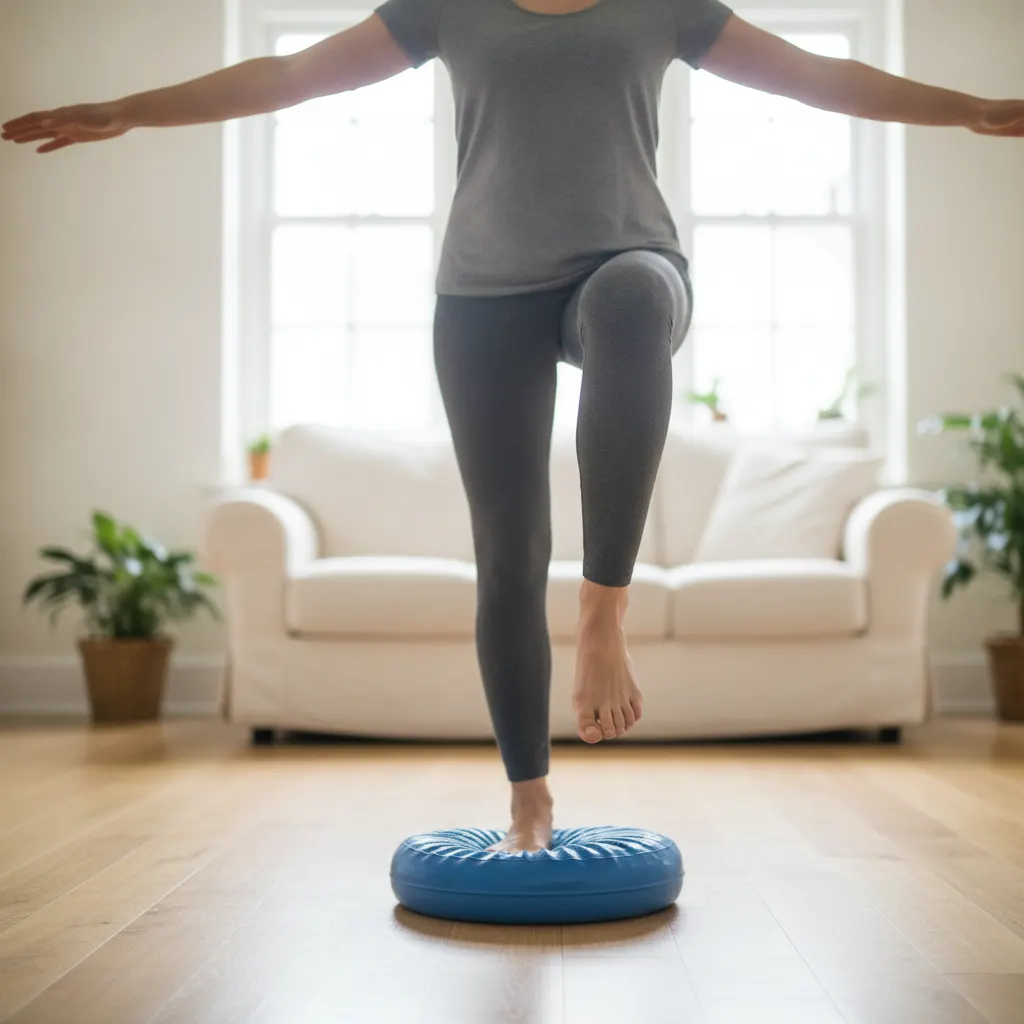
Progress only when you can perform the previous step with control and without a meaningful increase in pain or swelling. Stand beside a counter or sturdy support to reduce fall risk:
- Single-leg stand, eyes open, firm surface: stand on the injured leg for up to 30 seconds while keeping a hand near a stable support.
- Single-leg stand with reduced visual input: progress by briefly closing the eyes only if it is safe and you have stable support or professional supervision.
- Standing on an unstable surface: a balance pad or folded towel increases the challenge. Attempt this only after firm-ground balance is controlled and with support nearby.
- Tandem stance: place the heel of one foot directly in front of the toes of the other and maintain balance in the narrow stance, with support nearby.
Foot mechanics can affect how forces travel through the ankle during walking. For a general explanation of these terms, read Pronation or supination: what is your foot type.
This video from physical therapists Bob & Brad demonstrates several ankle-sprain exercises, including balance work. Use it as a visual supplement rather than a substitute for individual assessment.
Returning to sport: use functional criteria, not pain alone
Being pain-free during walking does not establish readiness for sprinting, landing, or changing direction. Clinicians may use single-leg hop tests to compare performance between the injured and uninjured sides. One study Journal of Athletic Training noted that 80%–85% limb symmetry thresholds may be too low and discussed at least 90% symmetry as a more demanding benchmark (Reid et al., 2020). This percentage should be interpreted as one part of a broader return-to-sport assessment that includes pain, swelling, motion, strength, balance, confidence, and sport-specific tasks.
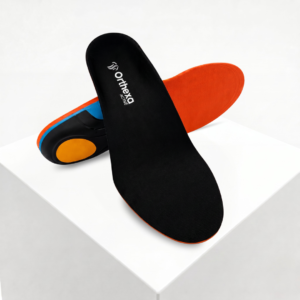
During return to activity, a clinician may recommend bracing or taping for selected sports or people with recurrent sprains. One consumer product is the PlantarCare ankle and foot brace . A brace may provide compression and external support, but it does not replace strength and balance training. Stable footwear may also help during activity. An optional consumer product is Orthopedic insoles for shoes – Active. Insoles are not a treatment for ligament injury and should fit without creating pressure or changing shoe stability.
Common mistakes and when to seek medical care
Returning to full activity before motion, strength, balance, and task-specific function have recovered can raise the risk of another injury. A fracture or other serious injury must also be considered when symptoms do not fit a mild sprain.
Clinicians use the Ottawa Ankle Rules to decide when an ankle or foot X-ray is indicated after an acute injury. A systematic review of 27 studies involving more than 15,000 patients, published in BMJ, reported 97.6% sensitivity for fracture (Bachmann et al., 2003). The rules support imaging when the relevant ankle or midfoot pain is accompanied by:
- inability to take four steps both immediately after the injury and during the clinical evaluation;
- bone tenderness along the posterior edge or at the tip of the medial or lateral malleolus;
- for midfoot injuries, bone tenderness at the navicular bone or the base of the fifth metatarsal.
The NHS also advises seeking medical care if you heard a crack at the time of injury, the ankle or foot looks deformed, the foot is numb or tingling, its color or temperature changes, or pain and swelling do not begin to improve after a few days. Persistent pain under the foot during the first morning steps may have another cause, such as plantar fasciitis , rather than the ankle sprain itself.
A gradual path back to a stable ankle
Recovery should progress from protection and comfortable motion to strength, balance, and activity-specific tasks. Timelines vary, so use function and symptom response rather than a calendar alone. Before returning to sport, consider a clinician-led assessment instead of relying only on the absence of pain.
Frequently asked questions about ankle exercises after a sprain
When can I start exercises after a sprained ankle?
Gentle motion often begins within a few days as severe pain and swelling improve, but the timing depends on injury severity. Seek assessment first if you cannot bear weight or may have a fracture or major ligament injury.
Why are balance exercises so important after an ankle sprain?
An ankle sprain can impair proprioception and neuromuscular control. In a systematic review, proprioceptive training reduced recurrent sprains by about one-third relative to no such training among people with a previous sprain.
Does an ankle brace replace exercises?
No. A brace may provide external support and can be part of a return-to-sport plan, but it does not restore strength, motion, or balance. Use it alongside appropriate rehabilitation when recommended.
How do I know that I am ready to return to sports?
Pain-free walking is not enough. Readiness should include restored motion, strength, balance, confidence, and sport-specific function. Clinicians may include hop testing and often look for at least about 90% symmetry, but no single score guarantees that reinjury will not occur.
When should an ankle injury receive prompt medical assessment?
Seek prompt assessment if you cannot take four steps, have focal bone tenderness around the malleoli or midfoot, heard a crack, see a deformity, or have numbness, marked color change, or a cold foot. These findings may require an X-ray or urgent treatment.
Disclaimer: This content is for general information and does not replace professional medical advice or an individual rehabilitation plan. Ask a doctor or physical therapist before starting exercises after a moderate or severe injury or if symptoms are not improving.
From our store
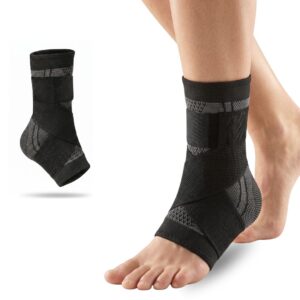
PlantarCare ankle and foot brace