Running insoles: how to choose the right pair
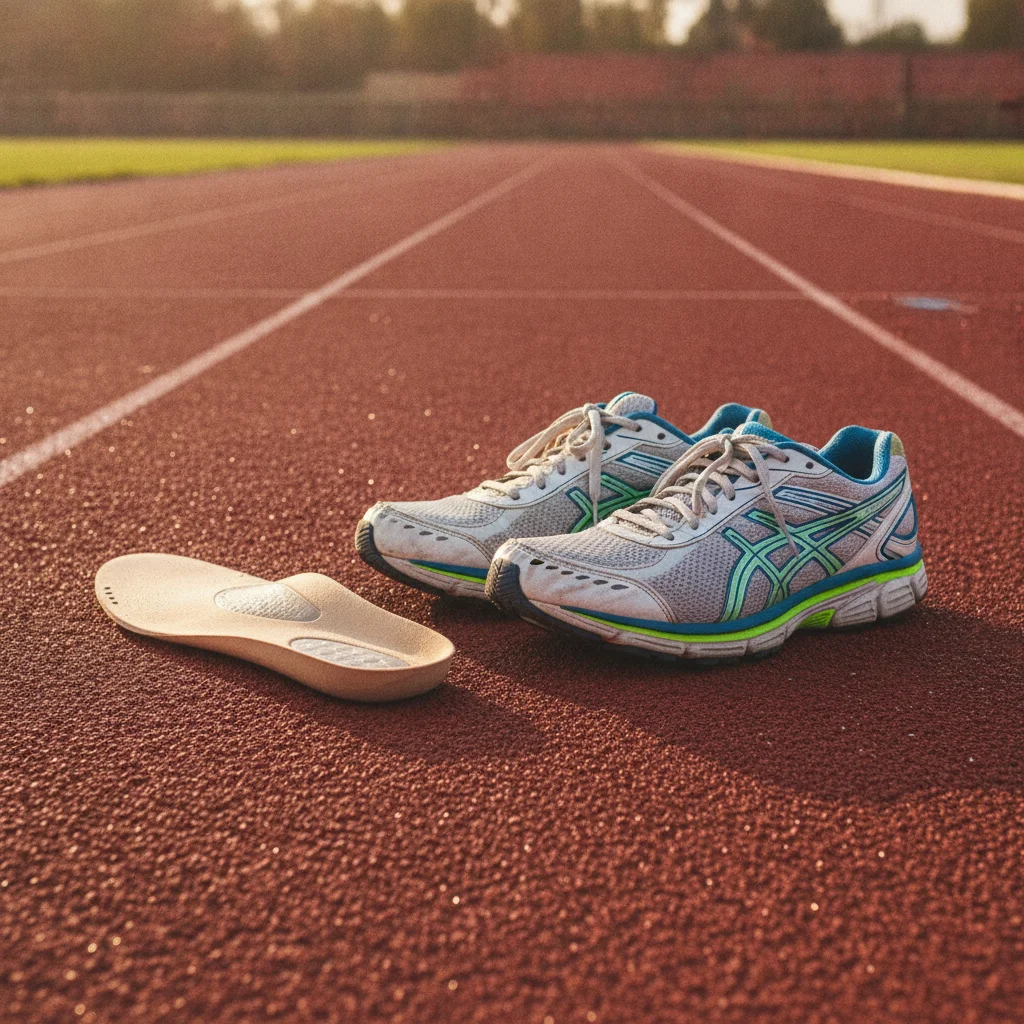
Running insoles are shaped inserts designed to change cushioning, fit, or support inside a running shoe. The right pair depends on the shoe, your comfort, training, and any assessed foot condition. Arch height alone does not determine pronation, and an insole cannot be assumed to correct running mechanics or treat heel, knee, or Achilles tendon pain.
This guide explains why some runners use insoles, what foot shape can and cannot tell you, common materials, differences between sport and everyday designs, and how to introduce and care for a new pair.
Why do runners use running insoles?
Running repeatedly loads the feet and legs. A replacement insole may change underfoot cushioning, pressure distribution, arch contact, or heel fit. It may improve comfort for some runners, but it does not reliably prevent injury or correct pronation, and a firmer or more cushioned design is not automatically better.
Plantar fasciitis is one common cause of heel pain in runners and other active people. It involves irritation or degeneration of the thick plantar fascia running from the heel toward the toes. The American Academy of Orthopaedic Surgeons resource (AAOS/OrthoInfo) calls it »one of the most common causes of pain on the bottom of the heel« and says about 2 million patients are treated for it each year in the United States. Repetitive impact activity such as running, low arches, and high arches are among several associated factors.
Insoles act by changing fit, cushioning, or pressure beneath the foot. They do not necessarily reduce tissue strain or microscopic injury with every step. The UK NHS includes »shoes with cushioned heels and good arch support« and »insoles or heel pads« among self-care options for heel pain.
Pronation is a normal part of foot motion. Some runners have more inward movement than others, but this cannot be diagnosed from arch height or shoe wear alone. Cleveland Clinic notes that flat feet can be associated with »ankle pain caused by overpronation« and with knee, hip, or lower-back symptoms. This does not establish that flat feet cause pain or that a retail insole will correct the entire movement pattern. For existing knee symptoms, see our guide to knee pain. For pain at the back of the ankle, read about pain in the Achilles tendon.
How do I choose running insoles for my feet?
Arch height, pronation, and comfort are related but distinct. A low, neutral, or high arch does not by itself prescribe an insole, and each group includes different movement patterns. Start with a design that fits the shoe and feels comfortable, and seek a gait or clinical assessment if pain or repeated injury is the reason for changing insoles.
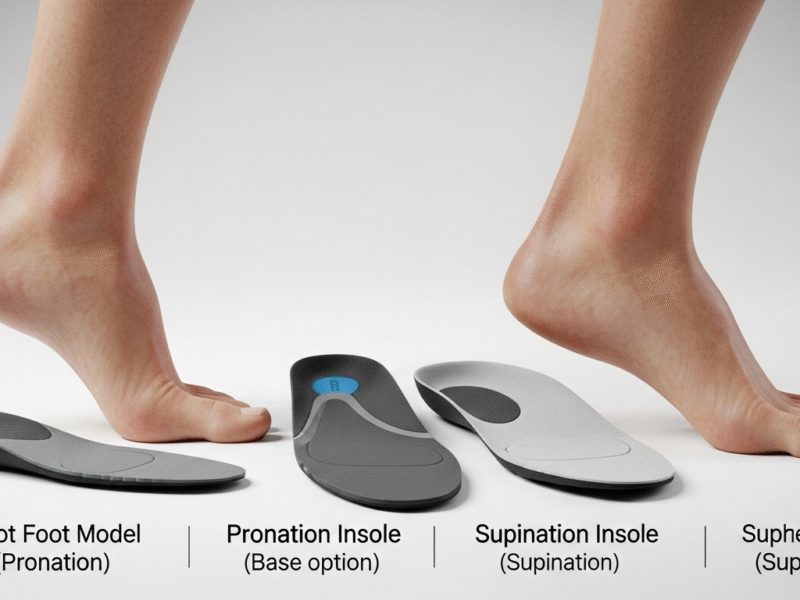
A »wet test« can give a rough impression of arch shape by showing how much of the sole contacts the paper. It cannot determine dynamic pronation, diagnose a condition, or identify the correct insole. Cleveland Clinic describes flat feet as having »little or no arch« visible when standing. Learn more about pronation and supination.
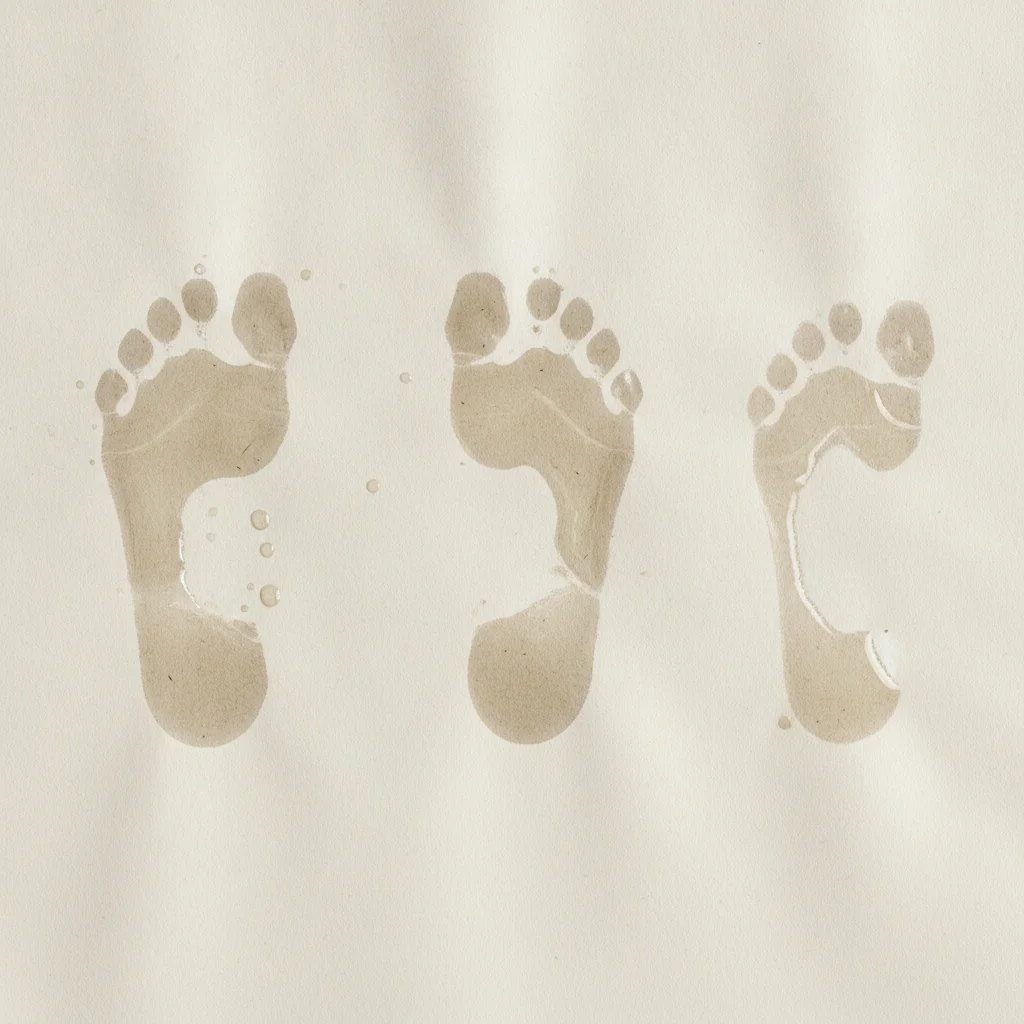
The table gives general features to consider, not a diagnosis or a prescription based on footprint alone.
| Foot type | Signs | Features you might try |
|---|---|---|
| Neutral | A visible arch and a midfoot footprint of moderate width | Comfortable cushioning and arch contact without pressure |
| Low arch | A broad midfoot footprint; movement pattern cannot be inferred reliably | Support that feels comfortable and does not press sharply into the arch |
| High arch | A narrow midfoot footprint; movement pattern cannot be inferred reliably | Comfortable cushioning and arch contact without a hard pressure point |
Also consider the space inside the shoe and how the insole feels during running. A pain-free recreational runner may not need a replacement insole. Runners with persistent pain or repeated injury should seek assessment rather than selecting a firmer arch solely from a footprint or shoe size.
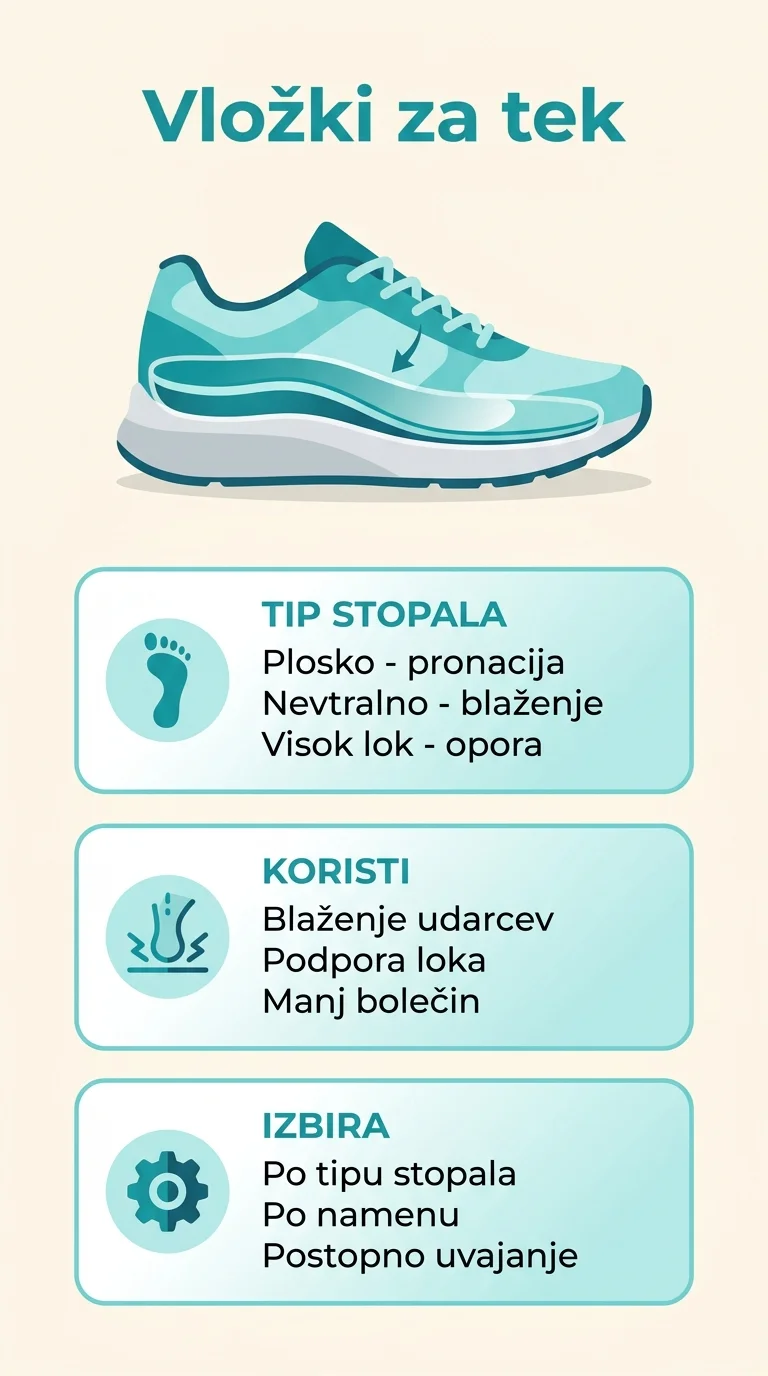
The infographic below summarizes arch shape, common insole features, and fit checks to make before running.
What are running insoles made from?
Running insoles may combine EVA or polyurethane foam, gel, a firmer shell, and a fabric top layer. Material names alone do not establish cushioning, durability, stability, or suitability; construction and fit matter.
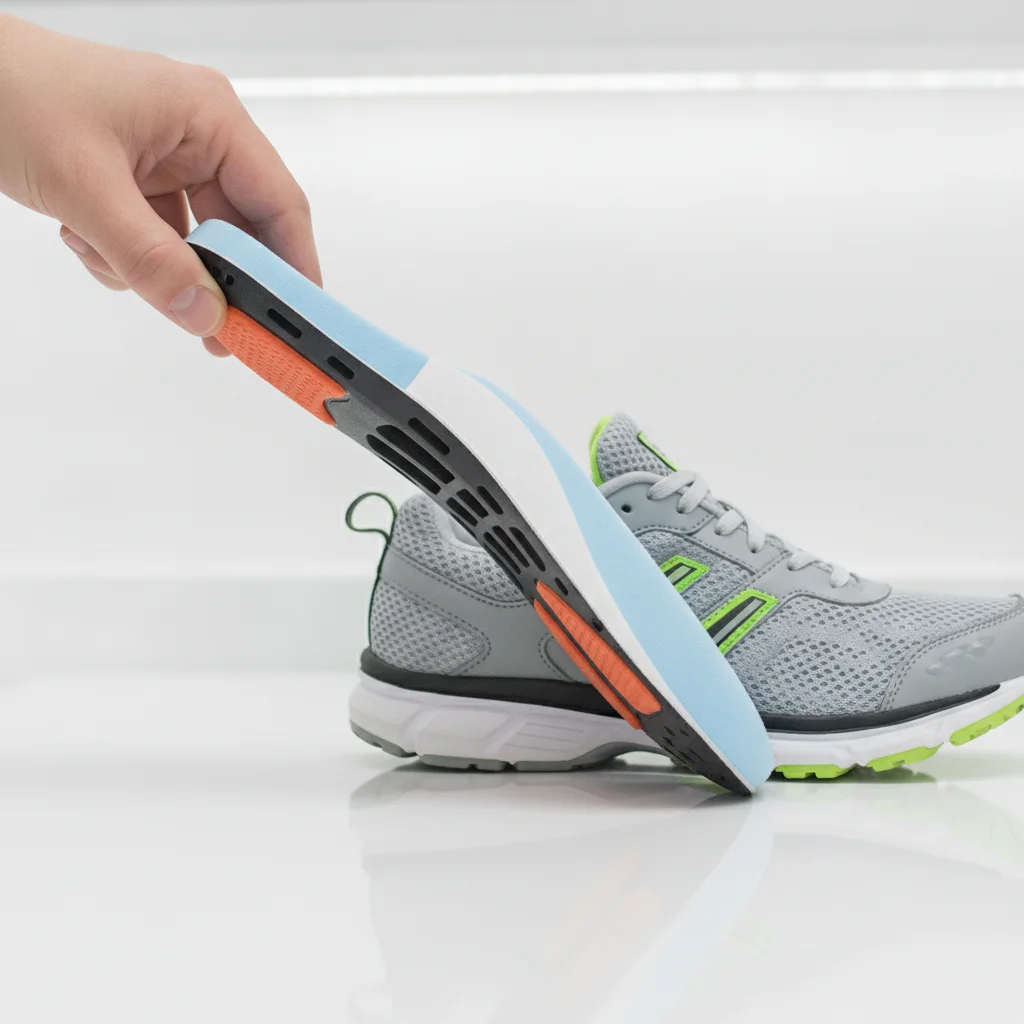
The most common materials and their properties:
- EVA foam: Lightweight and flexible; performance and recovery depend on formulation and construction.
- Polyurethane foam: Often denser than EVA; durability and feel vary by formulation.
- Gel: Used in some designs for a softer feel in selected areas such as the heel or forefoot.
- Support shell / arch reinforcement: A firmer component beneath the heel or arch that changes the insole’s support and torsional feel.
- Top layer (covering): May help manage moisture or surface friction, depending on the textile and fit. It cannot guarantee prevention of blisters or odor.
The useful balance is personal. A very soft insole may »compress« under load, while a very firm one may create uncomfortable pressure. Choose a design that lies flat, leaves enough room in the shoe, and remains comfortable while running.
How do sport and everyday insoles differ?
Products marketed for sport often use firmer structures or cushioning in selected areas, while everyday comfort insoles may use a softer, more uniform layer. These are design tendencies, not proof that one category manages impact or pronation better for every runner.
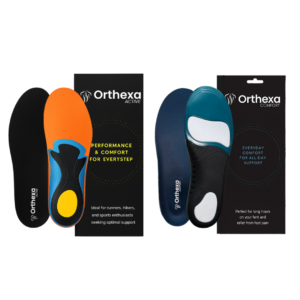
Orthexa offers two products with different intended uses. Active shoe insoles are the sport-oriented option, with shaped support and cushioning for running, brisk walking, and other activity. If you want separate pairs for activity and everyday footwear, consider the Active + Comfort set, which combines Active for sport with softer Comfort insoles for walking, work, and leisure. Browse the full shoe insoles.
| Property | Sports insoles (Active) | Everyday insoles (Comfort) |
|---|---|---|
| Purpose | Running, fast walking, sport | Everyday walking, standing, work |
| Cushioning feel | Responsive feel in selected areas | Softer, more uniform feel |
| Arch support | Firmer shaped support | Moderate support with an emphasis on comfort |
| When to choose | Activity when you prefer a firmer feel | Everyday footwear when you prefer softer cushioning |
Retail insoles may improve comfort or fit, but they do not treat pain, guarantee better running mechanics, or replace prescribed custom devices when a clinician determines those are needed. Stop using an insole that causes pain, numbness, rubbing, or pressure.
How should I introduce and care for running insoles?
Test new insoles gradually rather than first wearing them on your longest run. Begin with a short walk or easy run, check for pressure and rubbing, and increase use only if they remain comfortable. New pain is a reason to stop, not an expected adjustment that must be endured.
A cautious introduction might look like this:
- Days 1–3: try them during a short walk or easy run and inspect your feet afterward.
- Days 4–7: increase use gradually only if there is no pain, numbness, rubbing, or altered gait.
- After the first week: continue using them for suitable sessions if they remain comfortable. Stop and reassess if symptoms appear.
Remove the insoles after training and let them air-dry. Clean them only as the manufacturer directs and avoid heat unless the care label permits it. Replace them when damaged, permanently compressed, or no longer fitting comfortably; no fixed interval applies to every product or runner.
When should you seek medical advice?
Insoles are footwear accessories, not treatment for an injury. Consult a doctor, physical therapist, or podiatrist if pain in the foot, heel, Achilles tendon, or knee persists, worsens, or repeatedly returns. Do not continue running through significant pain while relying on an insole to resolve it.
Seek prompt professional advice for:
- sharp or persistent pain that worsens during or after running;
- swelling, redness, warmth, or a feeling of instability in the foot or ankle;
- numbness, tingling, or loss of sensation in the foot;
- pain that changes your gait or prevents normal weight-bearing.
If you have diabetes, impaired circulation, reduced sensation, or a diagnosed foot deformity, ask a qualified healthcare professional before using a new insole.
Frequently asked questions
Do running insoles really help?
They may improve comfort, cushioning, or shoe fit for some runners. The NHS includes insoles and heel pads among self-care options for heel pain, but that does not mean every running insole treats every overuse condition. Persistent pain needs assessment.
How do I know which insole fits my foot?
Check that the insole lies flat, leaves enough toe room, holds the heel securely, and feels comfortable while running. A »wet test« only suggests arch shape; it does not identify pronation or prescribe support. Seek professional advice if pain or repeated injury drives the decision.
Can I use the same insoles for running and everyday walking?
You can if the insole fits both shoes and remains comfortable. Separate sport and comfort designs are an option, not a necessity. Follow each product’s intended use and do not stack an insole over another unless the manufacturer specifically allows it.
How long do running insoles last?
Lifespan depends on the construction, mileage, use, care, and runner. Replace insoles when they are damaged, permanently compressed, or no longer fit or feel comfortable. A generic few-month rule is not reliable for every product.
Do insoles for running help with plantar fasciitis?
Insoles or heel pads can be one part of conservative care for plantar heel pain, and the AAOS includes them among nonsurgical options. They do not cure plantar fasciitis, and the most suitable design varies. Seek medical advice for persistent or severe heel pain.
This content is for informational purposes and does not replace professional medical advice. For persistent or severe problems with the foot, knee, or ankle, consult a doctor, physiotherapist, or podiatrist.
From our store
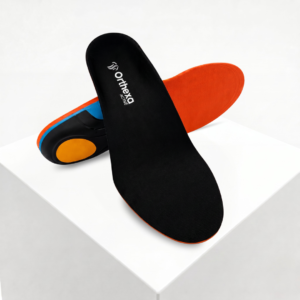
Active sports insoles