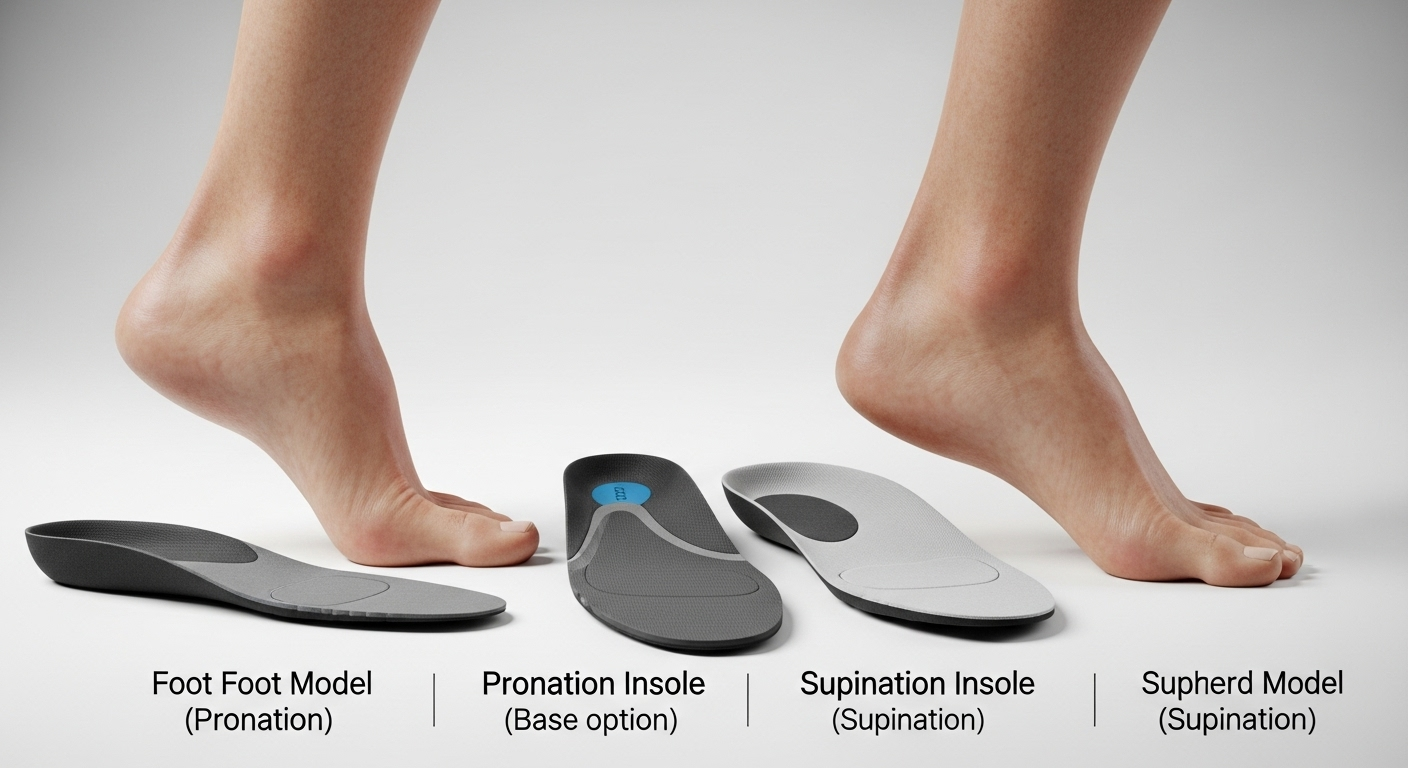
Pronation or supination: understanding your foot type
Pronation is the natural inward roll of the foot as it takes weight; supination is the opposite outward movement. Both are normal parts of a step. Problems may arise when the foot rolls too far inward or keeps too much weight on its outer edge, changing how forces pass through the foot, shin and knee. A wet footprint and the wear on your shoes can offer clues about your feet, although neither test diagnoses how they move.
This guide explains how to make those simple observations at home, what they can tell you and what to consider when choosing footwear and insoles.
What are pronation and supination?
During a typical walking step, the heel meets the ground and the foot rolls slightly inward (pronation), helping absorb and distribute impact. As you push off, the foot rolls outward (supination) and becomes more rigid to help propel you forward. These are two phases of a normal movement cycle, described in more detail by Hospital for Special Surgery.
| Type | What happens | Typical arch | Common problems |
|---|---|---|---|
| Neutral foot | Balanced pronation and supination | Normal | Lowest risk |
| Overpronation | The foot rolls too far inward and the arch flattens | Low or flat | Plantar fasciitis, shin or knee pain, bunions (hallux valgus) |
| Supination (underpronation) | Weight stays on the outer edge and the foot absorbs less impact | High and rigid | Ankle sprains, stress fractures, Achilles tendon pain |
How do you determine your foot type?
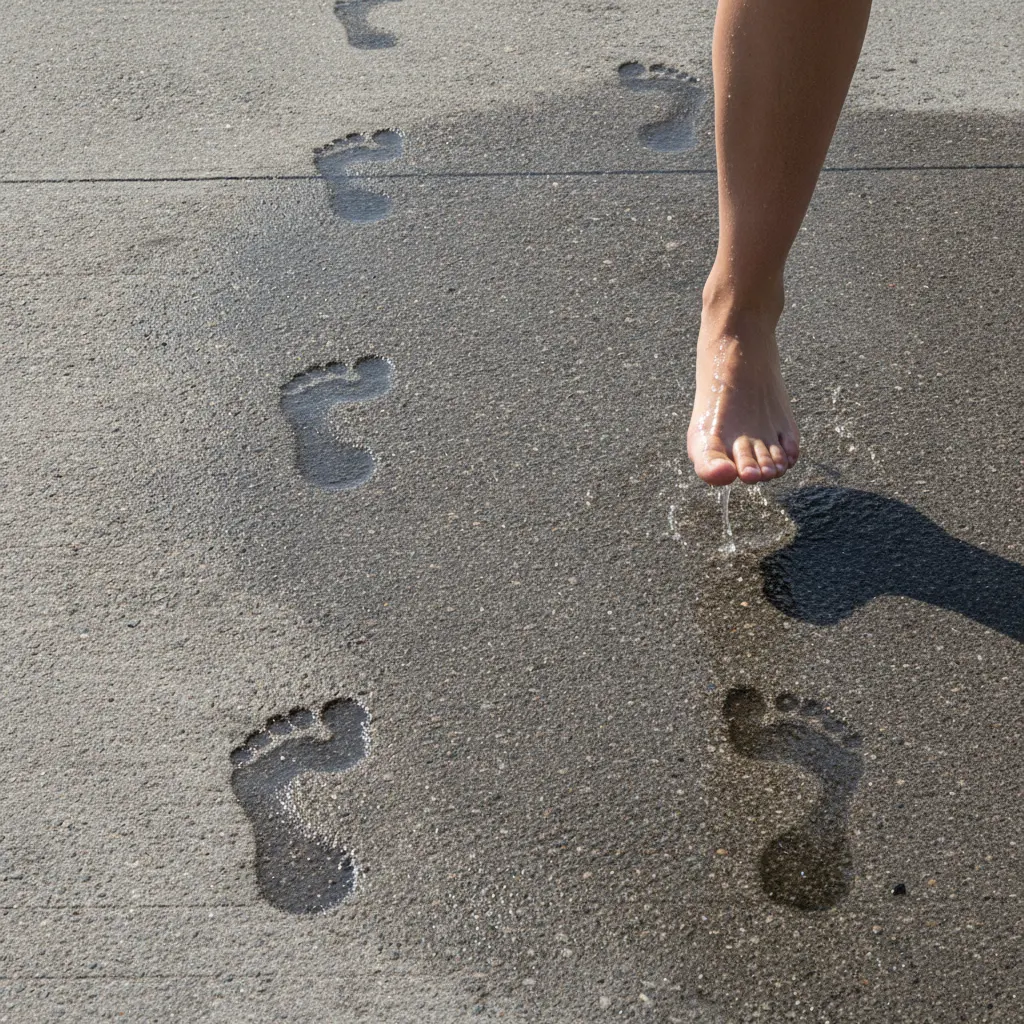
1. Wet foot test
Wet your foot, then step onto cardboard or a dark floor. Look at the footprint:
- Almost the whole sole is visible → a low arch, which may be associated with overpronation.
- About half of the arch is visible → a neutral-looking arch.
- Only a thin line, or no connection, between the heel and the front of the foot → a high arch, which may be associated with underpronation.
2. Check the wear on your shoes
Place a pair of worn athletic shoes on a table at eye level:
- wear along the inner edge (with the shoe tilting inward) → possible overpronation,
- fairly even wear, with more wear at the center of the heel → a more neutral pattern,
- wear on the outer edge → possible underpronation.
Both checks provide only a rough indication. A physical therapist or specialist running shop can assess your walking or running, often using video on a treadmill. If you have recurring injuries, seek a professional assessment.
What can help with overpronation?
The aim is to support the arch and strengthen the muscles around it, rather than force the foot into a supposedly ideal shape:
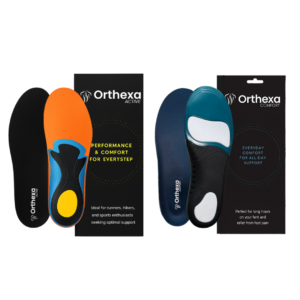
- Insoles with arch support can provide support while you walk. One option to consider is Comfort shoe insoles.
- Stability footwear (often labeled “stability” or “motion control”) with a firm heel counter.
- Foot-strengthening exercises: pick up a towel with your toes, do calf raises (3 sets of 15), and practice the “short foot” exercise by lifting the arch without curling your toes.
- Strengthening the hip and gluteal muscles may also help, as poor control of the pelvis can contribute to excessive inward rolling.
Overpronation can occur alongside plantar fasciitis; if you have morning heel pain, that article explains the condition in more detail.
What to do about supination?
- Cushioning is a priority: a high, rigid arch absorbs less impact, so consider a softer, cushioned insole and neutral footwear with adequate cushioning. For running, one option is Active sports insoles, while for a combination of work and sport you can explore the Active and Comfort insole set.
- Flexibility: regularly stretch the calves and Achilles tendons (30 seconds, 3 repetitions). Stiffness is a common concern in people who underpronate.
- Ankle stability: practice balancing on one leg. Underpronation can be associated with ankle sprains; see the exercise program in Ankle-strengthening exercises.
- Avoid overly rigid stability footwear designed to limit inward rolling, as it may be unsuitable for a foot that already rolls too little.
When should you seek professional advice?
Speak to a doctor or physical therapist if injuries keep returning despite suitable footwear, pain lasts more than a few weeks, you notice a pronounced change in foot shape, or you have diabetes. Pronation and supination are movements, not diagnoses. What matters is whether they are associated with symptoms.
Frequently asked questions about pronation and supination
Is pronation a fault that needs correcting?
No. Pronation is a normal part of walking and helps absorb impact. Support may be useful when excessive inward rolling is associated with symptoms. The aim is to support the foot and strengthen its muscles, rather than reshape it into an idealized form.
Can I have flat feet without any symptoms?
Yes. Many people with low arches have no pain and need no treatment. Insoles or exercises may be worth considering if you develop symptoms such as heel or arch pain, tired legs or recurring injuries.
What should I look for in insoles for overpronation or underpronation?
People who overpronate may benefit from arch support and a stable heel, while those who underpronate often look for cushioning and flexibility. These are general considerations; fit, comfort and individual symptoms matter.
Is the wet foot test reliable?
It can provide a quick indication of arch height while standing, but it does not show how the foot moves during walking or running. A physical therapist can assess your gait, particularly if you have recurring injuries.
This content is for information only and does not replace advice from a doctor or physical therapist.
Related: choose the right insole for hiking.
Related: understand your foot type.
Related: flat feet and pronation.
From our store