
02Mar
Sleeping after spine surgery: positions and pillow support
Recovery after spine surgery takes time, and sleep can be difficult during the early stages. Positioning pillows may improve comfort and help you follow movement restrictions, but the correct setup depends on the procedure and your surgeon’s instructions.
Sleep supports general health and recovery, while a painful or twisted position can make rest harder. This guide describes commonly used positions and warning signs. Your surgical team’s discharge instructions take priority over all general advice in this article.
This article provides general information and is not a substitute for medical advice, diagnosis, postoperative instructions, or treatment. Consult your surgeon or physical therapist before changing sleep positions or using a new positioning aid after surgery.
Why does sleeping position matter during recovery?
After surgery, the operated area may be painful and movement may be restricted. A comfortable setup often aims to maintain neutral spinal alignment. In practice, this means avoiding unnecessary bending or twisting and using support where your surgical team recommends it. A neutral position may reduce muscle strain and pressure on sensitive areas, but it does not guarantee faster healing. Restrictions differ after a discectomy, fusion, decompression, cervical procedure, or other operation.General sleep guidance after spine surgery
Follow the instructions for your specific procedure. Common guidance may include:- The log-roll technique: if your surgical team has instructed you to avoid twisting, sit on the edge of the bed, lower your torso onto your side while bringing your legs onto the bed, and keep your shoulders and hips moving together. Reverse the sequence to get up. Ask a physical therapist or nurse to demonstrate before discharge.
- Follow bending and twisting restrictions: Restrictions vary by procedure and surgeon. Do not assume that every person must follow the same limits for the same number of weeks.
- Use pillows as directed: Pillows can support the knees, legs, arms, or neck and make a permitted position more comfortable.
- Choose a supportive sleep surface: A mattress should allow you to rest without excessive sinking or pressure. There is no universal requirement to use a firm mattress after surgery, so follow your surgeon’s advice and use a surface you can enter and leave safely.
Common positions by surgery location
The permitted position depends on the operation, surgical approach, brace requirements, and individual precautions. Confirm each position with your surgical team.After lumbar spine surgery, such as a discectomy or fusion
Support can reduce strain on the lower back, but instructions vary by operation.- Back sleeping: some people find this comfortable with a pillow or rolled towel under the knees to keep the hips and knees slightly bent. Use this position only if it is permitted and you can get into and out of it safely.
- Side sleeping: if permitted, place a pillow between the knees and ankles to reduce rotation of the pelvis and lower back. Keep the legs comfortably bent rather than tightly curled.
- A position that may be restricted: stomach sleeping requires turning the head and can increase extension or rotation of the spine. Many surgical teams advise avoiding it early in recovery, but follow the restrictions for your procedure.
After cervical spine surgery, such as cervical fusion
The goal is generally to keep the head and neck in the position prescribed by the surgeon. A cervical collar, if prescribed, changes how pillows should be used.- Back sleeping: Back sleeping is commonly used, with a pillow that supports the neck without pushing the head too far forward. Your surgeon may give different instructions based on the surgical approach or collar.
- Side sleeping: Side sleeping may be permitted for some patients. If approved, use enough pillow height to keep the head from tilting toward or away from the mattress.
- A position that may be restricted: Stomach sleeping usually requires substantial neck rotation and is often restricted after cervical surgery. Ask your surgeon when, or whether, it is safe for you.
Pillows and other positioning aids
Positioning aids may improve comfort, but they do not accelerate healing on their own and must not conflict with surgical precautions.Choosing a head pillow
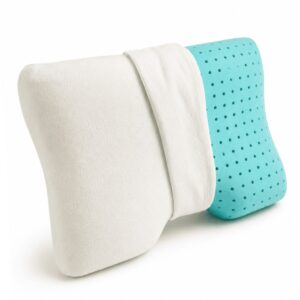
The pillow should support a permitted position without forcing the head or neck into flexion, extension, or rotation.- After cervical surgery: ask the surgical team which pillow height and shape are compatible with your procedure and any prescribed collar. Memory orthopedic contour pillow is a contoured consumer pillow designed to support the head and neck. It is not a postoperative medical device and should be used after surgery only if your clinician approves it. For general pillow information, read Morning neck pain: causes and what can help.
- After lumbar surgery: head-pillow height depends mainly on your sleeping position and body shape. Use a height that keeps the neck comfortable while following the postoperative position prescribed for your lower back.
Using pillows to support the body
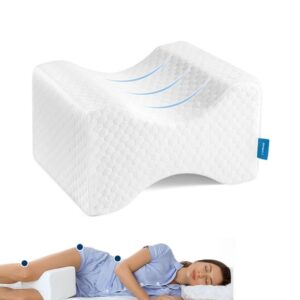
Additional pillows can support a permitted position and reduce unwanted rolling or twisting.- Pillow between the knees: when side sleeping is permitted, a pillow between the knees and ankles may reduce pelvic rotation. A regular pillow may work, or you may prefer a contoured option such as the ErgoPlus orthopedic knee pillow , which is shaped to sit between the legs. It may help maintain position but does not guarantee spinal alignment throughout the night.
- Pillow under the knees: when back sleeping is permitted, this support may reduce tension in the lower back for some people.
| Type of operation | Common position | Alternative position | Possible support |
|---|---|---|---|
| Lumbar spine | On the back | On the side | Pillow under the knees for back sleeping; pillow between the knees and ankles for side sleeping |
| Cervical spine | On the back | On the side, if approved | A head pillow of the height approved by the surgical team |
When should you contact your surgical team?
Some pain and discomfort may be expected, but follow the contact instructions in your discharge plan. Seek prompt or emergency medical care for:- a sudden or severe increase in pain that is not controlled by the prescribed plan;
- new or worsening tingling, numbness, or weakness in an arm or leg;
- new loss of bladder or bowel control or inability to urinate;
- possible wound infection, including increasing redness, warmth, swelling, drainage, wound opening, or fever.
Rest and positioning during recovery
Recovery after spine surgery is gradual. The main principle for sleep is to follow your surgical team’s positioning and movement instructions. Back sleeping with support beneath the knees and side sleeping with support between the knees are common options when permitted. Stomach sleeping is often restricted early on. Consumer pillows may improve comfort, but they do not replace postoperative instructions or guarantee a faster or pain-free recovery.This article provides general information and is not a substitute for medical advice, diagnosis, postoperative instructions, or treatment. Consult your surgeon or physical therapist before changing sleep positions or using a new positioning aid after surgery.
Related: sleeping position for a painful hip.
From our store
Memory contoured pillow
Contoured support for the neck and shoulders, with adaptive memory foam for comfortable sleep
Original price was: €69.90.€44.90Current price is: €44.90.
View product
ErgoPlus knee pillow
A contoured memory foam pillow for comfortable support between your knees when sleeping on your side
Original price was: €30.00.€22.90Current price is: €22.90.
View product