Hemorrhoid Cushions: Comfort, Not a Cure
A hemorrhoid cushion may make sitting more comfortable by reducing direct pressure on a sore area, but it does not shrink or cure hemorrhoids. Measures that address constipation and straining, including adequate fiber and fluid, are more central to treatment.
Important: Rectal bleeding should not automatically be attributed to hemorrhoids. It can also be a sign of colorectal cancer or another condition. New bleeding, a change in bowel habits, unexplained weight loss, or bleeding after age 50 needs medical assessment. According to the UK NHS , rectal bleeding should be assessed so that serious causes can be considered. UK NICE guidance recommends urgent investigation for certain adults age 50 or older with unexplained bleeding, abdominal pain, or weight loss.
Sources: NHS; NICE (NG12)
How can a seat cushion help with hemorrhoids?
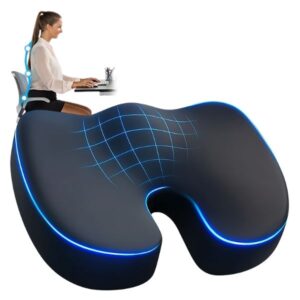
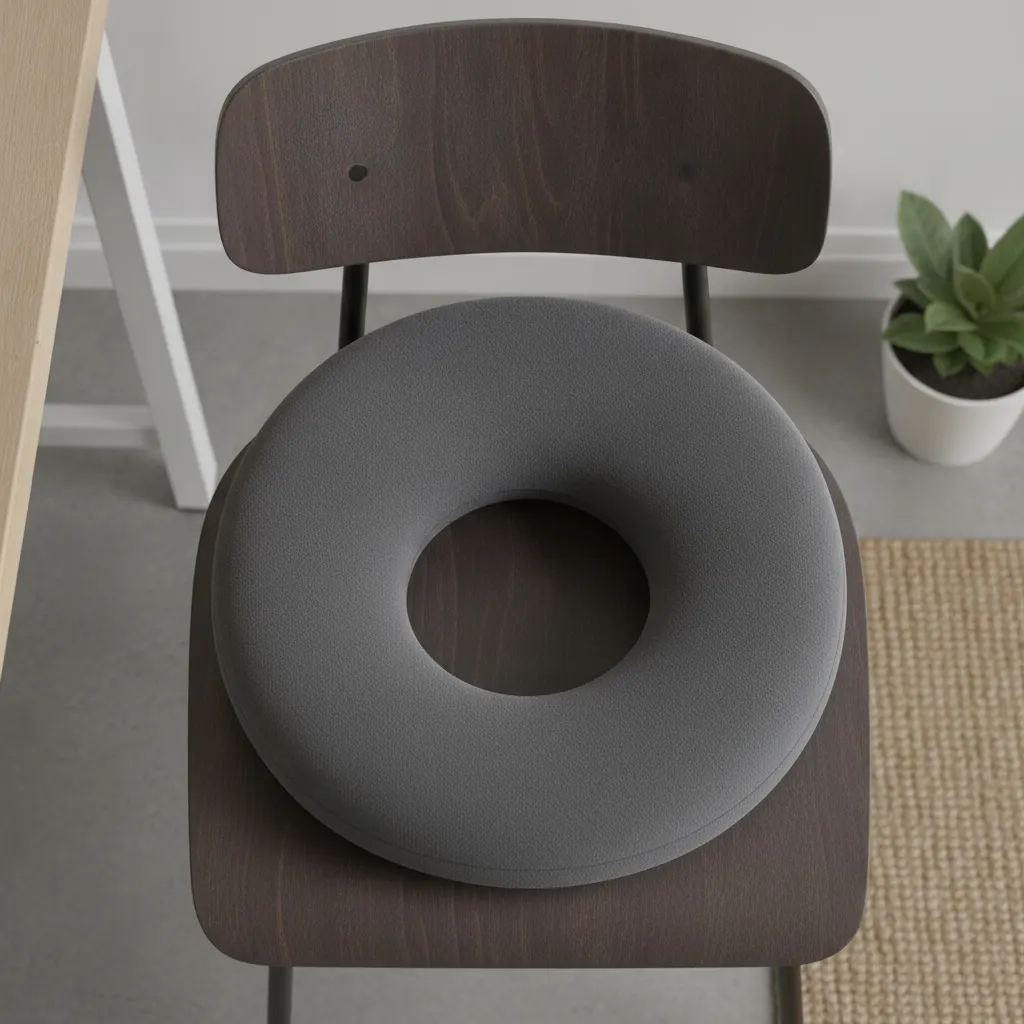
A cushion with an opening or cutout may reduce contact between a sore area and a hard seat. Less direct pressure can make sitting less painful for some people. This is a comfort measure only; the hemorrhoid remains present.
Prolonged sitting can aggravate symptoms, particularly when it also involves long periods on the toilet and straining. For broader guidance on reducing the effects of sitting, read The Effects of Prolonged Sitting and What Actually Helps.
Donut cushion or cutout cushion: which should you choose?
Some pressure-injury guidelines for seated people, including guidance associated with WOCN, discourage ring-shaped cushions because the rim may concentrate pressure on surrounding tissue. That evidence is not specific to hemorrhoids. A contoured foam cushion with a cutout may distribute weight more broadly, but individual comfort and fit vary.
Direct evidence in people with hemorrhoids is limited. One small study of immobile surgical patients (PMC8846244) did not associate a ring cushion with worse outcomes, but it examined patients lying during surgery and tissue over the sacrum rather than people sitting with hemorrhoids. A cutout cushion is therefore a reasonable comfort option, not an evidence-proven treatment.
| Cushion type | What it offers | Caution |
|---|---|---|
| Inflatable ring | Inexpensive and easy to carry | The rim may concentrate pressure; some seated-care guidelines discourage prolonged use |
| Foam ring | More stable than an inflatable ring | Similar concern about rim pressure; may retain heat |
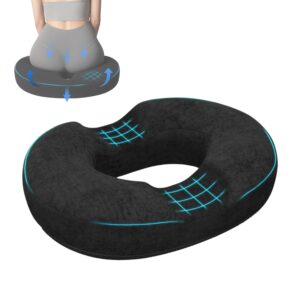
| Contoured memory foam with a cutout | May distribute weight more broadly and relieve direct contact, for example the MediLux ring seat cushion | Higher initial cost |
What actually treats hemorrhoids?
A cushion can ease sitting discomfort but does not address the cause. Helpful measures include adequate fiber and fluid to keep stools soft, avoiding straining and long periods on the toilet, and warm sitz baths for symptom relief. For a sourced guide covering home care and medical procedures, read Hemorrhoid Treatment: What Works at Home and When to See a Doctor.
Choosing a cushion for broader sitting support
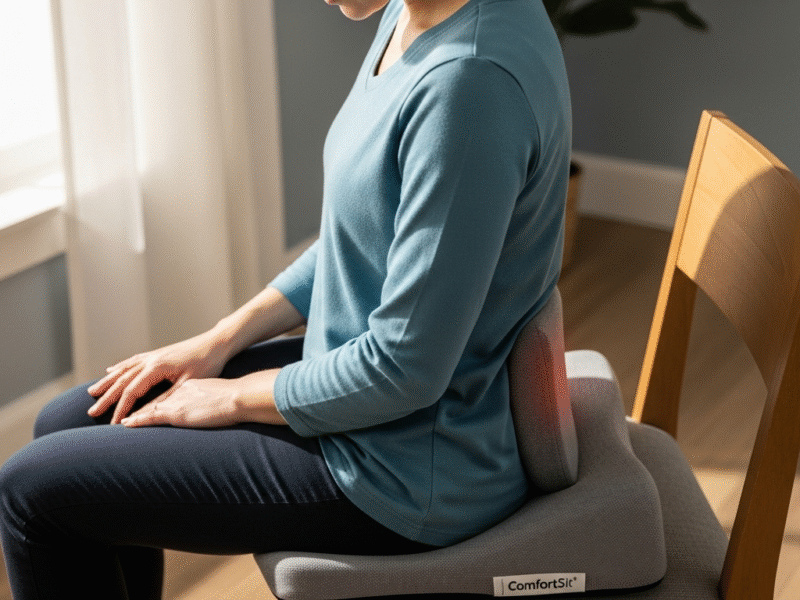
If you also have tailbone pain, see Tailbone Pain: Causes, Sitting Position, and Pressure Relief . A central cutout may reduce direct contact in both areas. For broader sitting and back support, another option is a memory-foam cushion such as the ComfortLux seat cushion. To compare models by need, read our guide to choosing a seat cushion.
Frequently asked questions
Does a cushion cure hemorrhoids?
No. A cushion may reduce pressure and pain while sitting, but it does not shrink a hemorrhoid. Fiber, fluid, reduced straining, and other evidence-based measures are covered in our guide to hemorrhoid treatment.
Ring or cutout cushion: which is better for hemorrhoids?
A contoured cutout cushion may spread weight more broadly than a classic inflatable ring. Evidence specific to hemorrhoids is limited, so choose based on comfort and stop using any cushion that increases pain, numbness, or pressure.
How long can I sit on a hemorrhoid cushion?
Even with a cushion, stand and change position every 30–45 minutes when practical. A cushion does not remove the wider effects of prolonged sitting; learn more in the effects of prolonged sitting.
When is bleeding thought to be from hemorrhoids still concerning?
See a doctor for any new rectal bleeding, a change in bowel habits, unexplained weight loss, or bleeding after age 50, as advised by NHS.
This content is informational and does not replace medical advice. A clinician should assess new rectal bleeding.
From our store
MEDILUX Ring Seat Cushion