Leg Elevation: When It Helps and How to Do It Properly
Elevating the legs above heart level uses gravity to help blood return toward the heart, which can relieve heavy, swollen legs after a demanding day. It is not a remedy for every kind of swelling. Swelling in only one leg with warmth, redness, or pain may indicate deep vein thrombosis, and relying on elevation could dangerously delay care. Below is a clear guide to when elevation may help, how to do it properly, and when to call a doctor instead of reaching for a pillow.
Why leg elevation can help
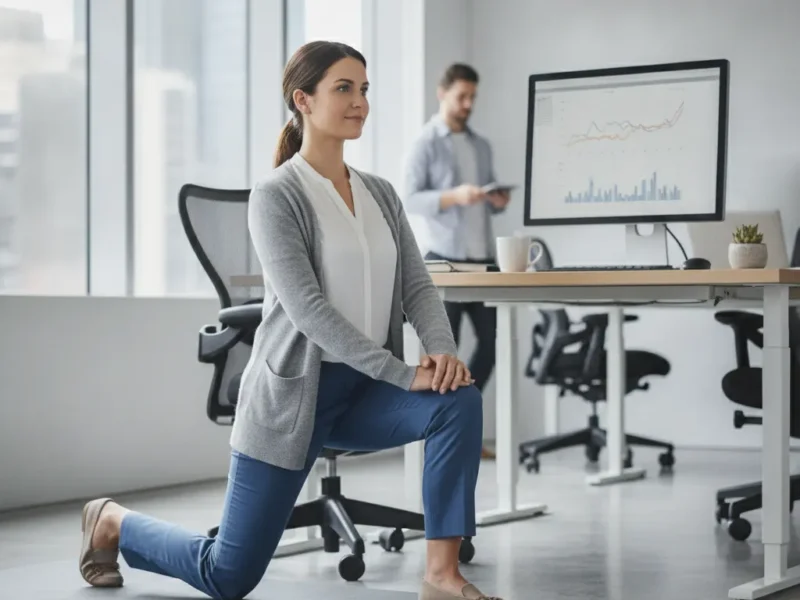
Blood returns from the legs to the heart through veins working against gravity. The calf muscle pump helps: every step compresses the deep veins in the calf and pushes blood upward, which is why this mechanism is sometimes called the “second heart.” Cleveland Clinic describes this as a key mechanism for venous return from the lower limbs. During prolonged sitting or standing, the muscle pump is barely activated and fluid can gradually accumulate in leg tissues, causing swelling (edema), heaviness, and fatigue.
Elevating the legs above heart level uses gravity in place of the muscle pump, helping fluid and blood return toward the torso without walking or moving. This can be particularly useful with varicose veins, where venous valves no longer work as effectively, and with generally reduced venous circulation.
When leg elevation may help
Leg elevation is suitable for common, everyday causes of swelling and fatigue, but not for every case of leg swelling. Situations in which it may help include:
- Tired, heavy legs after prolonged standing or sitting : the typical end-of-day swelling that occurs when you spend the day on your feet or at a desk. Learn more about the causes and longer-term approaches in our article about tired, heavy legs.
- Swelling during pregnancy : the NHS says mild swelling of the ankles, feet, and fingers is common and usually harmless during pregnancy, and elevation is one recommended self-care measure.
- Recovery after surgery, when advised by a doctor or physical therapist. Controlled leg elevation is often part of rehabilitation after procedures on the hip, knee, or ankle. One example is recovery after hip surgery, when a suitable lying position also matters for sleep.
- Restless legs in the evening : elevating and supporting the legs may ease discomfort associated with restless legs syndrome, although it does not address the underlying cause.
How to elevate your legs properly
For chronic venous insufficiency, Cleveland Clinic recommends elevating the legs above heart level for at least 30 minutes, at least three times a day . This is specific guidance from a healthcare institution rather than a general estimate. A shorter period may be enough for one-time evening relief after a demanding day, but persistent swelling may require the more frequent and longer pattern.
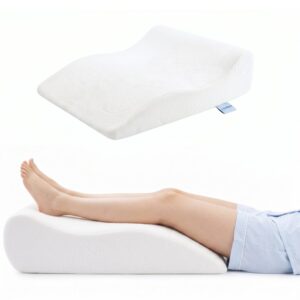
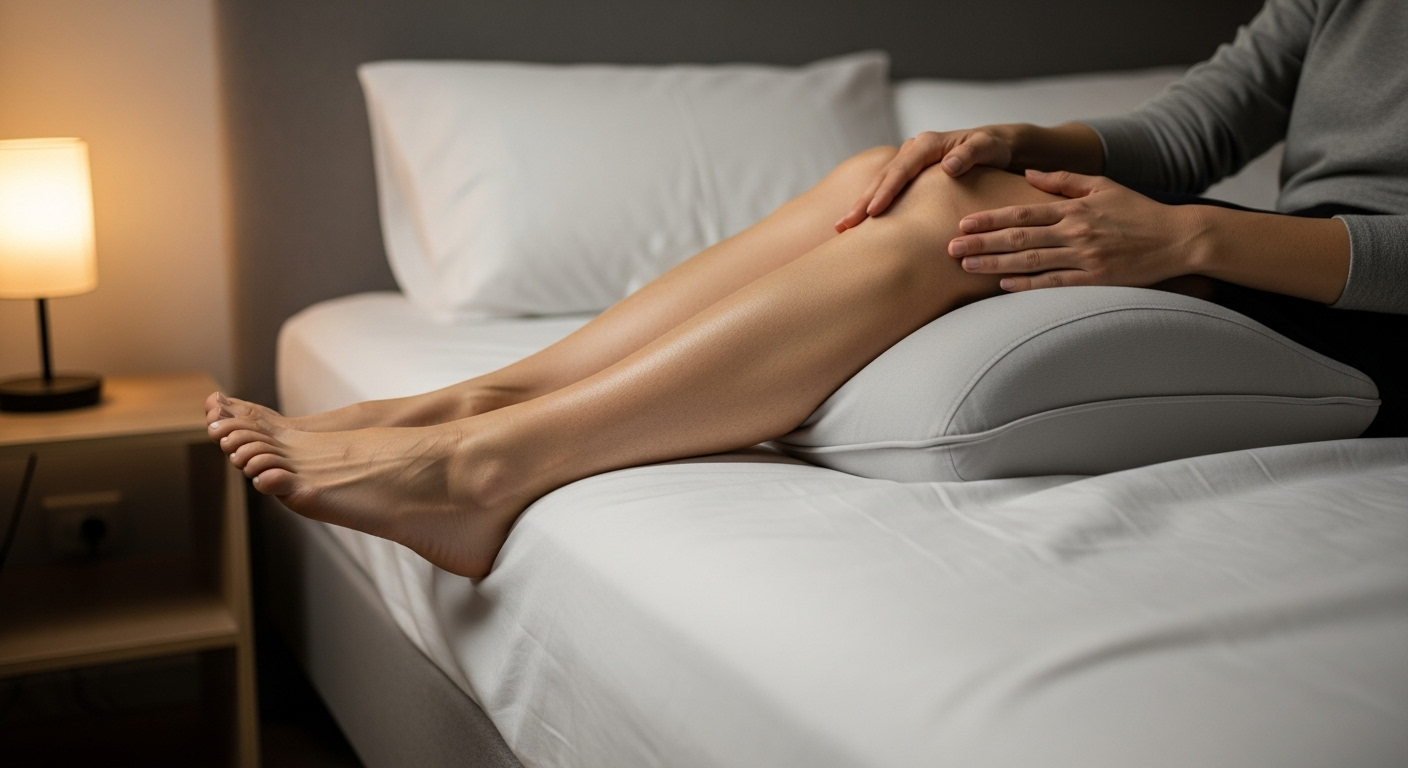
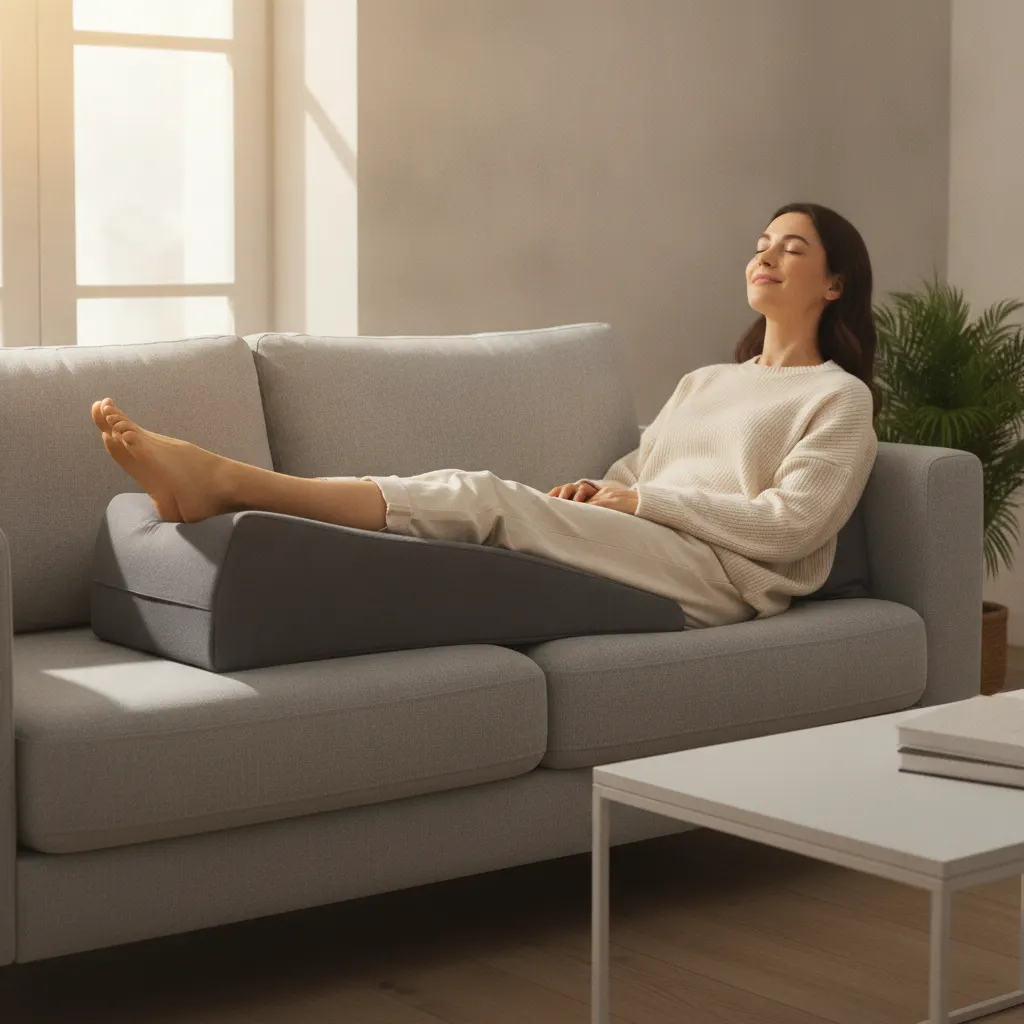
Support matters as well as height. The leg should rest along its full length from the calf to the ankle, rather than only at the heel or ankle on a pile of pillows. Stacked ordinary pillows can be unstable, and the leg may slide off. A pillow placed only beneath the knee can also keep it bent, which can impede mobility over time during recovery after knee surgery. A stable wedge that supports the whole leg and keeps the knee extended may therefore be more practical than a loose pile of household pillows.
When leg elevation is not the answer
This distinction is important to understand before reaching for a pillow.
Swelling in only one leg with pain, warmth, or redness
This may be a sign of deep vein thrombosis (DVT) , a clot in a deep vein of the leg. The NHS says DVT usually affects one leg, rarely both, and may cause throbbing pain, swelling, and red, bluish, or darkened skin in the affected area. Leg elevation in this situation is not a treatment, and delaying care can be dangerous because the clot may break loose and travel to the lungs. If you notice these signs, seek urgent medical care rather than waiting for a pillow to help.
Sudden shortness of breath or chest pain with a swollen leg is an emergency . According to the NHS , call your local emergency services immediately because this may be a pulmonary embolism, a serious complication of DVT.
New or increasing swelling in both legs
Cleveland Clinic notes that swelling in both legs can be caused by heart failure, kidney disease, or liver disease, all of which affect fluid regulation. If this swelling is new, is worsening, or has no known explanation such as a long flight or hot weather, NHS guidance recommends seeing a doctor rather than trying to manage it with a pillow alone.
Swelling during pregnancy with other symptoms
Mild leg swelling is common during pregnancy, but the NHS advises seeking immediate medical help if swelling develops suddenly in the face or hands along with a severe headache, vision changes, or pain beneath the ribs. These may be signs of preeclampsia rather than ordinary leg fatigue.
This article is for informational purposes and is not a substitute for medical advice. Speak with a doctor about any of the signs above or swelling that lasts for several days without improving.
What to look for in a leg-elevation pillow
When leg elevation is appropriate, an ordinary sofa cushion may not be the best option because it does not hold its shape, can be unstable, and may make the right height difficult to achieve. When choosing a purpose-designed pillow, consider the following:
| Criterion | What to look for |
|---|---|
| Height and incline | High enough to hold the legs above heart level while lying down, with a gradual incline and no sharp edge beneath the knees. |
| Support length | Supports the leg from the calf downward rather than only the ankle, keeping the knee extended and supported. |
| Firmness | Foam firm enough not to collapse overnight and to retain its shape over months of use. |
| Cover | A removable, washable cover for easier hygiene. |
Two products in our range are intended for this purpose: Leg pillow – Medical, designed specifically to elevate and support the legs, and the ComfortLift wedge pillow, a more versatile option that can also elevate the upper body. The right model depends mainly on whether you need support only for the legs or a broader, multipurpose wedge. You can also view the full support pillow range.
Frequently asked questions
How high should I elevate my legs?
Above heart level. In practice, lie down with your legs raised on a pillow or wedge rather than resting them on a low sofa arm.
How long should I keep my legs elevated?
For regular relief of swelling, Cleveland Clinic Cleveland Clinic recommends at least 30 minutes, at least three times a day. After surgery, follow instructions from your doctor or physical therapist, which may differ.
Is leg elevation safe during pregnancy?
Yes, mild leg swelling is common during pregnancy, and elevation is one of the NHS self-care recommendations . Seek immediate medical help for sudden swelling of the face or hands, a severe headache, or vision changes.
When is leg swelling more than “just fatigue”?
Seek medical care rather than relying on a pillow when only one leg is swollen and is painful, warm, or red; when swelling in both legs is new and unexplained; or when swelling is accompanied by shortness of breath or chest pain.
Summary
Elevating the legs above heart level for at least 30 minutes several times a day is a simple, supported approach for easing everyday leg swelling and heaviness after prolonged standing or sitting and during pregnancy. It does not replace medical assessment when swelling affects only one leg with pain or warmth, when new swelling appears in both legs, or when it is accompanied by shortness of breath. For comfortable, stable support, a purpose-designed pillow such as Medical or ComfortLift may be more practical than a pile of sofa cushions.
From our store