Seat cushions: how to choose one for your needs
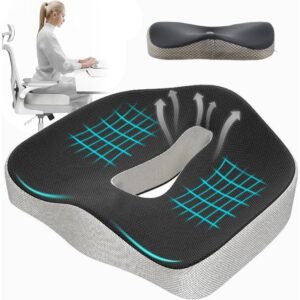
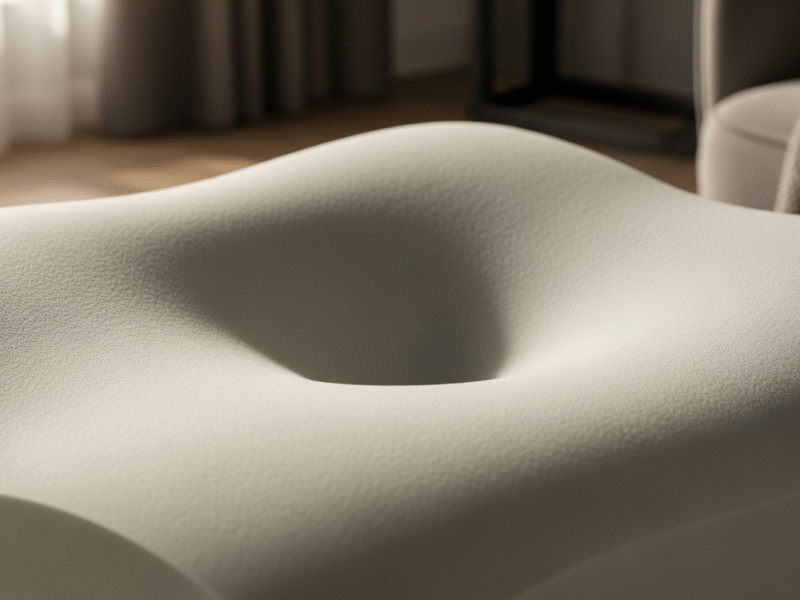
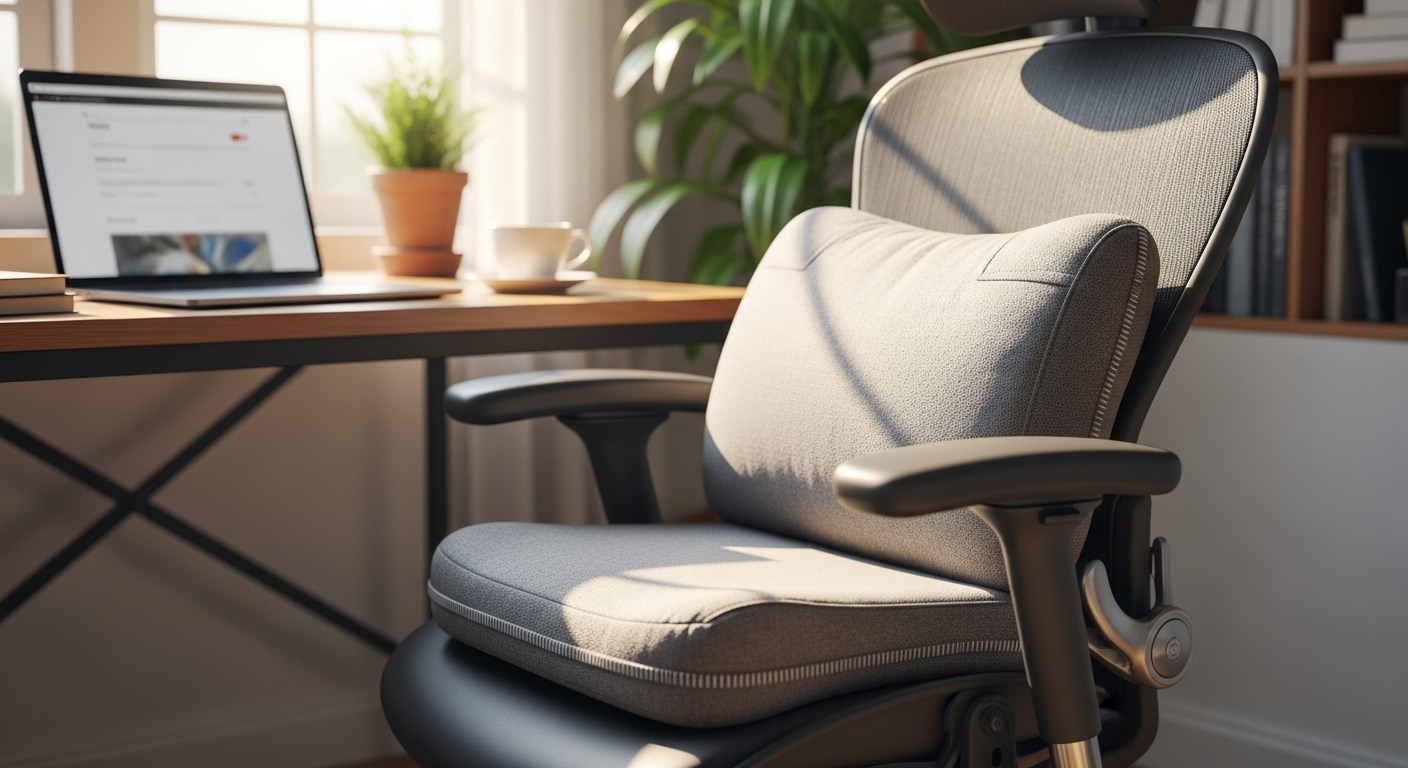
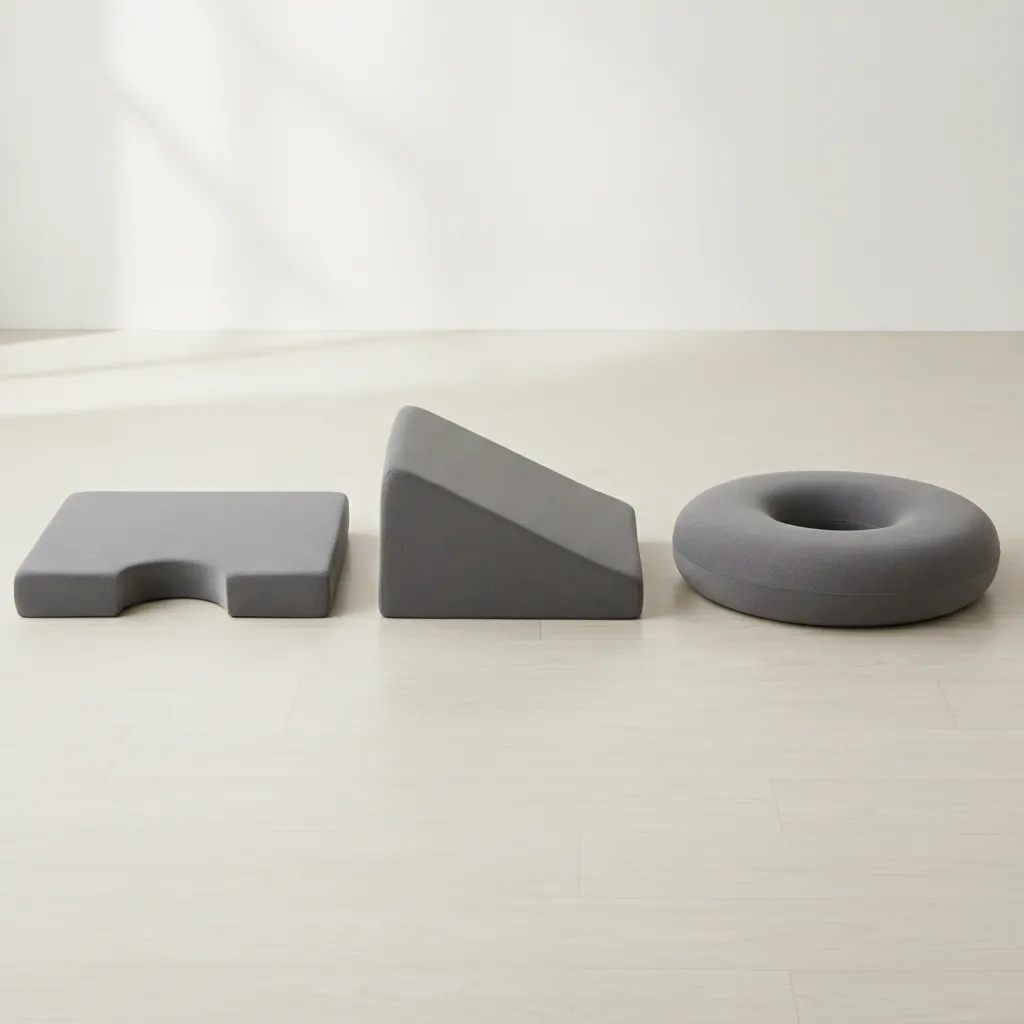
Choose a cushion around the support you need. A rear cutout may help reduce pressure on the tailbone; a seat cushion and lumbar support can make sitting more comfortable. Ring cushions have a central opening, while wedge pillows can support the legs when resting. Look for supportive foam that holds its shape and a nonslip base. Suitability depends on your symptoms and how the cushion fits your seat.
This guide compares the main types of cushions, the situations they are designed for and the features to check before buying.
How does a supportive seat cushion work?
When you sit, much of your weight rests on the sitting bones, with pressure also affecting the tailbone and surrounding soft tissue. A hard seat can become uncomfortable over time. A cushion changes how that pressure is distributed; a cutout or opening is intended to reduce direct pressure on a sensitive area. Some designs also change the angle of the pelvis, which may make an upright position more comfortable. The effect depends on the design, the chair and the individual.
A cushion does not replace movement. Even with a comfortable seat, take a break from sitting every 30–45 minutes. We explain the reasons in The effects of prolonged sitting.
Which type of cushion should you consider?
| Concern or use | Cushion type | Our model | Current price |
|---|---|---|---|
| Tailbone discomfort or long hours at a desk | Seat cushion with a rear cutout | ComfortSit | See product price |
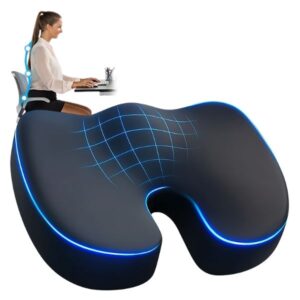
| Everyday comfort on a firm chair or car seat | Memory foam seat cushion | ComfortLux | See product price |
| Lower back discomfort while sitting | Lumbar cushion for the backrest | Lumbaris | See product price |
| Support for both the lower back and sitting area | Seat and lumbar cushion set | Lumbaris + ComfortLux | See product price |
| Seating needs with hemorrhoids, after a procedure or during pregnancy (seek advice on suitability) | Ring cushion with a central opening | MediLux | See product price |
| Tired or swollen legs, or resting with varicose veins | Wedge pillow for leg elevation | ComfortLift | See product price |
| Hip or lower back discomfort when side sleeping | Pillow between the knees | ErgoPlus | See product price |
Check the linked product pages for current prices in your selected currency. Browse all pillows and cushions.
What should you look for?
- Material: firm, high-density memory foam adapts to your shape while providing support. Our comparison with ordinary foam is in Why choose memory foam?.
- Firmness: a cushion that is too soft may flatten under your weight, while one that is too hard may feel uncomfortable. Check that it returns to its shape after you get up.
- Thickness: 5–8 cm is a common starting point, but check your setup. A thicker cushion changes your position relative to the desk and may require adjustments to your chair.
- A nonslip base helps keep the cushion in place on an office chair or car seat.
- A removable, washable cover and breathable fabric can make everyday care and warm-weather use more comfortable.
- Take care with inflatable ring cushions: a firm edge can increase pressure around a sensitive area.
A cushion provides support, not a cure
A cushion may help with pressure and comfort, but it does not necessarily address the cause of pain. Consider it alongside a suitable workstation (see Home office ergonomics), regular breaks and stretching exercises. If pain travels down your leg, our article on sciatica and sitting explains more. For pain at the base of the spine, see our guide to tailbone pain.
Frequently asked questions about seat cushions
Which cushion is best for an office chair?
A supportive memory foam cushion with a nonslip base is one option. A rear cutout may be more comfortable if pressure on the tailbone is a concern. If you also need support behind your lower back, consider whether a seat cushion and lumbar cushion work well together in your chair.
Can a seat cushion help with lower back pain?
It may make sitting more comfortable by changing how pressure is distributed and how your pelvis rests on the seat. It does not replace suitable back support, movement or regular breaks, and it will not address every cause of lower back pain.
How thick should a seat cushion be?
5–8 cm is a useful starting range, but thicker is not necessarily better. After adding the cushion, check that your elbows remain at about a right angle and your feet rest flat on the floor. Adjust the chair height if necessary.
How long does a memory foam cushion last?
A good-quality cushion may last several years with everyday use. Consider replacing it if it no longer returns to its shape or develops a permanent indentation, as it may no longer provide the same support.
This content is for information only. Speak to a doctor or physical therapist about persistent lower back, tailbone or leg pain.
From our store
COMFORTLUX Seat Cushion