
How to move more during the day: 10 simple habits
You do not need to find an extra hour for exercise to move more during the day. Simply build more walking and short activity breaks into the things you already do: take the stairs instead of the elevator, park farther away, take a movement break every 30–45 minutes, and spend active time with your family. According to the World Health Organization, every additional minute of physical activity counts, regardless of how it is spread throughout the day.
Below are 10 practical approaches for working parents, office workers, drivers, and shift workers. They require no gym membership and can fit into your existing schedule.
Why does every minute of movement count, even without a structured workout?
World Health Organization (WHO) recommends that adults get at least 150 minutes of moderate physical activity each week, while emphasizing: “Any amount of physical activity is better than none, and all physical activity counts.” This means you do not have to fit all your movement into a single workout. Ten minutes of walking in the morning, five minutes on the stairs at lunchtime, and an evening walk with the dog all contribute toward the same goal.
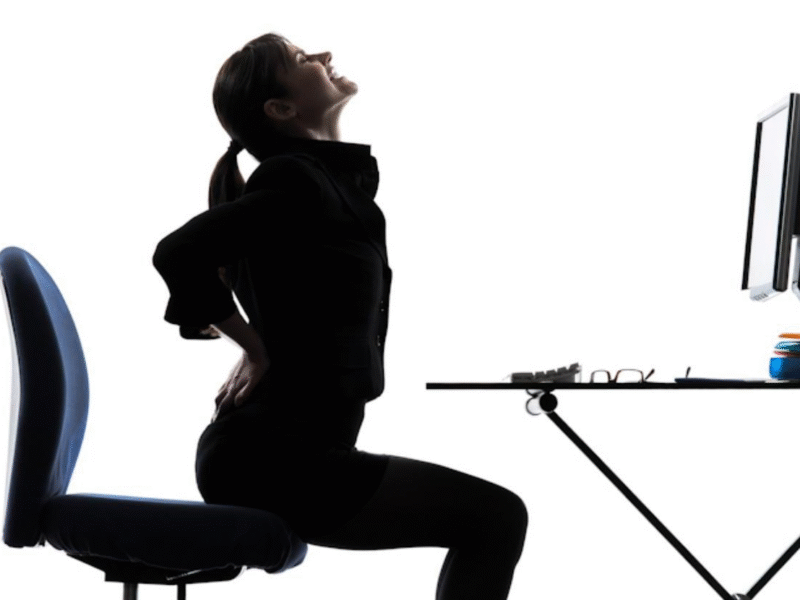
The global picture also shows why this matters: according to the WHO, 31% of adults worldwide (1.8 billion people) are physically inactive, and between 2010 and 2022, the proportion rose by 5 percentage points and is projected to reach, by 2030, 35%. We explain how prolonged sitting affects the body and when it becomes a health risk in our guide The effects of prolonged sitting ; here, we focus on simple ways to add more movement to everyday life.
How can you add movement to an office workday without leaving the workplace?
1. Take the stairs instead of the elevator
It is familiar advice, but still one of the most effective options: climbing stairs raises your heart rate and strengthens your leg muscles more than spending the same amount of time walking on level ground. If you have a few minutes and good balance, you can also try calf raises on the edge of a step to strengthen your calf muscles.
2. Hold meetings and take calls while walking
If you do not need to look at a screen, take a phone call while walking, or listen to a video meeting through headphones as you walk around the office or building. In addition to adding more steps, this may have another benefit: a Stanford study (Oppezzo and Schwartz, 2014, Journal of Experimental Psychology: Learning, Memory, and Cognition) found that walking increased creative (divergent) thinking by an average of about 60% compared with sitting. This may help explain why ideas often come more readily during a walk than at a desk.
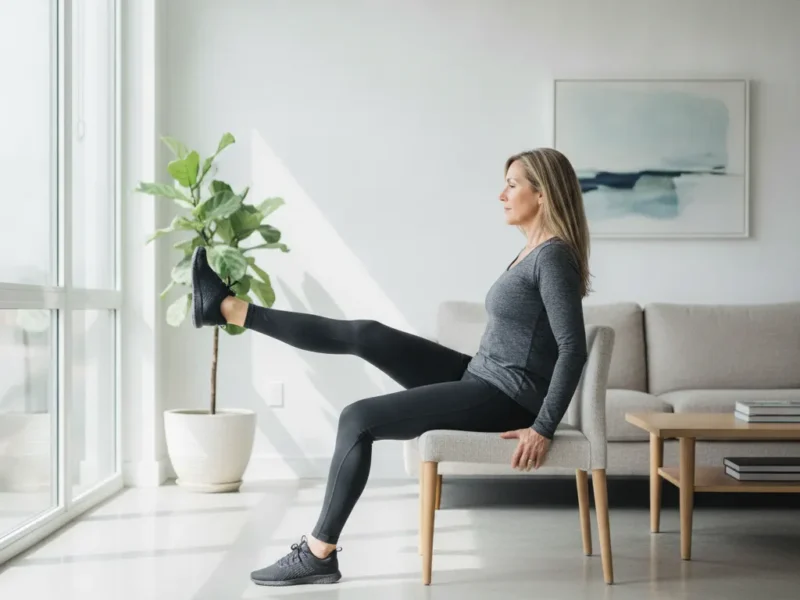
3. Get up and move every 30–45 minutes
Set a reminder, stand up, take a few steps, or do a couple of squats. Evidence that these short breaks can make a difference comes from a study published in Diabetes Care (Dunstan et al., 2012): short activity breaks during prolonged sitting produced measurable reductions in post-meal glucose and insulin levels. Long, uninterrupted periods of sitting have also been associated with cardiovascular health outcomes. In the OPACH study (Bellettiere et al., Circulation 2019), among 5,638 older women aged 63–97, those with the longest uninterrupted periods of sitting had a higher risk of cardiovascular disease than those who broke up their sitting more often. This finding applies to older women and should not be generalized to all adults, but it supports regularly interrupting long periods of sitting. For more on organizing your workday to reduce discomfort, read our guide to stretching exercises after every hour of sitting.
How can you add more movement to everyday tasks at home?
4. Park farther from your destination
When shopping, arriving at work, or taking children to school, park a few minutes’ walk from the entrance. Those extra minutes of walking quickly add up over the week without requiring a separate space in your schedule.
5. Walk a pet, yours or a neighbor’s
If you do not have a dog, local shelters often look for volunteers to walk animals. It is a simple way to get some fresh air, teach children to care for others, and add a dependable 15–20 minutes of walking to the day.
6. Play music while doing household chores
Vacuuming, tidying, or making dinner with music can quickly become an opportunity to dance. Dancing builds balance and coordination while turning a task you already need to do into physical activity. Involve the children and make it a short family routine.
7. Move while watching television
During your next show or film, march in place, use an exercise bike, stretch on the floor, or do gentle bodyweight exercises. If you stay active through a 30-minute show, you gain 30 minutes of movement you would not otherwise have had. If that feels like too much at first, move only during the commercial breaks.
What can drivers and shift workers do?
Structured exercise is often hardest to fit in around long drives or night shifts, but there are still opportunities to move:
- 8. At every longer stop, get up and walk around the parking area : when refueling, making a delivery, or waiting for a load, use a few minutes to move your legs and shoulders.
- 9. Turn your meal break into a short walk : even 10 minutes of walking before or after a meal can aid digestion and interrupt prolonged sitting behind the wheel or at a machine.
- 10. Park your truck or car in a more distant part of the parking lot : the principle is the same as for everyday parking, but for professional drivers, these minutes of walking add up day after day.
How much activity do these habits actually add?
The table below shows how everyday opportunities can add up to a meaningful amount of movement without a separate workout session.
| Opportunity during the day | Approximate additional minutes of activity | When to use it |
|---|---|---|
| Stairs instead of the elevator | 2–5 min | Whenever stairs are available as an alternative to the elevator |
| Parking farther away | 5–10 min | Shopping, arriving at work, taking children somewhere |
| Walking call or meeting | 15–30 min | Calls when you do not need to look at a screen |
| Movement break every 30–45 min | 5–10 min total | Office or desk work |
| Walking a pet | 15–20 min | Morning or evening |
| Active TV time / household chores with music | 20–30 min | Evening, during routine tasks |
Doing just a few of these things each day can quickly move you toward the recommended 150 minutes of moderate activity per week, without setting aside a separate workout session.
What about your legs and feet as you become more active?
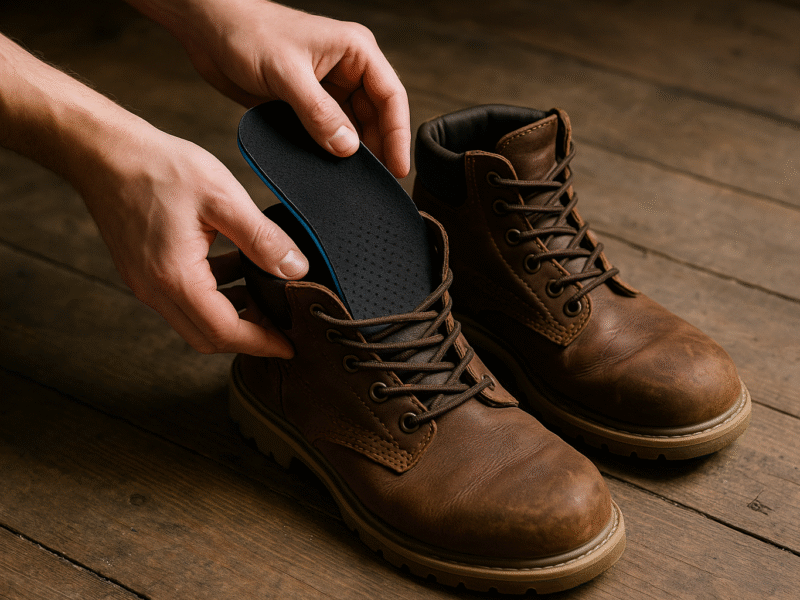
More stairs, walking, and standing on hard floors are positive changes for the body, but they may also reveal unsuitable footwear sooner. If your heel hurts, your arch feels tired, or the sole of your foot burns after a more active day, footwear without enough support may be responsible rather than the activity itself. For long days on your feet, one option is Comfort shoe insoles, which cushion pressure while standing and walking on hard floors. For more dynamic activity, such as walking, running up stairs, or weekend sports, another option is Active sports insoles with additional cushioning.
When is movement not enough, and when should you see a doctor?
These tips are intended for people without specific health restrictions who simply want to add more movement to everyday life. If you have cardiovascular disease or joint problems, or have been inactive for a long time, consult a doctor before increasing your activity. Seek medical care if you experience chest pain, severe shortness of breath, dizziness, or unusual joint pain during or after activity that does not resolve.
This content is for information only and does not replace advice from a doctor or physiotherapist.
Frequently asked questions about moving more during the day
Do short activity breaks really replace a workout at the gym?
Not completely. Structured strength and endurance training provides benefits that short breaks do not. However, according to the WHO, short and frequent periods of movement during the day count as physical activity and may be the most realistic way for many people to reach the recommended 150 minutes per week.
How much physical activity do I really need each day?
The WHO recommends at least 150 minutes of moderate physical activity per week, an average of about 20–25 minutes per day. It does not have to be continuous; you can divide it into several shorter periods during the day, which can make it easier to fit into a busy schedule.
How can I find time to move if I work shifts or drive a lot?
Look for opportunities within breaks you already take: stopping for fuel, waiting for loading, or taking a meal break. A few minutes of walking or stretching during each one add up over a shift or journey without requiring extra free time.
Does moving while watching television really count?
Yes. Activity counts according to the energy used and the demands placed on the body, whether or not a television is on. Marching in place, doing gentle exercises, or stretching during a show are all valid forms of movement, especially on days when there is no time for a separate session.
Related reading: 10 reasons why walking is beneficial and The effects of prolonged sitting.
From our store

Comfort shoe insoles