How to Make Long Drives Easier on Your Back
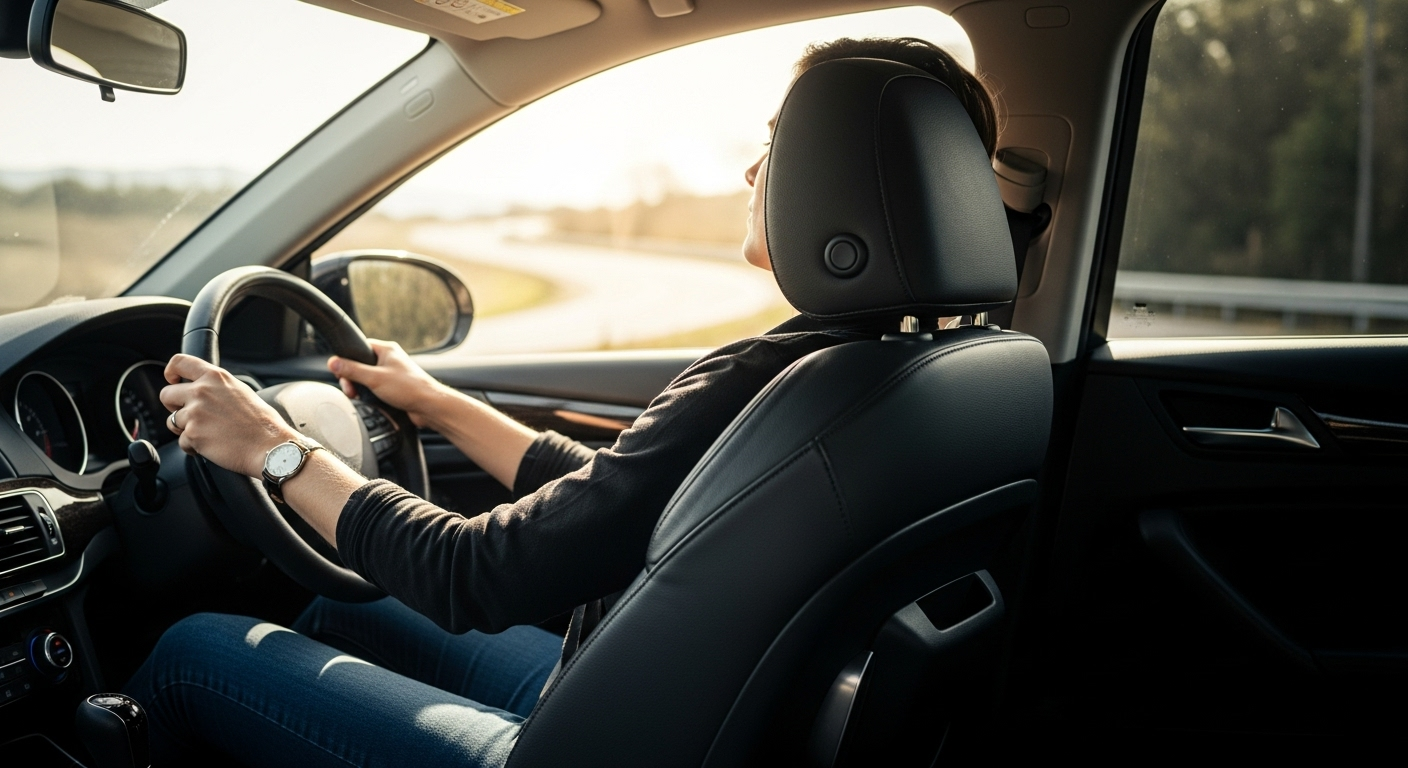
A long drive places different demands on your back than desk work. You cannot move around freely, the seat position is constrained, and your body is exposed to small road vibrations. Up to 84% of adults experience low back pain at least once in their lives, according to StatPearls in the US National Library of Medicine. Driving may aggravate symptoms in some people. This guide covers seat adjustment, breaks, and movement that may reduce discomfort and make a journey safer.
Why can long drives cause back pain?
Driving combines prolonged fixed posture, vibration transmitted through the seat, and, in some vehicles, limited lumbar support. Together, these factors may contribute to muscle fatigue and discomfort in the lower back.
Fixed posture and limited movement
Unlike at a desk, you cannot stretch or change position freely while driving. Prolonged sitting can leave the muscles of the back and legs feeling tired and stiff. The basic principles of sitting posture that also apply behind the wheel are covered in how to improve your sitting posture, while the wider health effects of prolonged sitting are discussed in our overview of prolonged sitting.
Vibration: an established occupational exposure for professional drivers
All driving involves some whole-body vibration transmitted through the seat. Exposure is usually limited for occasional drivers but can become a substantial occupational issue for professional drivers. A systematic review and meta-analysis of more than ten studies found that whole-body vibration exposure was associated with approximately twice the odds of low back pain (odds ratio 2.17) and nearly twice the odds of sciatica (odds ratio 1.92): Burström et al., 2015. These occupational findings do not mean an occasional journey will cause injury, but they support careful seat setup and regular breaks for people who drive for work.
Limitations of some vehicle seats
Although vehicle seats have improved, their shape and lumbar support do not suit every body. Poor fit may encourage an uncomfortable posture or concentrate pressure in particular areas.
How to adjust your car seat
Adjust the seat before starting the engine, while the vehicle is safely parked. A good setup is usually more useful than trying to correct a poor driving position with an accessory. Follow these steps.

1. Start from a neutral setup
Move the seat back and lower it before making small adjustments, if your vehicle allows. This can make it easier to find a position systematically rather than modifying the previous driver’s setup.
2. Seat height and distance
- Height: Raise the seat until you have a clear view of the road and instruments, while keeping adequate headroom. Aim to keep the hips approximately level with the knees if the vehicle permits.
- Distance: Move the seat forward until you can fully depress each pedal while keeping the knee slightly bent rather than locked. Keep your back in contact with the backrest.
3. Backrest angle
A mildly reclined backrest, often around 100 to 110 degrees, may feel more comfortable than a rigid 90-degree angle. Research on intradiscal pressure suggests that a backrest near 110 degrees with lumbar support may reduce disc pressure by approximately one-fifth compared with upright sitting:PMC review, 2023. Treat these angles as a starting point. You must still reach the pedals and steering wheel safely, maintain a clear view, and follow the vehicle manufacturer’s instructions.
4. Head restraint
Align the top of the head restraint with the top of your head and, where possible, keep the back of your head around two centimeters from it. This is also advised in the UK guidance Back Care for Drivers. Correct head-restraint position supports the head and may reduce whiplash injury in a collision.
5. Seat-cushion angle and lumbar support
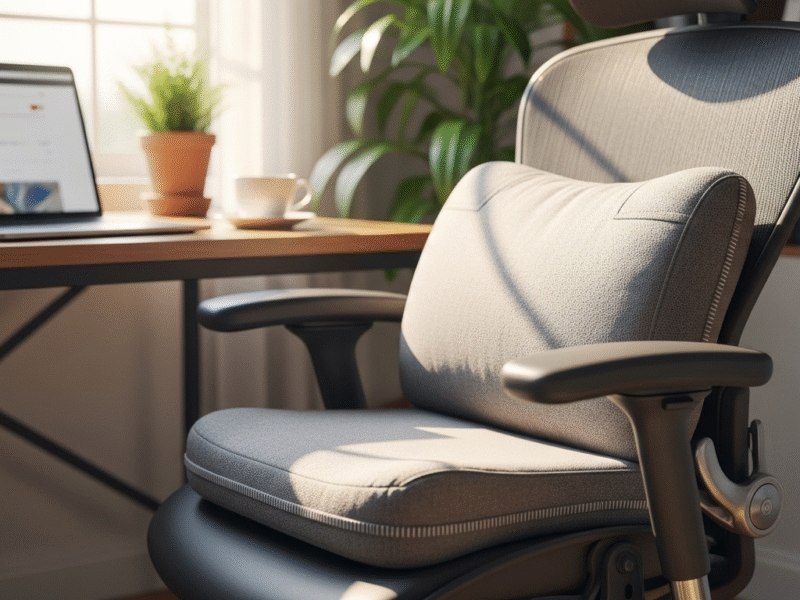
If adjustable, set the seat cushion so you can fully operate the pedals without concentrated pressure beneath the thighs. Support the natural curve of the lower back. If the built-in lumbar support is insufficient, a small rolled towel or a dedicated lumbar support cushion may fill the gap, provided it does not push you too far forward or interfere with vehicle control.
6. Steering-wheel reach and items in your back pocket
Adjust the steering wheel so you can hold its upper portion with your elbows slightly bent and your shoulders against the backrest, while maintaining the position recommended for safe control and airbag clearance. Remove a bulky wallet from your back pocket before a long drive. Uneven pressure beneath one buttock may cause discomfort and has sometimes been described as “wallet neuritis”:PMC, 2018. Evidence for this specific condition is limited, but removing a bulky object is a simple comfort measure.
Quick-reference table for seat setup
| Element | Suggested setup |
|---|---|
| Seat height and distance | Hips approximately level with knees; pedals fully depressed with the knee slightly bent. |
| Backrest angle | 100–110 degrees as a starting range, while maintaining safe control and back support. |
| Head restraint | Top aligned with the top of the head; gap from the back of the head around 2 cm where possible. |
| Lumbar support | Fills the lower-back gap without pushing the spine or body too far forward. |
| Items in pockets | Remove a wallet and other bulky items from back pockets before driving. |
Additional back support for the car
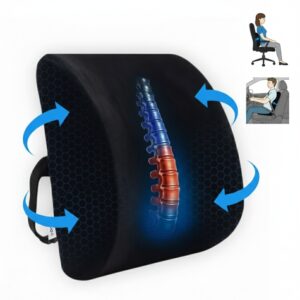
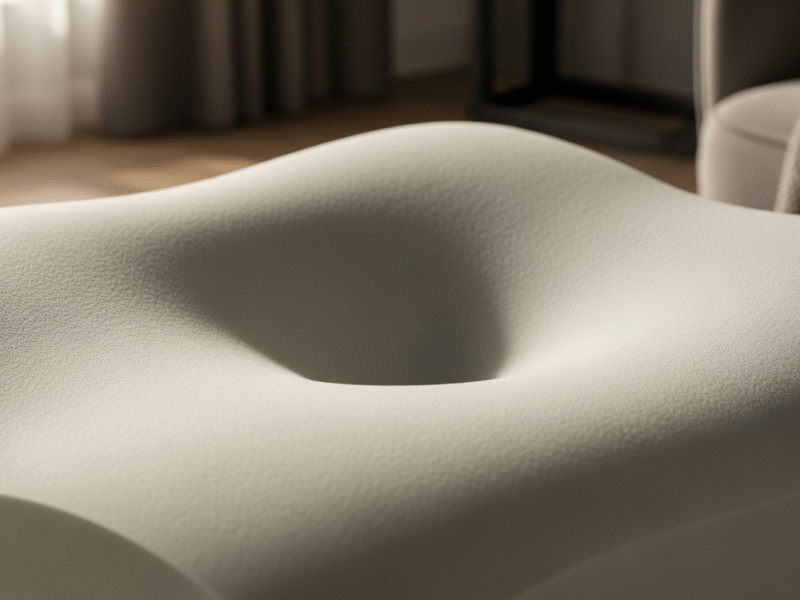
Discomfort can still develop on a long trip even after careful seat adjustment, especially when the built-in lumbar support does not fit you. The contoured Back support cushion – Lumbaris is made from memory foam and intended to fill the space behind the lower back. A Seat cushion – ComfortLux is intended to cushion the tailbone and hips and may feel more comfortable for some drivers. If you want both, there is also a set containing both cushions. Accessories must not interfere with seat belts, airbags, head restraints, pedals, visibility, or safe vehicle control. If neck discomfort is your main problem on long drives, see our separate guide to choosing a neck pillow for the car.
Break every two hours for safety as well as comfort
A break after every two hours of driving is a widely used road-safety recommendation. The UK road-safety campaign THINK! advises a 15-minute break after every two hours of driving to reduce fatigue. Follow the rules and advice for the country where you drive. During a break, leave the vehicle in a safe place, walk around, and move gently before continuing.
Prolonged immobility during a long journey can also increase the risk of deep vein thrombosis (DVT), a clot in a deep vein, usually in the leg. As with long flights, remaining still can slow venous blood flow in the legs. The CDC includes car travel in its advice and recommends moving every two to three hours. Seek medical advice promptly for swelling, pain, or tenderness in a calf or leg after a long journey, especially on one side. Call local emergency services if these symptoms occur with chest pain or difficulty breathing.
Stretching at a rest stop
A few gentle movements for the neck, shoulders, back, and legs during a break may help ease muscle tension and get you moving again. For a short routine that can also be done at a rest stop, see 5 Stretches After Every Hour of Sitting.
How to get out of the car with less twisting
After hours of sitting, the back may feel stiff, and a sudden twisting movement while getting out can be uncomfortable. Cleveland Clinic advises turning toward the open door and moving the trunk and legs together rather than twisting through the spine. Place both feet on the ground, then stand. A similar whole-body turn can be used when getting in or reaching toward the back seat.
When to seek medical care
Mild discomfort after a long drive often settles with movement and rest. Seek medical advice if:
- you develop swelling, pain, or tenderness in a calf after travel, especially in one leg, as this may indicate a blood clot;
- pain travels down the leg, which may indicate sciatica. Read what may help with sitting-related sciatica in our separate guide,
- you develop numbness around the groin or inner thighs, loss of bladder or bowel control, or rapidly worsening leg weakness, which requires immediate medical care; or
- pain persists for more than a week after the journey or does not improve with breaks and a suitable seat position.
Frequently asked questions about driving and back pain
How often should I stop during a long drive?
Plan to stop at least every two hours for approximately 15 minutes, in line with UK road-safety advice, and follow local guidance. Leave the vehicle in a safe location, walk, and move gently. Stop sooner if you feel tired, lose concentration, or need to change position.
What backrest angle is best for the back?
A range of 100 to 110 degrees can be a useful starting point, but there is no single best angle for everyone. Choose a position that supports your back while allowing full, safe control of the vehicle; avoid forcing a rigid 90-degree posture.
Do long car journeys increase the risk of a blood clot in the leg?
Prolonged immobility during car travel can increase DVT risk, much like a long flight. Regular movement during breaks may reduce immobility. One-sided calf swelling, pain, warmth, or tenderness after travel needs prompt medical assessment.
Are professional drivers at greater risk of back pain?
Professional drivers may have greater exposure to whole-body vibration and prolonged sitting. The cited occupational research found approximately twice the odds of low back pain among more highly exposed groups, although individual risk varies.
This content is for informational purposes and is not a substitute for consultation with a doctor. Seek medical help for the warning signs described above.
From our store
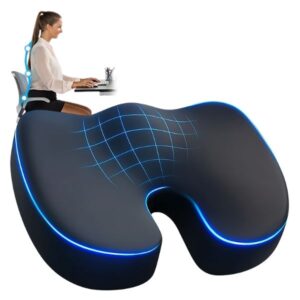
COMFORTLUX Seat Cushion