5 Exercises for Plantar Fasciitis
The exercise with the strongest evidence for plantar fasciitis is targeted stretching of the plantar fascia, rather than stretching only the Achilles tendon. A clinical study found better results with this technique after 8 weeks. Below are 5 stretching and strengthening exercises, a daily schedule, and a video demonstration of proper technique.
This article focuses exclusively on exercises. To learn what plantar fasciitis is, what causes it, how it is diagnosed, and which other treatments are available, including insoles, splints, and shock wave therapy, read our detailed guide Plantar Fasciitis: Causes, Symptoms, and Treatment.
Which exercise has the strongest evidence?
Targeted stretching of the plantar fascia is the exercise supported by the strongest clinical evidence. In a study by DiGiovanni et al. (Journal of Bone and Joint Surgery, 2006, 82 patients with chronic plantar fasciitis), this exercise was more effective after 8 weeks than stretching the Achilles tendon alone. After two years, 66 participants provided complete data, and 92% of them reported being satisfied with the treatment results. The American Academy of Orthopaedic Surgeons (AAOS) describes the exercise as follows:
- Sit in a chair and cross the affected foot over the opposite knee.
- Hold the toes just below their tips and gently pull them toward you until you feel a stretch in the arch. If they are difficult to reach, loop a towel around the big toe.
- Hold for 10 seconds and repeat 20 times on each foot. For greatest benefit, do the exercise in the morning before getting out of bed.
How should you stretch the calf muscles?
According to the American Academy of Family Physicians (AAFP) , limited upward ankle mobility due to tight calf muscles is the strongest risk factor for plantar fasciitis among people who are not athletes. Calf stretching is therefore an important complement to stretching the fascia itself.
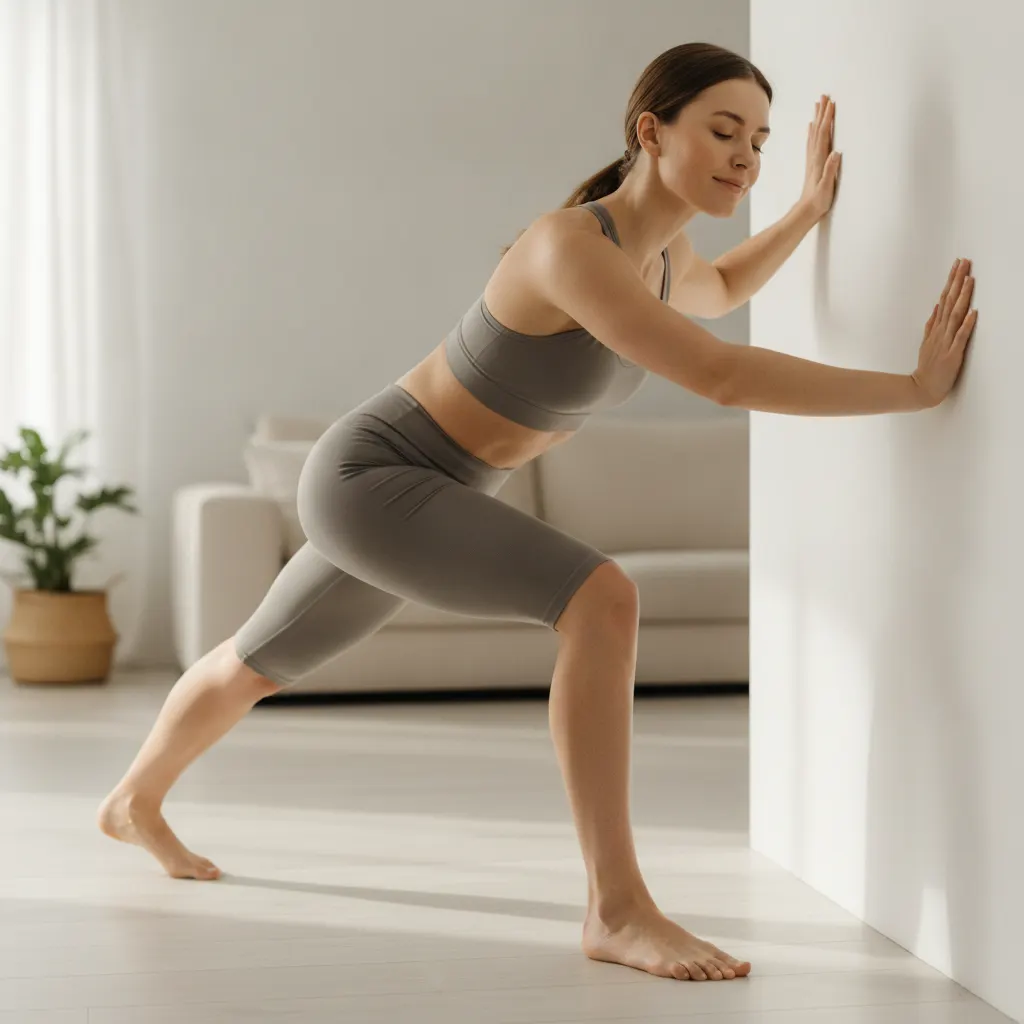
- Stand facing a wall with your palms against it at shoulder width.
- Place one foot forward and bend it slightly. Extend the affected leg behind you with the heel firmly on the floor.
- Slowly and steadily move your hips toward the wall until you feel a stretch in the calf. Hold for 10 seconds and repeat 20 times on each leg (AAOS). To target the deeper soleus muscle, repeat the exercise with the back knee slightly bent.
How can cold therapy and massage help?
Cold therapy and rolling the sole complement stretching and may calm irritated tissue. AAOS recommends rolling the sole over a frozen water bottle or ice for about 20 minutes, 3 to 4 times a day. If that takes too much time, Cleveland Clinic suggests rolling the foot over a golf or tennis ball for 2 to 3 minutes several times during the day.
Which strengthening exercises may help over time?
Once acute pain has eased, strengthening exercises can build the small muscles that support the arch and help reduce the load on the fascia with each step. In its foot and ankle conditioning program, AAOS recommends:
- Towel curls: Sit barefoot with both feet on the floor and place a small towel in front of you. Grasp it near the center with your toes, pull it toward you, and release. Do 20 repetitions on each foot daily.
- Marble pickups: Place about 20 marbles, or cotton balls, and a cup on the floor. Pick them up one at a time with your toes and place them in the cup. Repeat daily.
- Calf raises: Stand upright, lightly holding a chair or wall for support if needed. Rise onto the toes of both feet or only the affected foot, pause briefly, and lower slowly. Do 2 sets of 10 repetitions, 6 to 7 times a week.
What should your daily exercise schedule look like?
Consistency matters more than intensity. The table below summarizes when to include each exercise during the day.
| Time of day | Exercise | Amount |
|---|---|---|
| Morning (before getting up) | Seated plantar fascia stretch | 20 x 10 seconds |
| During the day (during breaks) | Wall calf stretch | 20 x 10 seconds (each leg) |
| During the day (during breaks) | Towel curls and marble pickups | 20 repetitions each |
| Evening | Rolling the sole over a chilled bottle | 2–20 minutes |
| 6–7 times a week | Calf raises | 2 x 10 repetitions |
What else may support recovery?
- Adjust activity: temporarily replace running and jumping with swimming or cycling until the pain eases.
- Choose suitable footwear: shoes should have heel cushioning and arch support; avoid walking barefoot on hard floors.
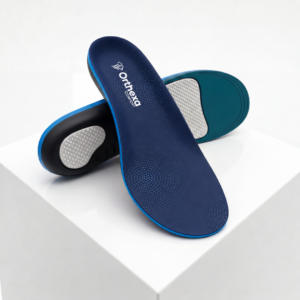
- Add support with insoles: for everyday walking and jobs that require standing, one option is Comfort shoe insoles, while for running and sports, consider Active shoe insoles. For both uses, there is also the Active + Comfort set.
- Follow a structured program: for a guided sequence of the exercises in this article, see the 4-Week Foot Exercise Program.
When are exercises not enough, and when should you see a doctor?
Stop any exercise that makes the pain worse instead of easing it. According to the UK National Health Service (NHS) , see a doctor if the pain is severe, has not improved after two weeks of consistent exercise, or if you have tingling or numbness in your foot or have diabetes. Learn more about causes, diagnosis, and other treatments in our guide Plantar Fasciitis: Causes, Symptoms, and Treatment.
This content is for informational purposes and is not a substitute for consultation with a doctor or physical therapist. Seek professional advice for severe, persistent, or worsening pain.
Frequently asked questions
Can I run with plantar fasciitis?
Running is not recommended during the acute phase when pain is severe because it places additional load on the fascia. As pain eases, you can gradually return to running. Pay attention to your symptoms, wear suitable shoes, and warm up and stretch before running.
How quickly do exercises help plantar fasciitis?
The time depends on the severity of the condition and how consistently you follow the plan. According to AAOS and StatPearls, 75–90% of people improve within 10 to 12 months of consistent conservative care, although many notice initial improvement after a few weeks of regular stretching.
Where can I see the proper exercise technique on video?
The video above demonstrates the technique. For additional examples, use videos from recognized physical therapy channels that show each exercise in full rather than only short clips.
Can exercises cause harm if I perform them incorrectly?
Yes, especially if you use jerky movements or continue through sharp pain. Stretch slowly and with control until you feel tension, not pain. Skip any exercise that worsens your symptoms and speak with a physical therapist.
Plantar fasciitis can be persistent but manageable. A consistent combination of stretching and strengthening may substantially reduce heel pain and lower the chance of symptoms returning.
From our store

Active and Comfort insole set
4-week foot exercise program
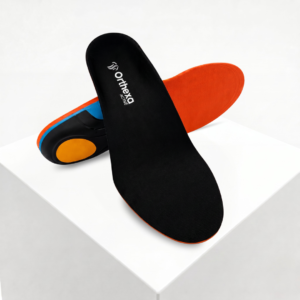
Active sports insoles