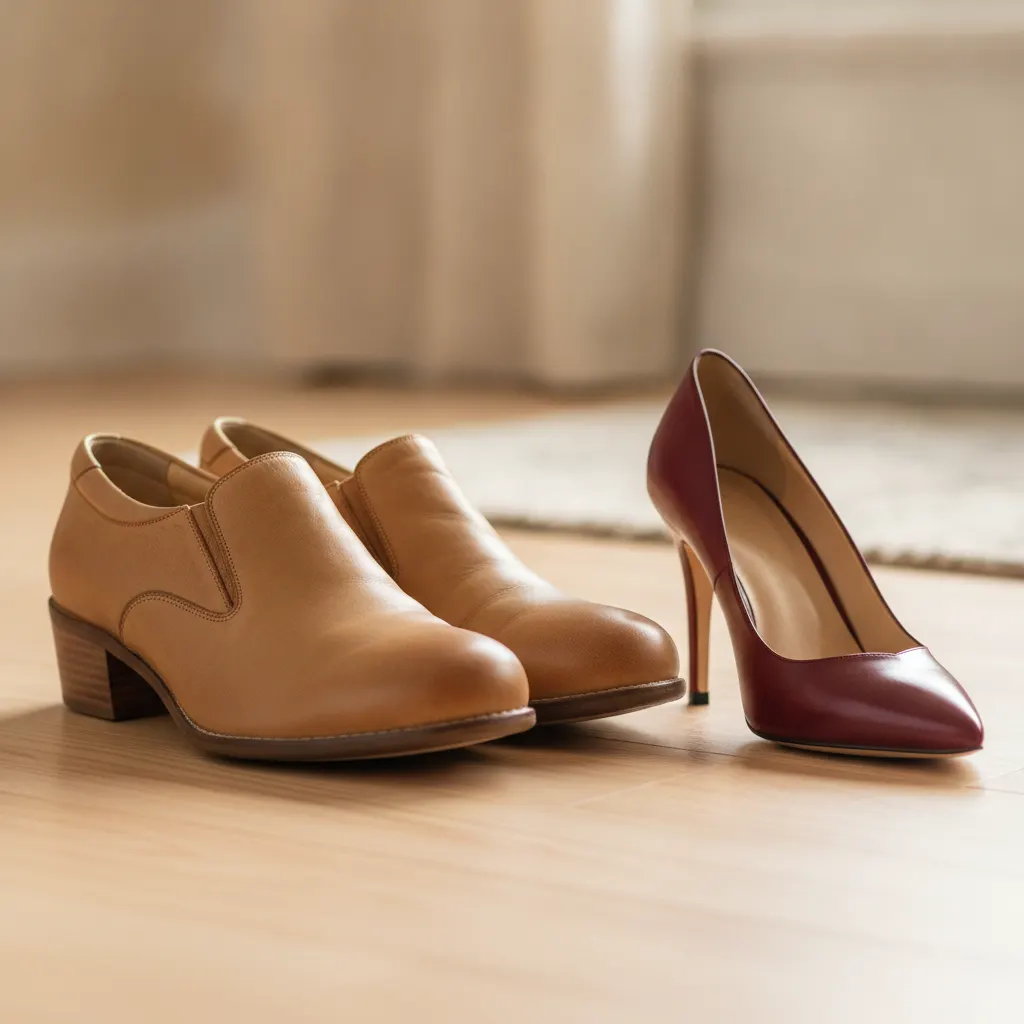
Hallux valgus: how to relieve symptoms without surgery
Hallux valgus is a gradual change in the alignment of the big toe that creates a painful bony prominence, commonly called a bunion, on the inner side of the foot. The deformity itself cannot be corrected without surgery, but suitable footwear, splints, insoles, and exercises may help relieve pain and slow its progression.
This article explains which measures may help with hallux valgus and what you can realistically expect from them.
What is hallux valgus, and why does it develop?
In hallux valgus, the first metatarsal shifts inward while the big toe angles toward the other toes, creating a prominence at the side of the joint. According to the American Academy of Orthopaedic Surgeons (AAOS), it is a progressive deformity that does not correct itself and usually worsens over time. Contributing factors include:
- heredity and foot shape , the most important factor,
- narrow, pointed shoes and high heels, which may accelerate the change in alignment,
- flat feet and excessive pronation – check your foot type here,
- female sex and age, as well as inflammatory joint diseases.
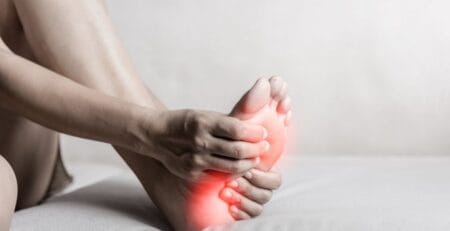
Symptoms include a painful, red prominence beside the big toe, swelling, corns on the second toe, pain when walking in narrow shoes, and increasing stiffness in the big-toe joint.
How can you relieve hallux valgus symptoms?
1. Change your footwear first
Other measures are unlikely to help if your foot is squeezed into a narrow shoe every day. Choose shoes with a wide, rounded toe box, a soft upper, and a heel no higher than 3–4 cm. Try this simple test: trace your foot on a sheet of paper and place the shoe over the outline. If the outline is wider than the sole, the shoe is too narrow.
2. Reduce pressure on the forefoot
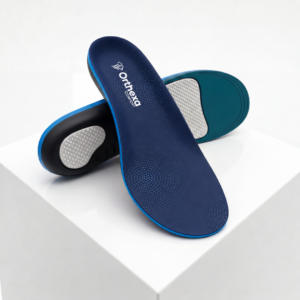
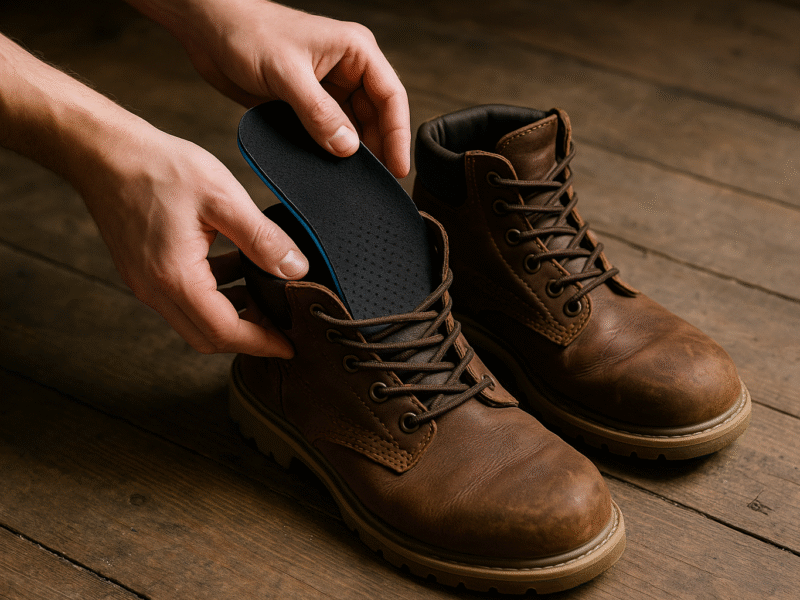
Hallux valgus can shift more load onto the forefoot, leading to painful pressure points and hard skin. Arch-supporting insoles can redistribute pressure across the sole. One option is Comfort shoe insoles. If pain is concentrated beneath the metatarsal heads, you may also find this article useful: Pain in the forefoot.
3. Splints, pads, and toe spacers
Silicone pads placed over the prominence can reduce rubbing against the shoe, while spacers between the big toe and second toe can reduce pressure. Night splints hold the big toe in a straighter position and may ease pain for some people. According to the AAOS, splints and spacers do not remove the deformity or permanently correct the angle of the toe. They are intended to relieve symptoms.
4. Exercises for mobility and strength
- Big-toe stretch: gently pull the big toe toward a straighter position and hold for 20–30 seconds. Repeat 3 times a day.
- Big-toe abduction: try moving the big toe away from the other toes without using your hand. Hold for 5 seconds and repeat 10 times.
- Picking up a towel or marbles with your toes : this strengthens the small muscles of the foot.
- Rolling a ball under the sole may help relax tight tissue.
5. During a flare-up
Apply a cold pack to the prominence for 15–20 minutes, rest with your foot elevated, and use an over-the-counter pain reliever if appropriate for you. At home, wear supportive slippers with a soft toe area, and avoid walking barefoot on hard tile floors.
When is surgery needed?
Surgery is the only way to correct the deformity itself. According to AAOS guidance, however, it should not be performed for cosmetic reasons alone. It may be considered when pain continues to limit daily activities despite wide shoes, insoles, and pads, when the big toe overlaps the second toe, or when the joint is severely stiff. Recovery can take weeks or months. Discuss surgery with an orthopedic specialist after conservative measures have been tried.
Frequently asked questions about hallux valgus
Can hallux valgus be corrected without surgery?
The deformity itself cannot. A splint or exercise will not return the bone to its original position. Conservative measures may still reduce pain and slow progression, which is enough to keep symptoms manageable for many people.
Do high heels cause hallux valgus?
High heels are not the only factor. Heredity is considered the strongest factor because foot shape and ligament laxity can be inherited. Narrow, pointed shoes and high heels may accelerate progression, which is why changing footwear is an important first step.
Do night splints work?
They may ease pain and tension at night for some people, but they do not permanently correct the angle of the big toe. The same applies to toe spacers and pads. Use them to improve comfort, rather than expecting the prominence to disappear.
Does hallux valgus always get worse?
It usually progresses slowly, although the rate varies greatly. With suitable footwear, insoles, and exercises, many people remain free of significant symptoms for years. It is helpful to act early, before the joint becomes stiff.
This content is for information only and does not replace medical advice. Seek medical attention for severe pain, redness, or warmth around the joint.
From our store