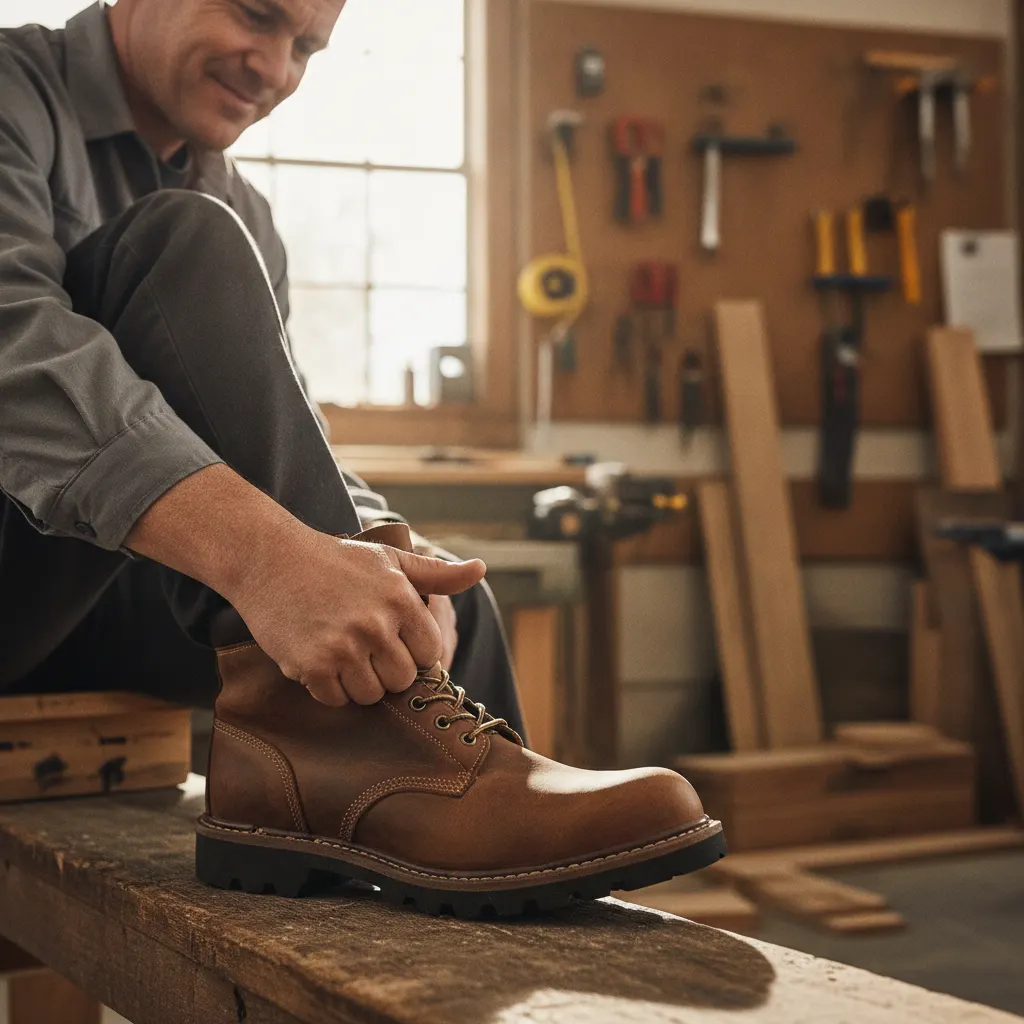
Choosing work shoes: fit and safety
Choosing the right work shoe is primarily about fit and the required level of protection, rather than price or brand. Check the size late in the afternoon, leave enough room for your toes, follow the protection requirements for your workplace, and choose an outsole that grips the surface where you actually work. In the European system, this may include an S1–S3 classification. An insole can improve comfort, but it cannot correct a poorly fitting shoe.
This guide covers measuring and fit, the meaning of the European SB, S1, S2, and S3 classifications, heel and outsole selection, the myth that an uncomfortable shoe will simply break in, and signs that a pair needs replacing.
What is the right work-shoe size?
Feet swell during the day. According to the American Academy of Orthopaedic Surgeons (AAOS), the increase can be as much as 8%. Measure or try on shoes late in the afternoon or evening rather than in the morning, and do so while standing because body weight spreads the foot. Leave about a thumb’s width between your toes and the end of the shoe. The AAOS specifies half an inch, or approximately 1.3 cm.
Width is as important as length. Shoe lasts differ between brands, so the same labeled size can fit differently across manufacturers. If a shoe feels tight across the midfoot, do not compensate by choosing extra length; look for a model made on a wider last. Feet also often differ slightly in size, so fit the larger foot. If your toes feel compressed or your forefoot becomes painful after a few hours, the toe box may be too narrow. Read more in Pain in the forefoot. A wide, rounded toe box is especially important for people with hallux valgus because a narrow toe can press on the prominent joint. See our guide Hallux valgus: how to relieve symptoms.
What do the European SB, S1, S2, and S3 classifications mean?
In the European Union, protective work footwear is covered by EN ISO 20345. According to the European Agency for Safety and Health at Work (EU-OSHA), the standard requires a safety toe cap to withstand an impact of at least 200 J and compression of at least 15 kN. The category indicates which additional protections the footwear provides:
| Category | Added protection | Suitable for |
|---|---|---|
| SB | Basic protection: a safety toe cap for impact and compression | Dry conditions with a risk of falling objects |
| S1 | SB plus antistatic properties, heel energy absorption, and a closed heel area | Dry indoor work, such as warehousing or light manufacturing |
| S2 | S1 plus a water-resistant upper | Damp conditions without sharp objects underfoot, such as kitchens or cleaning work |
| S3 | S2 plus a puncture-resistant midsole and a cleated outsole | Construction sites, outdoor work, and floors with sharp debris |
A safety toe cap may be steel, aluminum, or composite. Steel is the most common but conducts heat, cold, and electricity. Aluminum is a lighter alternative that must meet the same certification requirements. Composite caps use nonmetallic fibers, do not conduct heat or electricity, and do not trigger metal detectors, which can matter at airports and some production facilities. Choose the class and toe-cap type according to the hazards identified for your workplace, not the price of the shoe. Standards and category names differ outside the EU.
Heel, outsole, and grip: what should you check?
In its ergonomic guidance for protective footwear, EU-OSHA states that the heel should be no higher than 5 cm and that the shoe should have cushioning in the heel area. A heel that is too high changes posture and can add strain to the ankles and lower back during a full day of standing or walking. EU-OSHA also identifies shoe weight and sole stiffness as relevant ergonomic features. The sole should be stiff enough to remain stable under load but flexible enough at the forefoot to allow a natural step. If your work involves prolonged standing, see the practical advice in 8 hours on your feet.
A “slip-resistant” label alone does not show how well an outsole will grip, as performance differs substantially between models. This was demonstrated in a study by the US NIOSH/CDC involving almost 17,000 food-service workers across 226 school districts. Workers who received highly rated, 5-star slip-resistant shoes at no cost had 67% fewer workers’ compensation claims for slipping injuries. Injury rates did not fall among workers who selected and bought slip-resistant footwear themselves. The material and tread design therefore matter more than the words “slip-resistant” on the box. For wet or oily surfaces, look for a tread designed to channel away liquids.
Will work shoes break in over time?
Do not rely on an uncomfortable shoe becoming suitable with wear. The AAOS advises against buying shoes that need to be stretched or require heel grips to stop slipping, as these are signs of a poor initial fit. A few days of adjustment to a new sole or support can be normal, but pain in the toes, heel, or forefoot should not be expected to resolve simply by continuing to wear the shoe.
Breathability is another commonly overlooked feature. Work shoes with steel or composite toe caps may be less breathable than athletic footwear. EU-OSHA recommends changing socks daily and, where practical, alternating between two pairs of shoes so that each pair can dry fully. A damp, compressed insole may lose support more quickly, regardless of whether your foot pronates or supinates.
When should you replace work shoes?
According to CDC/NIOSH guidance on work-boot wear, the protective function declines gradually, rather than only when a visible hole appears. Worn tread reduces grip, wear can reduce water resistance, and water inside the shoe can impair thermal and electrical insulation. Check:
- whether the outsole tread is still clearly visible or has worn smooth,
- whether the shoe still repels water or your foot becomes wet in the rain,
- whether the upper or seams have visible cracks,
- whether the heel cushioning remains compressed instead of returning to its original shape.
For daily standing or physical work, replacement may be needed every 6–12 months, while shoes used in lighter conditions may last longer. Visible wear and loss of protection matter more than the calendar.
What can an insole correct, and what can it not correct?
A shoe insole can improve the comfort of a correctly fitting shoe, but it cannot fix the wrong fit. If a shoe is too short, too narrow, or has too high a heel, an insole does not create more space and may increase pressure beneath the toe cap. In a suitable shoe, an insole with arch support may reduce pressure around the heel and arch during long periods of standing or walking on hard floors. The appropriate support profile also depends on factors such as pronation or supination; see our guide Pronation or supination. For an overview of how insoles may be used in work footwear, see Shoe insoles for work shoes: when are they useful?.
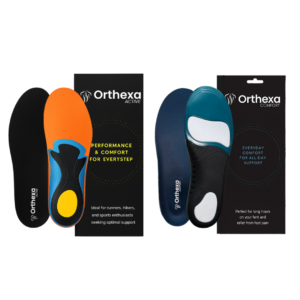
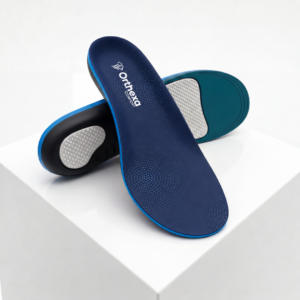
For all-day standing, one option is Comfort shoe insoles. For people who are also active in sports after work, another option is the Active + Comfort set , with one pair for work and another for sports. Browse the full shoe insole range.
Common mistakes when choosing work shoes
- Buying from a single measurement: measure both feet and fit the larger one, considering width as well as length.
- Measuring in the morning: feet are usually smallest then, so try shoes late in the afternoon.
- Assuming the shoe will break in: pain present when you try on the shoe rarely resolves simply through wear.
- Choosing the wrong safety class for the workplace: S1 does not provide the same protection as S2 or S3 on wet, slippery surfaces.
- Replacing footwear too late: worn tread and cracked uppers indicate a loss of protection, not merely a change in appearance.
When should you see a doctor?
This article is for information only and does not replace a medical assessment. Consult a doctor or orthopedic specialist if pain in the foot, heel, or toes persists despite correctly chosen shoes and insoles; if you develop swelling, tingling, or a pronounced deformity such as progressing hallux valgus; or if you have diabetes and notice changes in sensation in your feet.
Frequently asked questions about choosing work shoes
Should work shoes fit tightly or have a little extra room?
Allow a little extra room rather than choosing a tight fit. Leave about a thumb’s width between the toes and the end of the shoe because feet swell during the day. A shoe that is too tight, especially one with a rigid toe cap, can compress the toes and increase forefoot pain.
Which European safety class, S1, S2, or S3, do I need?
It depends on the workplace hazards. Under the European classification, S1 is generally used for dry indoor work, S2 for damp conditions without sharp debris, and S3 for construction sites or outdoor work where the sole could be punctured. Follow the risk assessment and applicable protection requirements for your workplace.
Can an insole fix a shoe that is too large or too small?
No. An insole adds support and cushioning inside a correctly sized shoe; it does not compensate for the wrong size. Replace an incorrectly sized shoe before adding an insole.
How often should I replace work shoes?
For daily standing or physical work, replacement may be needed every 6–12 months, depending on signs of wear such as worn tread, loss of water resistance, or cracks in the upper.
Does a composite toe cap protect as well as a steel one?
Both types must meet the same impact and compression requirements when certified to the same EN ISO 20345 standard. Composite caps are lighter, do not conduct heat or electricity, and do not trigger metal detectors. Steel toe caps may offer greater resistance to highly localized sharp impacts.
Work shoes may be worn for 8 hours a day, so take time to try them on late in the afternoon, confirm the correct safety class for your workplace, and replace the shoes before the outsole loses its grip. Add an insole for extra comfort only after choosing a shoe that fits correctly.
Related: arch support for flat feet.
From our store
Comfort shoe insoles