Memory Foam for Sitting: Benefits and Drawbacks
Memory foam seat cushions can distribute pressure across the sitting bones and tailbone and may retain their shape well, making them a practical option for many people. They also have drawbacks: memory foam warms during prolonged sitting, becomes firmer in cold conditions and softer in heat, and inexpensive versions may compress quickly. This article compares both sides and explains when gel, latex, or firmer conventional foam may be a better fit.
What is memory foam?
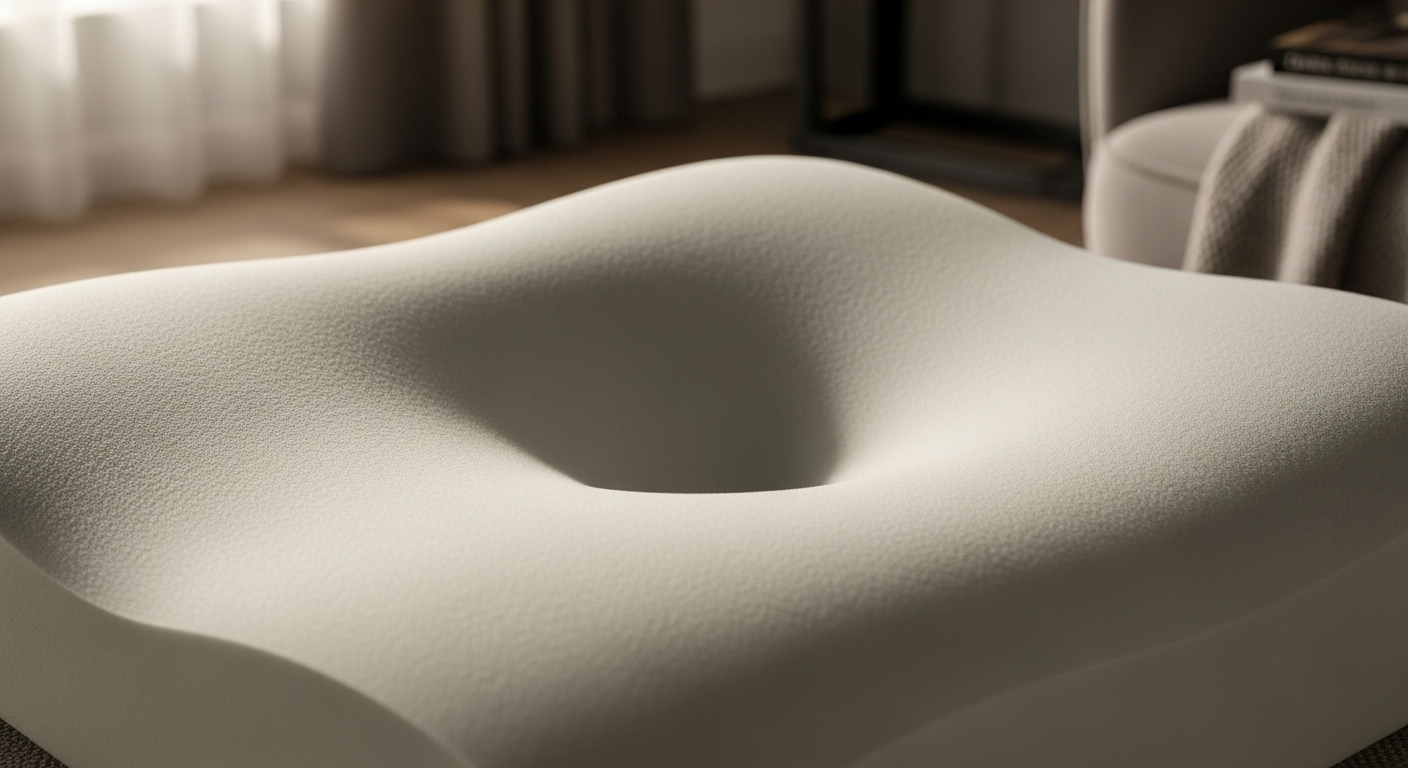
Memory foam, or viscoelastic polyurethane foam, softens under pressure and body heat and conforms to the body. When pressure is removed, it slowly returns to its original shape. It was originally developed for NASA in the 1960s and is now used in pillows, mattresses, and seat cushions. We reviewed it as a neck-pillow material in the article Memory Foam Pillows: Are They the Best Choice for Your Neck? . Here, we focus specifically on how it performs beneath the sitting bones rather than the neck.
Benefits of memory foam for sitting
The main benefit is not a proven reduction in pressure on the spinal discs. Modern research does not consistently show that sitting systematically creates more spinal pressure than standing. The more relevant benefit is pressure distribution: foam spreads body weight over a broader area rather than concentrating it at points such as the sitting bones and tailbone, reducing localized pressure on skin and soft tissue.
- Pressure distribution: viscoelastic foam conforms to the body and spreads the load rather than concentrating it at the tailbone or sitting bones.
- Resists early compression: higher-quality, denser foam generally retains support longer than inexpensive thin foam, which may compress and form a hollow.
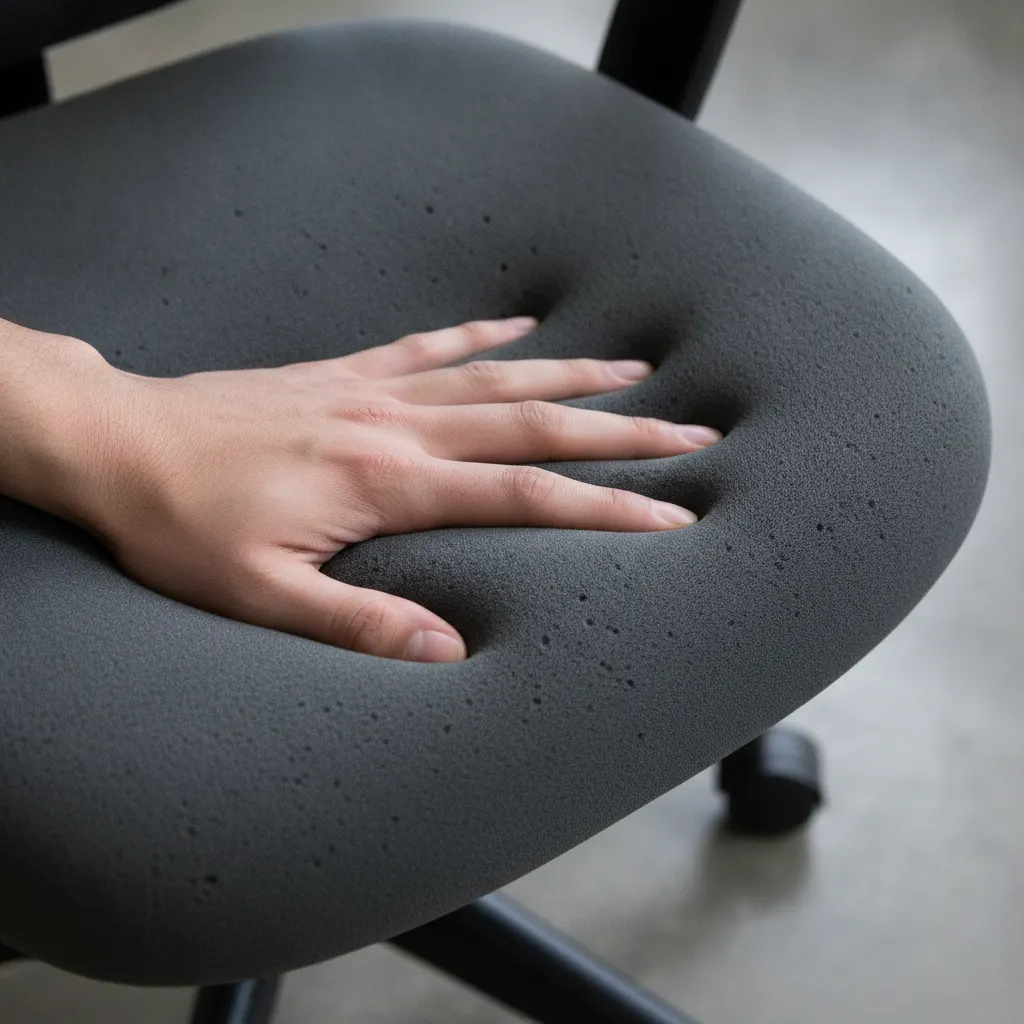
- Returns to shape: after you stand, the cushion slowly returns toward its original shape, helping maintain more even support with regular use.
The principle that pressure-distributing foam reduces pressure-injury risk underlies clinical guidance for hospital mattresses and wheelchair cushions used by people who sit or lie down for long periods. UK NICE guidance summarized in the NCBI Bookshelf recommends high-specification foam as initial protection for people at increased risk of pressure ulcers. This applies to a hospital or care population rather than healthy office workers. A randomized study of older wheelchair users at high ulcer risk likewise found that pressure-relieving cushions prevented ischial pressure ulcers more effectively than standard convoluted foam (PubMed). These clinical findings should not be treated as a medical indication for a healthy office user, but they support the basic pressure-distribution mechanism.
Drawbacks that matter in daily use
A balanced assessment should include practical disadvantages, some of which become particularly noticeable during long periods of office sitting.
- Retains heat: the same feature that lets the foam soften and conform to the body also means it releases heat less effectively than materials such as gel or latex. During hours of sitting, the back of the thighs and lower body may feel warmer.
- Sensitive to temperature: the foam is firmer in a cold room or car and can become softer and less supportive in heat.
- Inexpensive versions may compress quickly: thin, low-density foam may collapse within a few months and lose the support for which it was purchased.
- Odor after unpacking: new foam releases volatile organic compounds for a limited period, producing a “new product” odor. Measurements of new memory foam mattresses found emissions were highest on the first day after unpacking and then declined rapidly over the following weeks, while measured levels remained below the health-based guidance values used in that study (PubMed). It is still sensible to air a new cushion for a few days after opening.
- The foam itself is not washable: only a removable cover can be washed. Moisture and machine washing can damage the foam core.
People who sit in a warm office without air conditioning or perspire heavily may find heat retention outweighs the pressure-distribution benefit. Memory foam is therefore not the first choice for everyone.
Memory foam compared with other materials
No material is best for everyone. The comparison below summarizes what you can reasonably expect from each.
| Material | Pressure distribution | Temperature feel | Durability | Note |
|---|---|---|---|---|
| Memory foam | Very good; conforms to the body | Retains heat and becomes warm | Good at higher densities; inexpensive versions may compress quickly | Best suited to people who want close contouring and do not mind a warmer feel |
| Gel or gel-infused foam | Good | Cooler to the touch than plain memory foam | Good | Heavier; may suit warm rooms or summer use |
| Latex | Good, but feels more springy than conforming | Cooler and retains less heat | Very good; retains resilience longer | Generally more expensive; unsuitable for people with a latex allergy |
| High-resilience (HR) polyurethane foam | Good; conforms less closely to the body | Retains less heat than memory foam | Very good | A practical everyday base, but less suited to localized relief around areas such as the tailbone |
| Air-filled cushion | Adjustable by changing the amount of air; used clinically for some high-risk patients | Does not retain heat | Depends on valve and material quality; may slowly lose air | Very light for travel, but less stable than foam |
| Basic cushion (fiber or unspecified foam) | Limited; may quickly compress to one level | Does not retain heat | Limited | Least expensive, but provides little targeted pressure distribution |
Who may find memory foam most suitable?
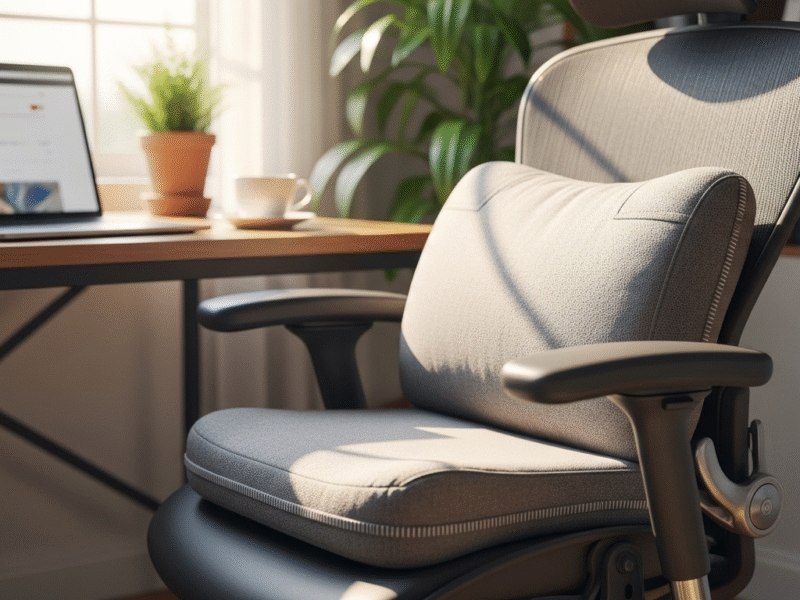
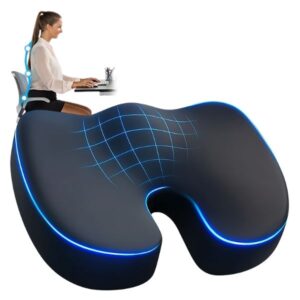
For many people who sit in an office, car, or home and want more support without specific medical restrictions, a sufficiently dense memory foam cushion such as the ComfortLux seat cushion may offer a practical balance of contouring, support, and price. It is not the only suitable option. If heat bothers you or you often travel by car in summer without air conditioning, gel or HR foam may feel more comfortable. If your main need is support for the lower back rather than the sitting surface, consider a Lumbaris lumbar support, which uses the same type of material against the backrest.
Which cushion shape suits your concern?
Material is only half the decision. Shape also matters, including flat cushions, tailbone cutouts, wedges, and ring cushions. We cover choices for specific concerns such as tailbone pain, hemorrhoids, sciatica, and general office comfort in the separate guide Seat Cushions: Which Type Suits Your Needs?.
When should you see a doctor?
A seat cushion is an aid for comfort and pressure relief, not a treatment. Seek medical care if lower back or tailbone pain lasts longer than a few weeks despite reducing pressure and taking breaks, is accompanied by tingling, loss of sensation, leg weakness, or bowel or bladder problems, or began after an injury.
Frequently asked questions
Does memory foam become too warm for sitting?
It can. Heat retention is its main drawback compared with gel or latex. You may notice it during prolonged sitting in a warm office or a car without air conditioning. A breathable cover and regular breaks may help, but they do not change this property of the material.
How long does a high-quality memory foam cushion last?
It depends mainly on foam density and daily loading. Denser foam retains shape and support longer, while thin, low-density foam may compress within a few months. A visible indentation that no longer recovers is a sign that replacement may be needed.
Is memory foam better than gel or latex?
Not universally. Memory foam conforms more closely, gel feels cooler and is somewhat heavier, and latex is springier and more durable but more expensive. The best choice depends on whether close contouring or a cooler feel matters more to you.
Can I wash a memory foam cushion?
Wash only the cover if it is removable and washable. Water and machine washing can damage the foam core. For easier hygiene, choose a cushion with a removable cover and wash it separately according to its care instructions.
This content is for informational purposes and is not a substitute for consultation with a doctor or physical therapist.
From our store
COMFORTLUX Seat Cushion