
Knee pain while running: causes, exercises, and when to seek care
Knee pain can interrupt training for runners at any level. It does not always mean that running must stop permanently, but the right response depends on the cause. Training changes and progressive strengthening may help many overuse problems, while swelling, trauma, locking, or instability needs closer assessment.
This guide reviews common causes, short-term symptom management, strength exercises, nutrition, equipment, and signs that warrant medical care.
Understanding knee pain while running
The knee absorbs and transfers substantial force during running. Pain can arise from several tissues and is influenced by training load, strength, recovery, previous injury, and other factors.
Why do knees hurt while running?
Knee pain often reflects several contributing factors. A rapid increase in running distance, frequency, speed, hills, or other training load can exceed the body’s current capacity and irritate sensitive tissue.
Two conditions commonly discussed in runners are:
- Runner’s knee (patellofemoral pain syndrome): Patellofemoral pain typically causes pain around or behind the kneecap. It may worsen with running, stairs, squatting, or prolonged sitting. Its causes are multifactorial rather than simple tissue “wear.”
- Iliotibial band syndrome (ITBS): IT band syndrome usually causes pain on the outer knee during repetitive activity. Current explanations involve compression and irritation of tissue near the lateral femoral epicondyle rather than the band simply rubbing back and forth over bone.
Other contributors can include changes in hip or leg strength, training technique, footwear comfort, previous injury, and individual anatomy.
Symptoms to pay attention to
- Dull or sharp pain in the front, inside, or outside of the knee.
- Pain that occurs during running and gradually subsides afterwards.
- Swelling or a feeling of warmth around the knee joint.
- Grinding or creaking with knee movement, which may be painless or may occur with discomfort.
- Pain or difficulty on stairs, often worse going down.
What to do when pain begins
Stop or reduce the activity that provokes sharp or increasing pain. Short-term symptom care can be useful, but complete rest is rarely the whole rehabilitation plan.
The RICE approach
RICE stands for rest, ice, compression, and elevation. It remains a familiar short-term comfort strategy during the first 24–72 hours, although modern rehabilitation also emphasizes appropriate early movement and gradual loading.
- R (Rest): Pause running or any movement that clearly worsens pain. Continue comfortable daily movement when safe rather than remaining completely inactive.
- I (Ice): If cold feels helpful, wrap an ice pack in a towel and apply it for 10–15 minutes. Check the skin regularly and allow it to return to normal temperature between applications. Cold may temporarily reduce pain but does not accelerate tissue healing.
- C (Compression): A comfortably fitted elastic wrap may help swelling. Loosen or remove it if the foot becomes numb, cold, discolored, or increasingly painful.
- E (Elevation): Support the leg above heart level when practical. Elevation may help reduce swelling in the short term.
Longer-term rehabilitation and strength
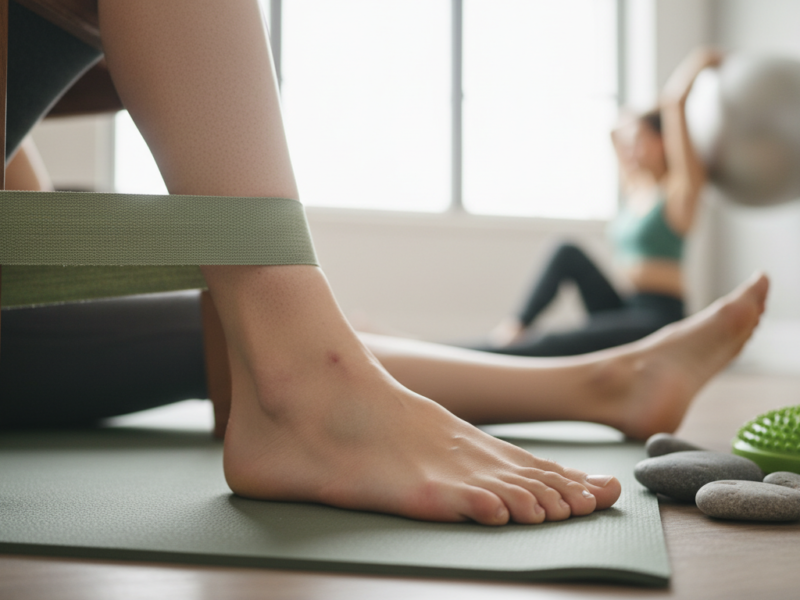
Once serious injury has been excluded and symptoms are settling, a progressive program may address strength, movement control, training load, and return to running. The appropriate exercises depend on the diagnosis.
Sample exercises for the hip and knee muscles
Hip and thigh strengthening is commonly included in rehabilitation for patellofemoral pain. The following are general examples, with a sample frequency of 2–3 sessions per week. Stop if pain becomes sharp or increases substantially afterward.
| Exercise | How to perform it | Repetitions |
|---|---|---|
| Bridge (pelvic lift) | Lie on your back with knees bent and feet on the floor. Lift the hips until the trunk and thighs form a comfortable line, pause for one second, and lower slowly. | 2–3 sets of 15 repetitions |
| Side leg lift | Lie on one side with both legs straight. Keep the pelvis steady while lifting the top leg, then lower it slowly. | 2–3 sets of 15 repetitions per side |
| Half squat | Stand with your back against a wall and feet about shoulder-width apart. Slide down until the knees are bent about 45 degrees, hold for 5–10 seconds, and return with control. | 2–3 sets of 10 repetitions |
| Step-up | Place one foot on a stable step. Press through that foot to raise the body, keeping the knee aligned over the foot, then lower slowly with control. | 2–3 sets of 10–12 repetitions per leg |
Warm-up and flexibility
A gradual dynamic warm-up can prepare the body for running. Static stretching may improve flexibility when a specific restriction is present, but it is not required to prevent every running injury. If you stretch, use a comfortable position and hold for about 30 seconds without forcing it.
Nutrition and joint health
A balanced dietary pattern supports overall health and recovery, but no food can diagnose or cure mechanical running-related knee pain.
Foods often included in balanced eating patterns
A varied diet can include:
- Fatty fish: salmon, mackerel, and sardines, which provide long-chain omega-3 fatty acids.
- Berries and leafy vegetables: blueberries, spinach, kale, and other fruits and vegetables, which provide vitamins, minerals, fiber, and phytochemicals.
- Nuts and seeds: walnuts, almonds, flaxseed, and chia seeds, which provide unsaturated fats, fiber, and other nutrients. Plant sources contain ALA rather than the same omega-3 forms found in fish.
- Spices: turmeric and ginger can add flavor and contain compounds studied for inflammatory effects. Evidence from supplements or extracts does not establish that ordinary culinary amounts relieve a runner’s knee pain.
- Olive oil: extra-virgin olive oil contains oleocanthal and unsaturated fats. It is a food, not a substitute for nonsteroidal anti-inflammatory medication.
Limit highly processed foods and sugary drinks as part of an overall balanced pattern. Decisions about red meat can account for portion, frequency, processing, and personal dietary needs.
Equipment as one part of the plan
Comfortable equipment may help manage training, but shoes and insoles do not prevent all knee pain.
Choosing running shoes and insoles
Choose running shoes that fit comfortably and suit the activity. Gait analysis can describe movement, but it does not reliably identify one ideal shoe or predict every injury.
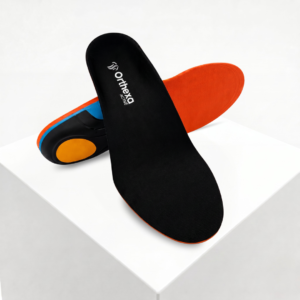
Some runners find that an insole changes comfort or pressure distribution. The effect on knee pain varies by diagnosis and individual response. One consumer option is Active orthopedic shoe insoles, designed to add cushioning and support during activity. They are not a treatment for every cause of knee pain.
When to seek professional care
Consult a doctor or physical therapist if:
- pain persists for more than two weeks despite reducing aggravating activity and using appropriate self-care;
- pain is severe or interferes with daily activities;
- there is marked swelling, redness, warmth, or deformity;
- you cannot fully straighten or bend the knee, particularly after an injury;
- the knee feels unstable, gives way, catches, or locks.
A measured return to running
Running-related knee pain has many possible causes. Adjusting training load, using diagnosis-appropriate strengthening, and returning gradually may help. Nutrition and equipment can support general health and comfort, but neither replaces assessment when symptoms are severe, persistent, swollen, unstable, or linked to trauma.
This article provides general information and is not a substitute for medical advice, diagnosis, or treatment. Consult a qualified healthcare professional about persistent or concerning symptoms and before beginning rehabilitation after a significant injury.
Related: running insoles and knee pain.
From our store