
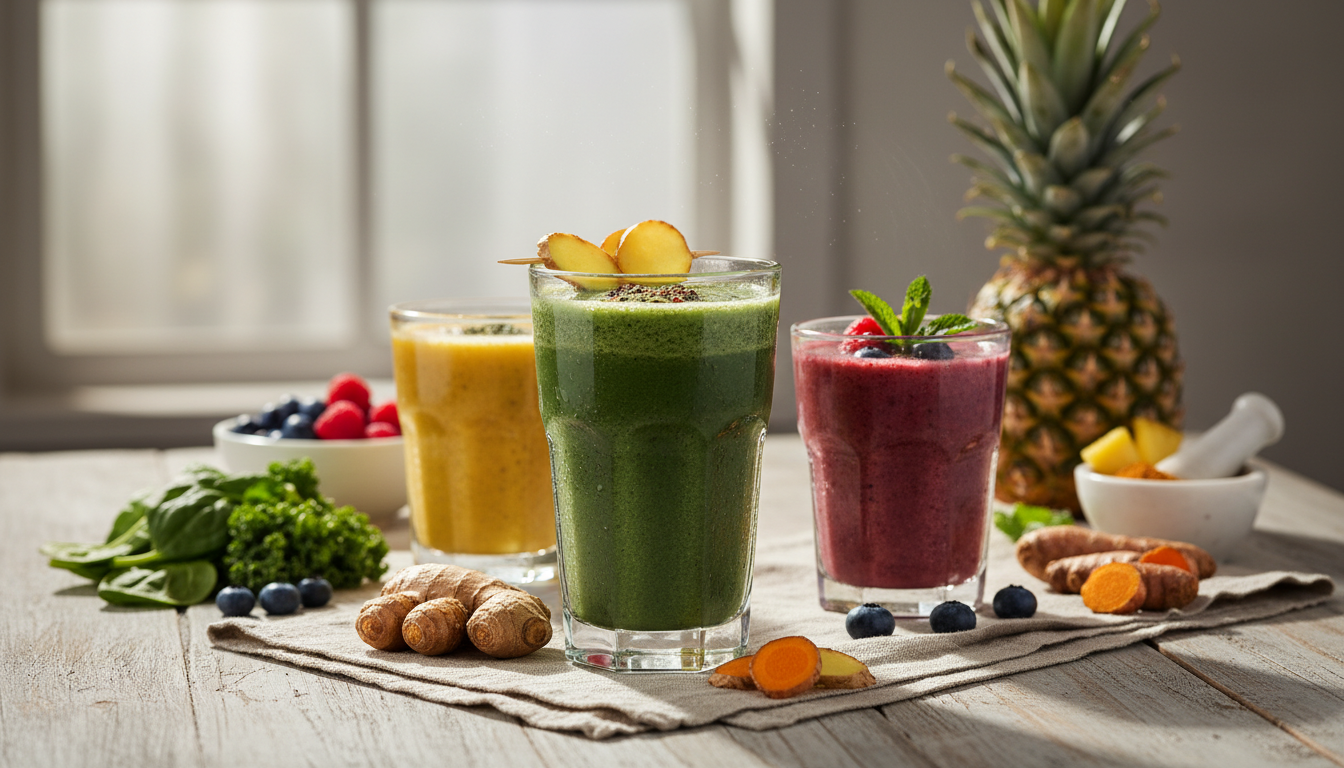
Smoothie recipes with fruit, vegetables, and spices
Joint pain has many causes, including injury, osteoarthritis, inflammatory arthritis, and infection. A smoothie can be a convenient way to include fruit, vegetables, seeds, and other foods in a balanced diet, but it is not a treatment for joint pain or inflammation.
This article reviews common ingredients and provides three recipes. Research on concentrated extracts or supplements should not be assumed to apply to the culinary amounts used in a smoothie.
Health and medication note: This article provides general nutrition information and does not replace medical or dietetic advice. Ask a doctor, pharmacist, or registered dietitian before making major dietary changes or using concentrated turmeric, curcumin, ginger, bromelain, or piperine products, particularly if you take medication, have a bleeding disorder, are pregnant, or have gallbladder, kidney, liver, or gastrointestinal disease. Check recipes for food allergies and carbohydrate needs.
Understanding joint pain and inflammation
Joint pain affects people of all ages and may result from injury, overuse, osteoarthritis, inflammatory arthritis, infection, gout, or other conditions. Inflammation contributes to some causes but is not the common mechanism behind every painful joint.
Dietary patterns can influence overall cardiometabolic health and some inflammatory markers, but a single food does not control arthritis. Diets rich in varied plant foods, unsaturated fats, and minimally processed foods can support general health alongside diagnosis-appropriate care.
What does research on these ingredients show?
Fruit, vegetables, seeds, and spices contain nutrients and bioactive compounds. Evidence varies by ingredient, preparation, dose, condition, and outcome.
Turmeric and curcumin
Turmeric contains curcumin. Studies have examined concentrated curcumin products for osteoarthritis and inflammatory conditions, but supplement findings do not show that a teaspoon of culinary turmeric will relieve joint pain. One small study published in Phytotherapy Research in 2012 compared a curcumin product with diclofenac in people with active rheumatoid arthritis. Its size and design do not establish that curcumin is more effective or safer than standard treatment.
About black pepper: piperine can increase curcumin absorption, but it can also affect drug absorption and metabolism. Adding black pepper is optional and should not be treated as universally safe with medication.
Ginger
Ginger contains compounds including gingerols. Some studies of concentrated extracts have reported modest changes in osteoarthritis symptoms, including one six-week trial. These results do not establish that fresh ginger in a smoothie acts like an anti-inflammatory drug.
Pineapple and bromelain
Bromelain is a group of enzymes concentrated mainly in the pineapple stem. Supplement studies cannot be generalized to the amount found in pineapple fruit, and pineapple smoothies have not been shown to treat arthritis or post-injury swelling.
Berries
Blueberries, raspberries, strawberries, and other berries provide fiber, vitamins, and anthocyanins. Berry intake has been associated with some differences in inflammatory markers, but associations do not prove pain relief.
Leafy green vegetables
Spinach, kale, and Swiss chard provide vitamins, minerals, fiber, and phytochemicals. People taking warfarin or another vitamin K-sensitive medication should keep vitamin K intake consistent and follow clinical advice.
Omega-3 fats from plants
Flaxseed, chia seeds, and walnuts contain alpha-linolenic acid (ALA). Evidence about rheumatoid arthritis symptoms more often involves the long-chain omega-3 fats EPA and DHA from marine sources or supplements, so it should not be assumed that a spoonful of seeds has the same effect.
A flexible smoothie formula
Adjust the ingredients for taste, allergies, nutrition needs, medication considerations, and the capacity of your blender.
Basic formula
- Liquid base, about 250 ml: use water, unsweetened almond milk if safe for your allergies, or coconut water.
- Optional spices: add 1–2 cm of fresh ginger and/or 1 teaspoon of turmeric powder. Black pepper is optional and may be unsuitable with some medications.
- Fruit, 1 cup: use frozen pineapple or mixed berries for flavor and texture.
- Vegetables, 1 large handful: add spinach or kale if it suits your diet and medication plan.
- Unsaturated fat or seeds, 1 tablespoon: add ground flaxseed or chia seeds, or use one-quarter of an avocado for creaminess. Avocado is not a meaningful omega-3 source.
- Optional additions: protein powder may increase protein content, but check the ingredients, serving size, allergens, and whether it fits your nutrition needs.
Three smoothie recipes
These recipes are food ideas rather than tested treatments. Adjust them for allergies, medication interactions, blood glucose management, and personal taste.
Recipe 1: pineapple, turmeric, and ginger smoothie
This smoothie combines sweet pineapple with turmeric and ginger. It has not been shown to relieve arthritis pain.
- 1 cup of frozen pineapple chunks
- 1 banana (fresh or frozen)
- 1 teaspoon turmeric powder
- Pinch of black pepper, optional
- 1 cm fresh ginger root, peeled
- 1 cup unsweetened almond milk, or an allergy-safe alternative
Preparation: Put all the ingredients in a blender and blend until smooth. Serve immediately.
Recipe 2: green smoothie with ginger and spinach
Spinach provides color and nutrients, ginger adds heat, and apple balances the flavor.
- 1 large handful of fresh spinach
- 1 green apple, cut into pieces
- 1 cm fresh ginger root, peeled
- 1 tablespoon of chia seeds
- Juice of 1/2 lemon
- 1 cup of water
Preparation: Mix all the ingredients in a blender until you get a uniform mixture.
Recipe 3: mixed-berry smoothie with seeds
Berries provide fiber and anthocyanins, while ground flaxseed provides fiber and ALA.
- 1.5 cups mixed frozen berries (blueberries, raspberries, and strawberries)
- 1 tablespoon of ground flax seeds
- 1/4 teaspoon of cinnamon
- 1 cup of water or coconut water
Preparation: Mix all the ingredients in a blender until the desired consistency.
Practical considerations
Treat a smoothie as food within the overall diet, not as a dose of medicine.
- Consider the whole diet: A smoothie does not need to be consumed every day. Account for calories, carbohydrate, fiber, and protein in the rest of your meals.
- Listen to your body: Adjust ingredients if they cause reflux, gastrointestinal symptoms, allergy symptoms, or blood glucose changes.
- Use a broader plan: Joint health depends on the diagnosis and may involve medical treatment, appropriate physical activity, sleep, and an overall balanced anti-inflammatory diet, along with adequate hydration for general health. Drinking extra water does not “lubricate” a damaged joint or treat arthritis. water is essential for joint lubrication.
Limitations and when to seek care
Smoothies have not been shown to treat arthritis or reliably relieve joint pain. Seek medical care for severe, persistent, worsening, swollen, hot, red, or injured joints, and for fever with joint symptoms. Do not replace prescribed treatment with food or supplements.
Recipes as part of ordinary meals
These recipes offer one way to combine fruit, vegetables, seeds, and spices. Choose them for taste and nutrition rather than a promise to reduce inflammation or pain, and adapt them to your health needs.
From our store